Quick answer
Petit Bateau does not sell a separate sleepwear line, so the sleepwear-vs-daywear question comes down to which everyday pieces you set aside for sleep. For babies, the 3-pack long-sleeve bodysuits (FW26 - A0H03) are the most practical night option because the envelope neckline makes overnight changes easier. For toddlers and older kids, long-sleeve tees like FW26 - A0H17 or AW25 - A0EBB work as pajama tops when paired with soft bottoms you already own. There is no safety certification difference to weigh here because these are daywear pieces, not flame-resistant pajamas.
Why Petit Bateau has no separate pajama category
The brand's catalog is built around everyday knitwear: bodysuits, tees, and layering pieces. That means you will not find a 'pajama' label or a sleep-specific fabric claim in the product records. Instead, parents treat certain pieces as nightwear by buying them a size up, washing them separately, or simply designating a set for the crib. This is a practical approach, but it has one real limitation: without a stated sleepwear standard, you cannot assume any flame-resistance or sleep-safety certification. If your household requires certified pajamas, Petit Bateau daywear is not a substitute.
Bodysuits vs tees: the real functional split
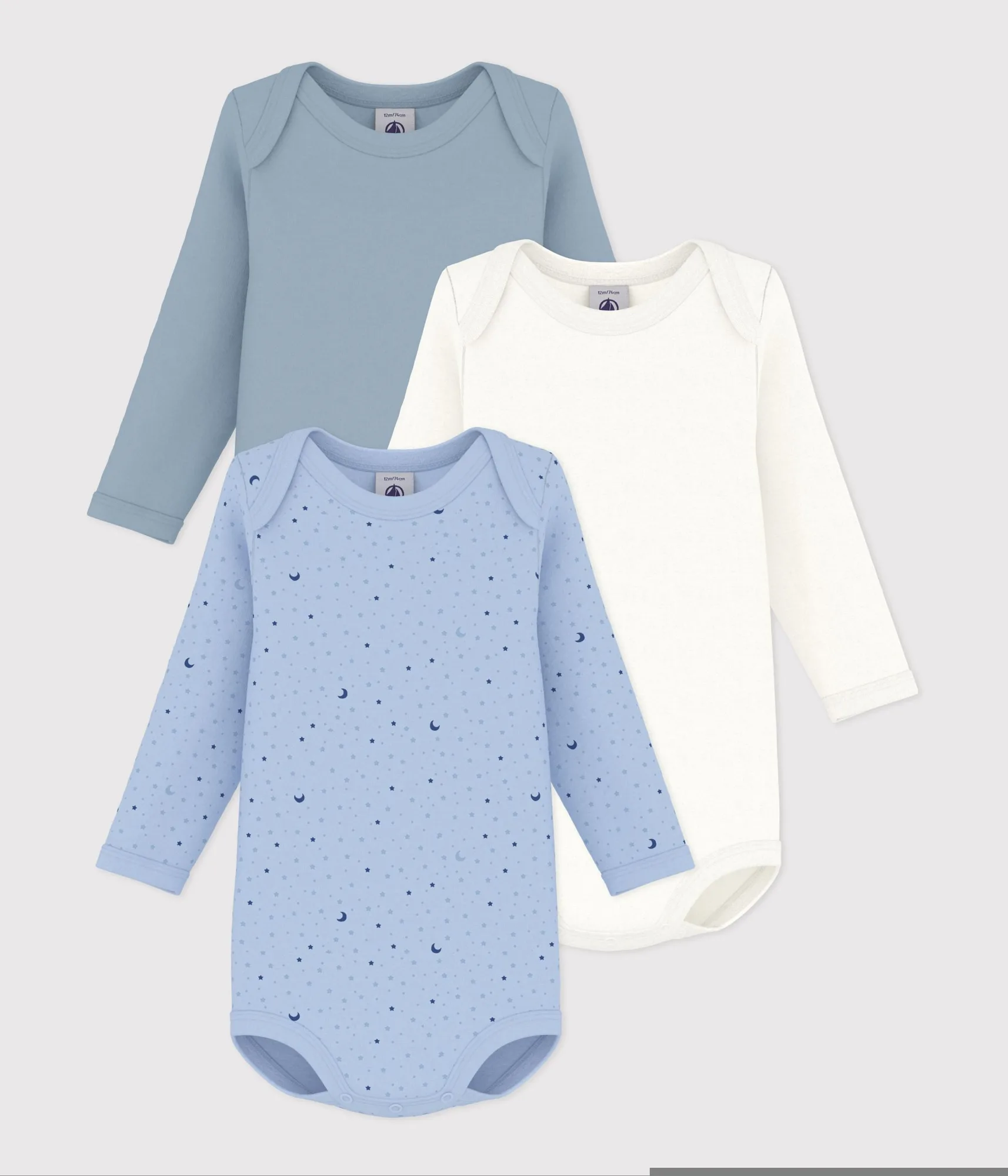
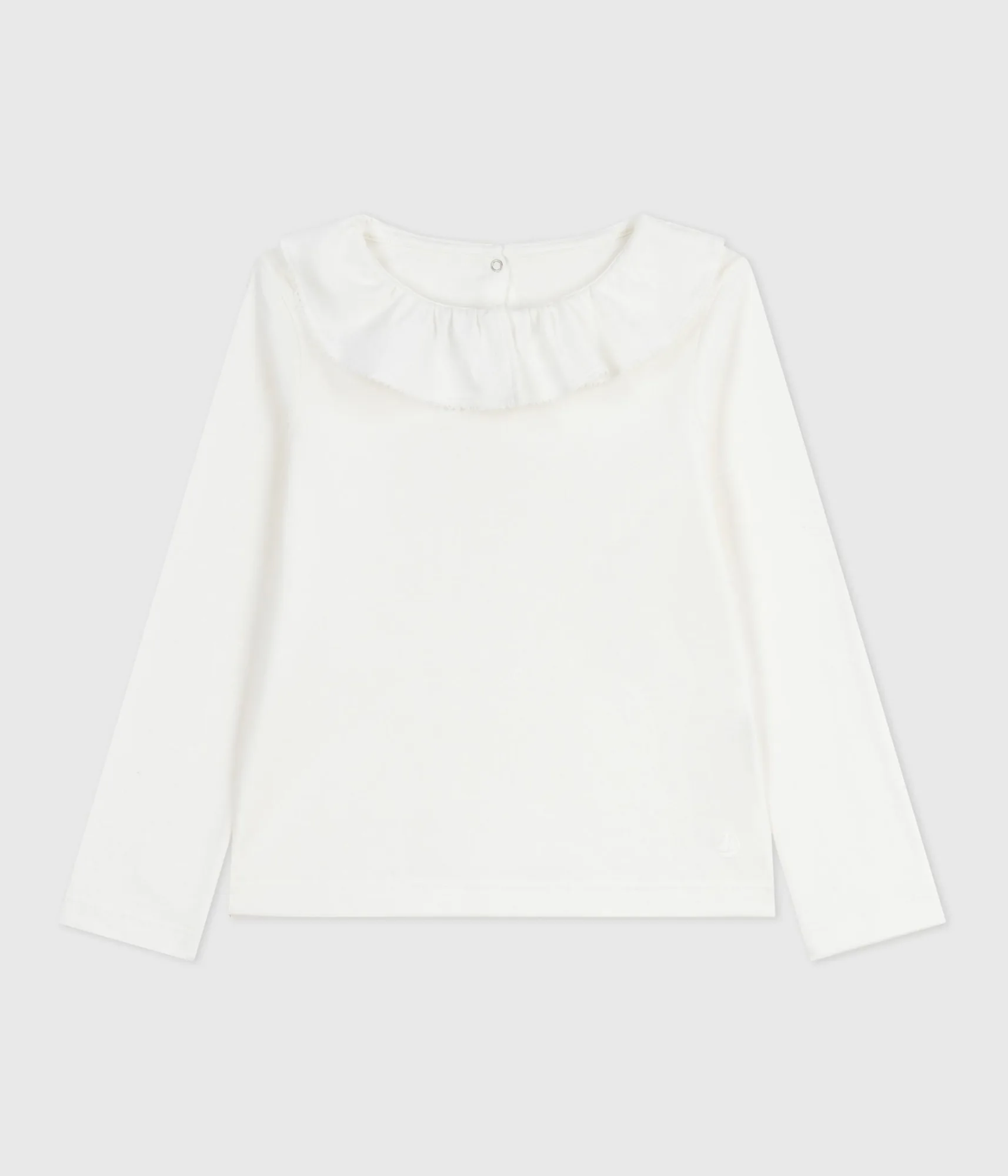
The 3-pack long-sleeve bodysuits (FW26 - A0H03) include one solid blue, one solid white, and one light blue moon-and-star print. The envelope neckline is the detail that matters most at night: it lets you pull the bodysuit down over the shoulders instead of over the head during a diaper change. Long-sleeve tees such as FW26 - A0H17 and AW25 - A0EBB do not have that feature. They are pullover tops, which is fine for a child who can sit up and dress themselves, but less convenient for a newborn. The ruffle collar on AW25 - A0EBB is a daywear detail; it adds bulk at the neck that some children find annoying against a pillow.
Fabric and season: what the records actually say
The supplied product facts do not include fiber content, GSM, or temperature ratings for any of these pieces. That is a genuine gap, not an oversight in this article. What the records do give you is season labeling: FW26 - A0H17 and FW26 - A0H03 are Fall Winter 2026, AW25 - A0EBB is Fall/Winter 2025/26, and SS25 - A0CWH is Spring Summer 2025. Use that as your starting point. A long-sleeve piece labeled for fall/winter is the safer bet for a cold bedroom; a short-sleeve tee like SS25 - A0CWH is a summer nap option, not a winter night option. If you need exact fabric weight, check the care label on the garment itself before committing a piece to sleep duty.
How to build a sleep set from daywear
Buy one size up for sleep. Nightwear that fits snugly at the shoulder will ride up during the night, and a bodysuit that is too tight at the leg opening is uncomfortable for a sleeping baby. Keep sleep pieces separate from play pieces in the drawer so you are not hunting for a clean bodysuit at 2 a.m. Wash sleep pieces on a gentle cycle and skip fabric softener, which can reduce absorbency and leave residue against skin. For toddlers who run warm, a long-sleeve tee with a lightweight bottom is often enough; for babies who sleep cold, layer a bodysuit under a sleep sack rather than adding a second heavy top.
Trade-offs when using daywear for sleep
- Bodysuit vs pullover tee: Bodysuits (FW26 - A0H03) give you the envelope neckline for easier changes, but they stop at 36M. Tees like FW26 - A0H17 go up to 36M and AW25 - A0EBB goes to 12A, so older kids get a pajama top option but lose the envelope neckline. Choose bodysuits for babies under 3, tees for kids who dress themselves.
- Season label vs actual room temperature: Fall/winter pieces are your best guess for a cold bedroom, but no product record states fabric weight. A fall/winter long-sleeve tee is not automatically warmer than a spring/summer one if the knit is thin. Check the care label for fiber content before assuming a piece is warm enough for winter nights.
- Cost per sleep set: The 3-pack bodysuits give you three night pieces in one purchase. Buying three separate tees costs more per piece, and you still need bottoms. The 3-pack is the lower-cost route for babies; tees are the only route for older kids. For babies, start with the 3-pack. For kids past 36M, budget for a top and bottom separately.
Petit Bateau pieces parents use for sleep
- FW26 - A0H03: Baby Boy 3 Pack Long Sleeve Moon & Star Bodysuits with envelope neckline, in blue, white, and light blue moon/star print The envelope neckline allows downward removal, which is the single most useful feature for overnight diaper changes on a baby who cannot yet sit up.
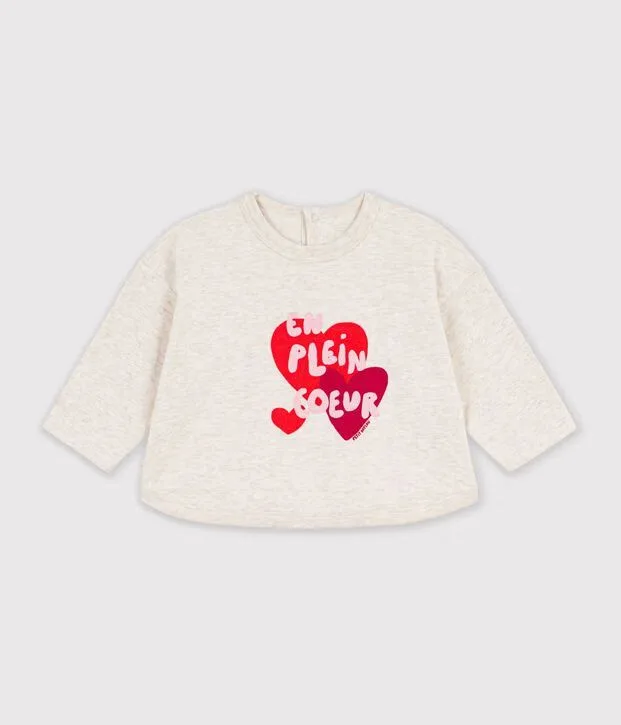
- FW26 - A0H17: Long-sleeve tee for baby girls in Oatmeal with a heart graphic, sizes 3M to 36M, Fall Winter 2026 A pullover top with no envelope neckline. Better as a pajama top for a toddler who can dress themselves than for a newborn.
- AW25 - A0EBB: Long-sleeved tee with ruffle collar, white, sizes 3A, 5A, and 12A, Fall/Winter 2025/26 The ruffle collar is a daywear detail. It can feel bulky at the neck during sleep, so this piece is a better daytime layer than a night top.
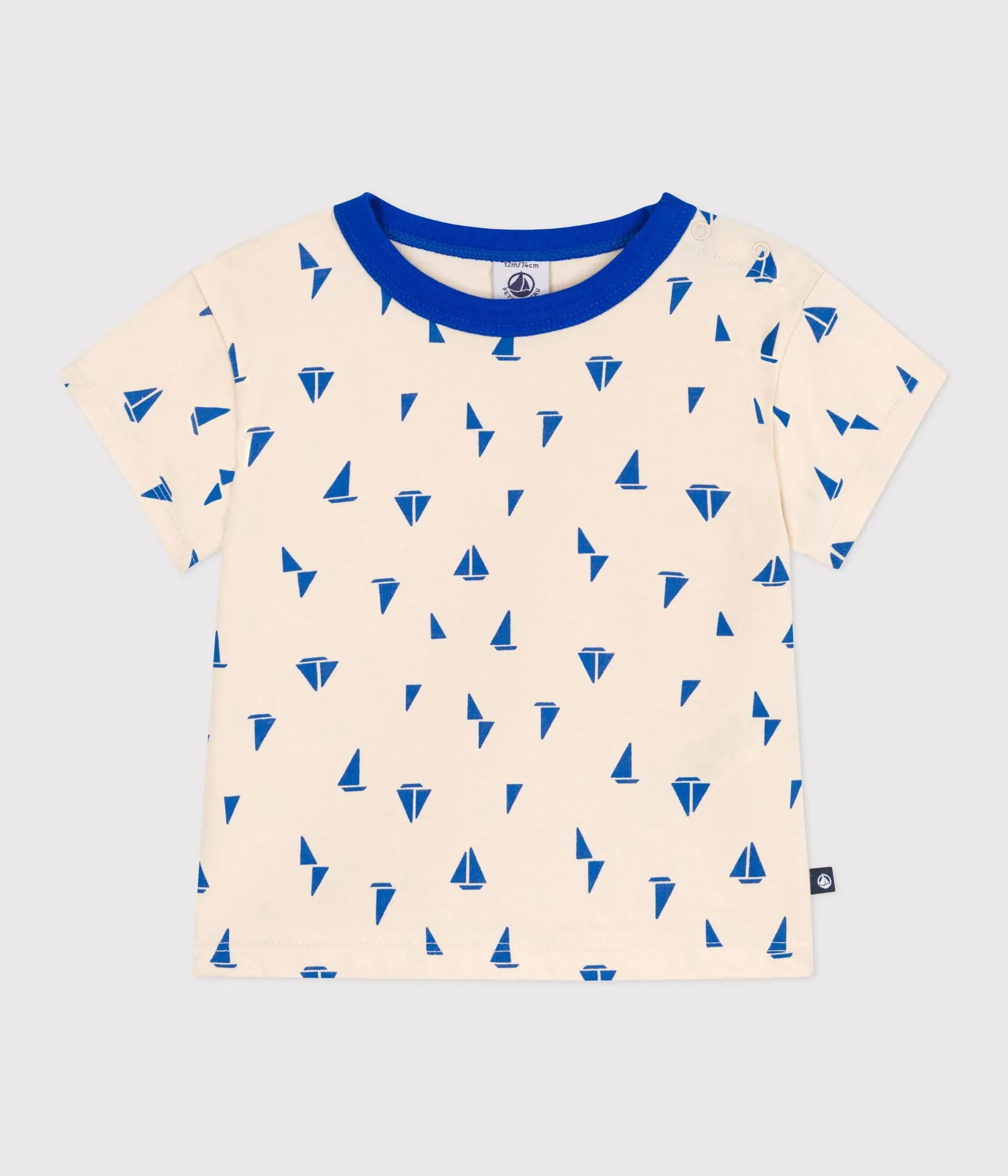
- SS25 - A0CWH: Short-sleeved tee with surfboard print on white, sizes 6M to 36M, Spring Summer 2025 Short sleeves and a summer season label make this a warm-weather nap option, not a cold-night piece.
Who should choose which
Best for
- Babies under 36M who need overnight diaper changes — the 3-pack bodysuits (FW26 - A0H03) are the most practical sleep option.
- Toddlers and older kids who dress themselves and need a pajama top — FW26 - A0H17 or AW25 - A0EBB work as night tops with soft bottoms.
- Parents who want one brand for both day and night and do not require certified flame-resistant sleepwear.
Not for
- Households that require certified flame-resistant pajamas — Petit Bateau daywear does not carry a sleepwear safety certification in the supplied records.
- Newborns if you want a dedicated sleepwear fit — the bodysuits are daywear pieces sized for everyday wear, not a snug sleepwear cut.
- Anyone who needs a stated fabric weight or temperature rating before buying — that information is not in the product records.