Quick answer
Use phonics flash cards for kids in short, daily sessions that move from letter sounds to words and then to fluent rereading. Work through the 260-card set in its 20 stages, one stage at a time, and stop while your child is still successful.
Why short daily practice beats long sessions
Reading fluency grows through repeated, low-stress exposure, not marathon drills. Ten focused minutes a day gives a child enough repetition to recognize letter-sound patterns without turning practice into a power struggle. Keep sessions short enough that your child finishes wanting one more card rather than dreading the next one.
The 20-stage structure in a 260-card phonics set is useful here: it gives you a natural stopping point. Instead of reviewing the whole deck, you can work on one stage until your child reads those cards smoothly, then move on.
When to slow down or step back a stage
If your child guesses at words or needs to sound out every letter, the current stage is too hard for fluency practice. Step back one stage, review those cards for a few days, and return when accuracy feels stable. Fluency practice should feel like rereading familiar material, not decoding new material under pressure.
Skip the timer for beginners. Speed comes after accuracy, and a visible timer can make a child rush or freeze. Use it only with a stage your child already reads correctly and comfortably.
A 10-minute fluency routine with phonics cards
- 1. Pick one stage and sort the cards: Choose a single stage from the 20-stage sequence and pull only those cards. Shuffle them so your child reads the patterns in a different order each day. Common mistake: mixing stages, which makes the pile feel random and frustrating. Keep the rest of the deck out of sight during practice.
- 2. Warm up with letter sounds: Spend one minute on the alphabet or letter-sound cards from the current stage. Say the sound together, then let your child say it alone. Checkpoint: if your child hesitates on more than a couple of sounds, review those cards before moving to words.
- 3. Read words aloud, then reread for smoothness: Show one card at a time and have your child read it aloud. On the second pass through the same cards, encourage a smooth, connected reading rather than letter-by-letter sounding out. Common mistake: correcting every slip immediately; instead, note the word and revisit it after the pass. Two passes are enough; stop before fatigue sets in.
- 4. Add a quick game to build speed: Lay five to eight known cards on the table and ask your child to find a card you say aloud. Or time a small pile and try to beat the previous time on a second attempt. Checkpoint: only use the timer once your child reads the cards accurately.
- 5. Log the stage and decide the next step: Write down the date, stage, and any words that caused trouble. Move to the next stage when your child reads the current stage accurately and smoothly on two different days. Common mistake: advancing because the child is bored rather than because the cards are easy. Return to the logged trouble words at the start of the next session.
Product facts
-
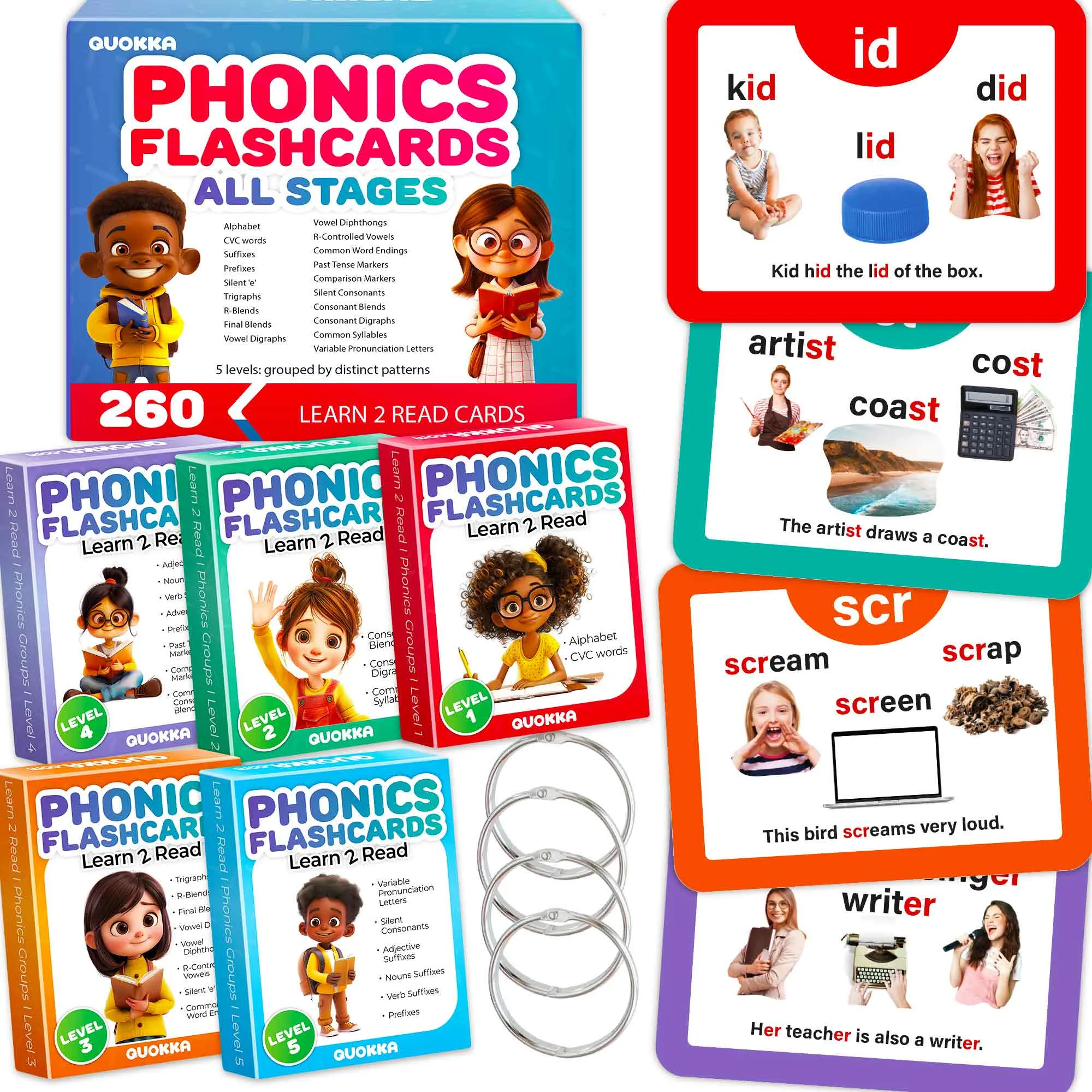
Phonics Flash Cards for Kids | 260 Cards for Reading Fluency: The set includes 260 cards across 20 stages, from alphabet and CVC words to suffixes, prefixes, and blends. The staged structure lets you match practice to your child's current level instead of mixing easy and hard cards in one pile.
Phonics Flash Cards for Kids | 260 Cards for Reading Fluency