Quick answer
Choose a medium pickup bike pad when you usually carry one or two bikes over a standard tailgate and want a padded, weatherproof cover that protects paint and secures frames without a full bed rack. Verify camera and latch clearance before ordering.
Why medium sizing is a fit decision, not a bike-count rule
Medium bike pads are sized to the tailgate area they cover, not to a fixed number of bicycles. A medium pad can work well for a single trail bike or a pair of bikes if the pad spans the tailgate surface where frames and downtubes rest. The real constraint is whether the pad's width and drop match your truck's tailgate height and your bike's frame layout.
Measure the flat outer face of your tailgate from the top edge to the bottom edge, then compare that to the pad's coverage. A pad that is too short leaves exposed paint where a downtube or pedal can rub. A pad that is too tall may bunch at the latch or interfere with the backup camera flap.
Camera, latch, and hatch clearance come first
Modern tailgates often have a backup camera, a latch handle, and sometimes a power-release button in the upper center. A bike pad that ignores these features either blocks the camera or sits crooked. Look for an adjustable hatch flap or a cutout design that accommodates the camera and latch system on your specific truck.
If your truck has a camera mounted in the tailgate handle bezel, confirm the pad's flap can be positioned around it. If the pad relies on a fixed opening, measure the distance from the top of the tailgate to the camera before buying. This is the most common reason a medium pad that fits one truck will not sit cleanly on another.
Straps and frame blocks matter more than padding thickness
Thick padding feels protective, but a bike stays paint-safe only if the pad stays put. Active downtube straps and integrated frame blocks keep the bike from sliding sideways during turns and braking. Without them, even a well-padded pad can shift and let a frame or fork rub the tailgate.
Check how the pad attaches to the tailgate. Straps that route around the tailgate edge and tension against the inner panel are common. If the pad relies only on gravity or a loose bungee, it may lift at highway speed or in crosswinds. The attachment method should match how often you install and remove the pad.
Weatherproof materials and paint-safe linings
A truck bed bike transport pad lives outside, so the outer shell should handle rain, dust, and sun. PVC tarpaulin is a common choice because it resists water and wipes clean. The inner lining is equally important: a soft microfleece or similar liner reduces the chance of scratching clear coat or leaving rub marks.
Avoid pads with hard plastic backing or exposed seams that can trap grit against the paint. If you frequently haul in muddy conditions, choose a pad you can rinse and dry quickly rather than one with thick foam that stays damp.
Decision rules for buying a medium pickup bike pad
- Measure tailgate coverage first: Measure the flat outer face of your tailgate from top edge to bottom edge. Choose a medium pad whose coverage matches that height without hanging below the tailgate or bunching at the top. If your tailgate is unusually tall or short, medium may not be the right size. Write down your tailgate height before comparing any pad.
- Confirm camera and latch clearance: Locate your backup camera and latch handle. If either sits in the upper center of the tailgate, choose a pad with an adjustable hatch flap rather than a fixed cutout. Test the flap position mentally against your camera's location before ordering. A pad that blocks your camera is a safety problem, not just an inconvenience.
- Match attachment to your hauling frequency: If you install the pad weekly, prioritize straps that are quick to tension and release. If the pad stays on for the season, a more secure strap system is worth the extra setup time. Avoid pads that rely only on gravity if you drive at highway speeds. Decide how often you will remove the pad before choosing the strap style.
- Check bike frame contact points: Confirm the pad has active downtube straps and integrated frame blocks if you carry bikes with suspension forks or wide downtubes. These features keep the frame from sliding. For a single rigid bike, basic straps may be enough, but frame blocks reduce paint rub. More contact points generally mean less movement and less paint wear.
- Weigh weatherproofing against drying time: A PVC tarpaulin shell sheds rain and wipes clean, but thick foam or closed seams can stay damp. If you ride in wet conditions often, plan to dry the pad fully before folding it or storing it against the truck. Weatherproof outer fabric does not guarantee the whole pad dries quickly.
Product facts to weigh
-
PICKUP BIKE PAD (MEDIUM SIZE): Ultra-premium tailgate cover made from durable weatherproof PVC tarpaulin with an ultra lux micro fleece lining. The weatherproof shell suits outdoor parking and wet rides, while the fleece lining is aimed at protecting your truck's paint from scuffs.
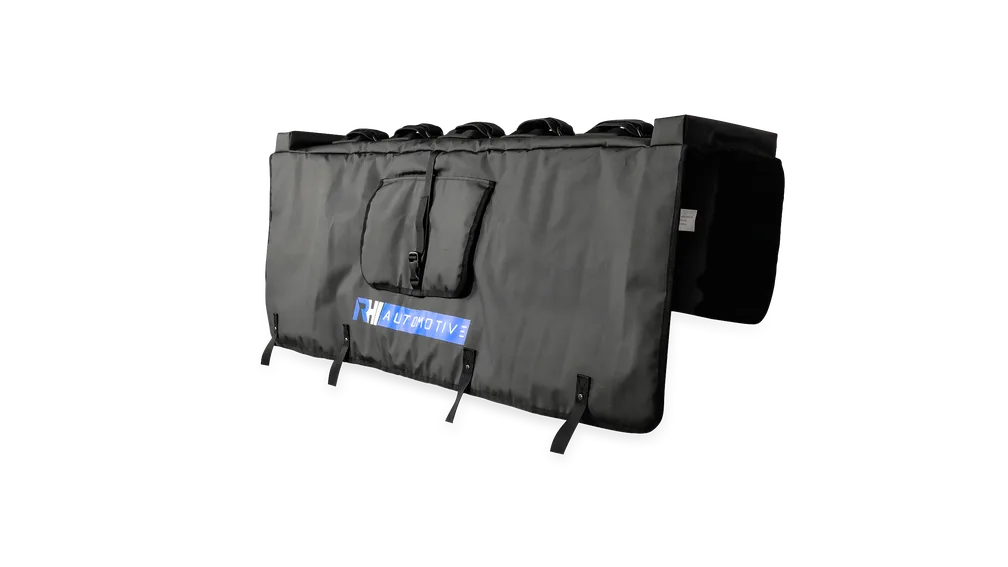
PICKUP BIKE PAD (MEDIUM SIZE)
-
PICKUP BIKE PAD (MEDIUM SIZE): Adjustable hatch flap accommodates virtually all backup cameras and latch systems. If your tailgate has a camera or latch in the upper center, this feature lets you position the pad without blocking the view.
-
PICKUP BIKE PAD (MEDIUM SIZE): Active downtube straps and integrated frame blocks keep your bike secure and blemish free. These hold the bike in place during turns and braking, which is the practical difference between a pad that protects paint and one that just covers it.
Who this medium pad suits
Best for
- Drivers of mid-size or full-size pickups with a standard-height tailgate who carry one or two bikes
- Riders who want paint protection and camera clearance without installing a full bed rack
- Owners who haul bikes occasionally and want a pad that can stay on the truck between rides
Not for
- Trucks with tailgates that fall outside the pad's coverage range or have unusual camera placements
- Hauling more than two bikes regularly, where a bed rack or dedicated carrier is more practical
- Owners who need a hard-mounted carrier for heavy e-bikes or motorcycles