Quick answer
A Pilates chair is a compact, versatile piece of equipment that targets the lower body and core with precise spring resistance. It's ideal for home studios with limited floor space, but it doesn't offer the full-body gliding carriage movement of a reformer. Choose a chair if you prioritize footwork, hip work, and portability over the reformer's broader range of exercises.
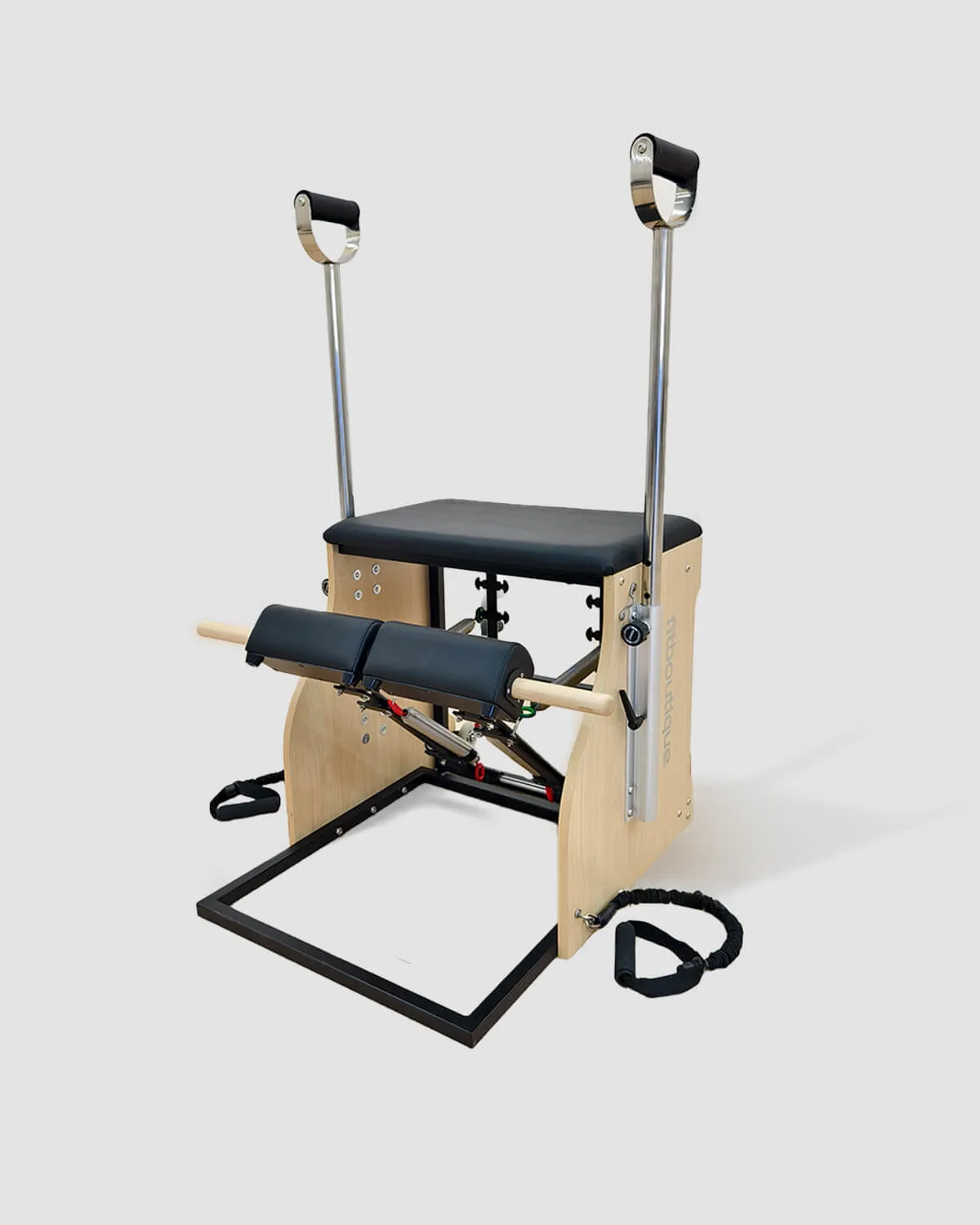
Pilates chair
Key features to look for in a home Pilates chair
When shopping for a home Pilates chair, focus on spring resistance, build quality, and footprint. Most chairs use one to four springs, with heavier springs offering more resistance for advanced work. Look for a sturdy steel or aluminum frame that won't wobble during use. A padded seat and non-slip pedals improve comfort and safety. Also check the chair's weight and whether it has wheels or folds for storage, especially if you plan to move it between rooms.
Pilates chair vs reformer: which suits your home studio?
A Pilates chair excels at unilateral leg work, balance challenges, and core stabilization exercises that are harder to replicate on a reformer. It takes up roughly half the floor space of a foldable reformer and is easier to store upright. However, a reformer offers a gliding carriage that enables hundreds of exercises for the entire body, including upper body pulls, leg presses, and spinal articulation. If your goal is a complete home studio with maximum versatility, a reformer may be a better long-term investment. If space is tight and you want focused lower body and core training, a chair is a smart choice.
Decision rules for choosing a Pilates chair
- Space available: Measure your workout area. A Pilates chair typically needs about 2 ft x 3 ft of floor space. A foldable reformer needs roughly 4 ft x 8 ft when in use but can store upright. If you have less than 12 sq ft of dedicated floor space, a chair is the practical choice.
- Exercise focus: Chairs excel at footwork, hip work, and single-leg exercises. Reformers offer a wider range including full-body pulls, spinal articulation, and arm work. Consider which movements you do most. If lower body and core are your priority, a chair is sufficient. For total body variety, choose a reformer.
- Budget and long-term value: A quality Pilates chair costs less than a reformer, but a reformer's versatility may justify the higher price if you plan to use it for years. Both hold resale value well. Set a budget and think about how your practice may evolve. A chair is a lower-cost entry point; a reformer is a more future-proof investment.
How our foldable reformers compare to a Pilates chair
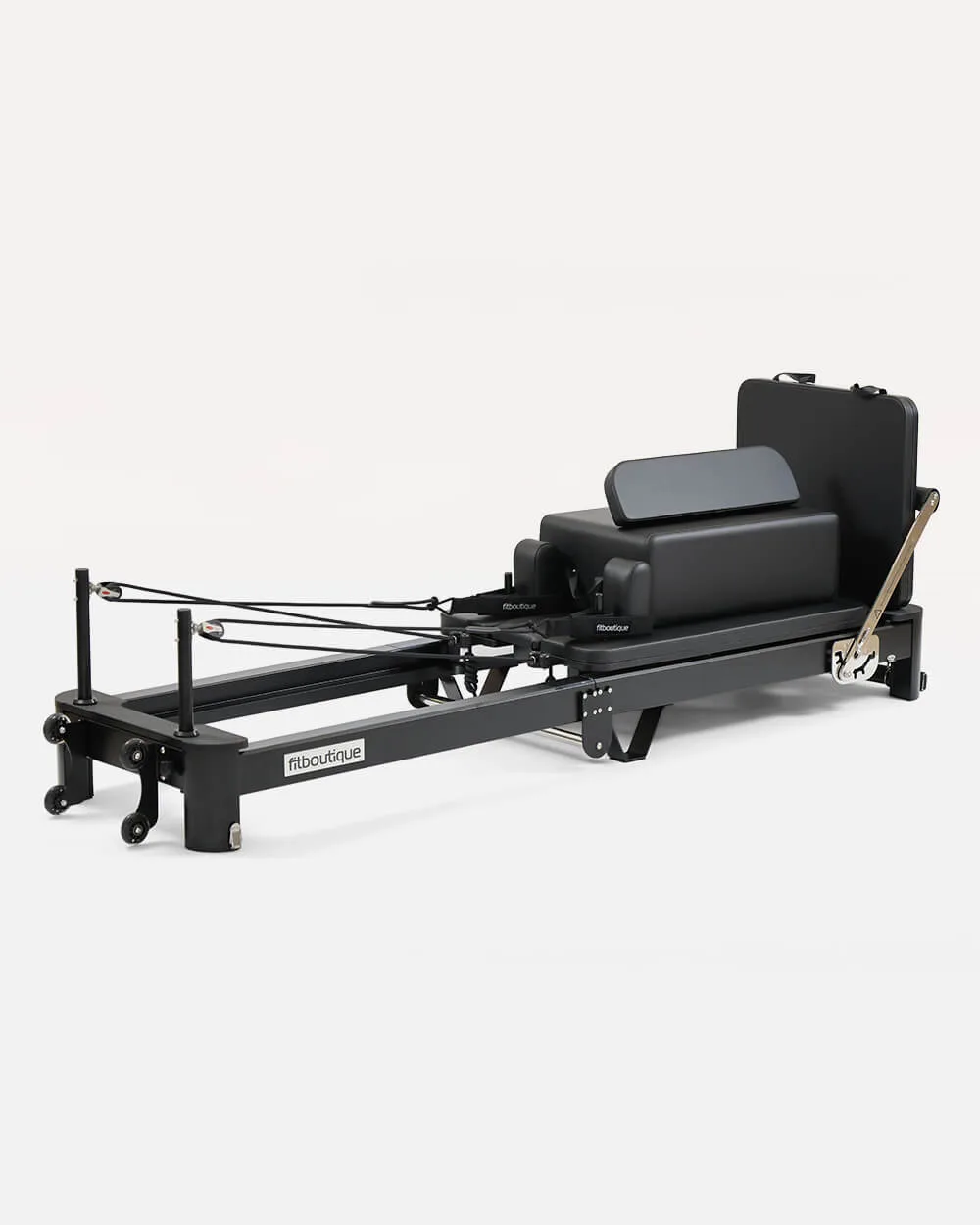
- Foldable Reformer: Experience full studio performance at home with our commercial grade foldable aluminium reformer. Built from high grade aluminium and steel, it features a 6 spring system, premium padding and a smooth gliding carriage designed for strength, stability and precision. The foldable frame includes a centre support bar and integrated wheels, allowing the reformer to store upright easily without compromising structure. If you decide a reformer offers the versatility you need, this model gives you a full range of motion in a package that folds upright, similar to a chair's compact storage.
- Onyx Fold Reformer: The Onyx Fold is a commercial grade aluminium reformer designed for full studio performance with the flexibility of a foldable frame. Featuring a 6 spring system, premium padding and smooth carriage glide, it delivers the same strength, stability and performance as our non fold commercial models. The foldable design includes a centre support bar and wheels, allowing the reformer to store upright when not in use. For those who want studio-quality resistance and glide without dedicating permanent floor space, the Onyx Fold offers a similar storage convenience to a chair while providing a broader exercise library.
Who should buy a Pilates chair vs a reformer
Best for
- Home practitioners with limited floor space who want a compact, portable machine
- Those focused on lower body strength, balance, and core stability exercises
Not ideal for
- Users who want a full-body workout with hundreds of exercise variations
- Anyone who already owns a reformer and is looking for a completely different movement pattern