Quick answer
Put the Piper Lark Baby Carrier on with the waistband snug at your natural waist, settle your baby in a deep seat with knees higher than the bottom, and tighten the shoulder straps last so the panel stays high and close. Do this once before you leave, then repeat the same three checks every time you put it on for daily use.
What the Piper color and Lark range mean for everyday wear
Piper is a warm, clean tan chambray, and its neutral tone is the main reason it works as a daily carrier: it coordinates with whatever you and your baby are already wearing, so you are not matching a carrier to an outfit each morning. That is a style benefit, not a performance one, so choose Piper if you want one carrier that disappears into your wardrobe rather than a print you plan around.
The Lark carries babies from 10 to 45 lbs, starting at size 3–6 months. That range covers a long stretch of daily use, but it also means the fit changes as your baby grows. Recheck the waistband height and the panel position whenever your baby moves up a clothing size, because a fit that worked at 12 lbs will not automatically work at 20 lbs.
When a different carrier or setup makes more sense
The Lark is a soft structured carrier, so it is built for hands-free carrying during errands, walks, and household tasks, not for long hikes or back carrying beyond what the carrier is designed to support. If you need a carrier for a newborn under 10 lbs, the Lark's stated starting weight means it is not the right first carrier; look at a newborn-specific option instead.
Daily use also means repeated on-and-off. If you will be taking the carrier off and putting it back on several times in one outing, practice the waistband and strap sequence at home first so you are not adjusting in a parking lot. The steps below are written for that repeatable routine.
How to fit and use the Piper Lark step by step
- Fasten the waistband at your natural waist: Buckle the waistband so it sits level at your natural waist, not on your hips. A waistband that rides low lets the panel sag and pulls your shoulders forward. Checkpoint: slide two fingers under the band; it should feel snug but not dig in. If the band slides down when you move, tighten it one notch before adding your baby.
- Hold the panel up and settle your baby in: Lift the panel to chest height, then place your baby against your chest with their legs through the leg openings. Support them with one hand while you bring the panel up over their back. Common mistake: letting the panel bunch at the waist instead of spreading it flat from knee to knee. The panel should reach the back of your baby's neck, not just mid-back.
- Create a deep seat with knees higher than the bottom: Reach inside the panel and tilt your baby's pelvis so their bottom drops toward your waist and their knees rise above their hips. This is the lark baby carrier fit check that most often gets skipped. If the legs hang straight down, the seat is too shallow. A deep seat keeps weight on your hips rather than your lower back.
- Tighten the shoulder straps last: With the seat set, pull the shoulder strap adjusters evenly on both sides until your baby is close enough to kiss. Tighten a little at a time and check that the panel stays high. Common mistake: overtightening one side, which twists the panel and shifts the carrier off center. Both straps should feel equally tensioned when you look in a mirror.
- Run the daily-use check before you leave: Before heading out, confirm three things: the waistband is level, your baby's chin is clear of their chest with an open airway, and the panel supports the back of the neck. Then do a gentle bounce and a reach forward to see whether anything loosens. This is the routine to repeat every time you put the carrier on. If anything slips during the bounce test, fix it now rather than mid-errand.
Product facts
-
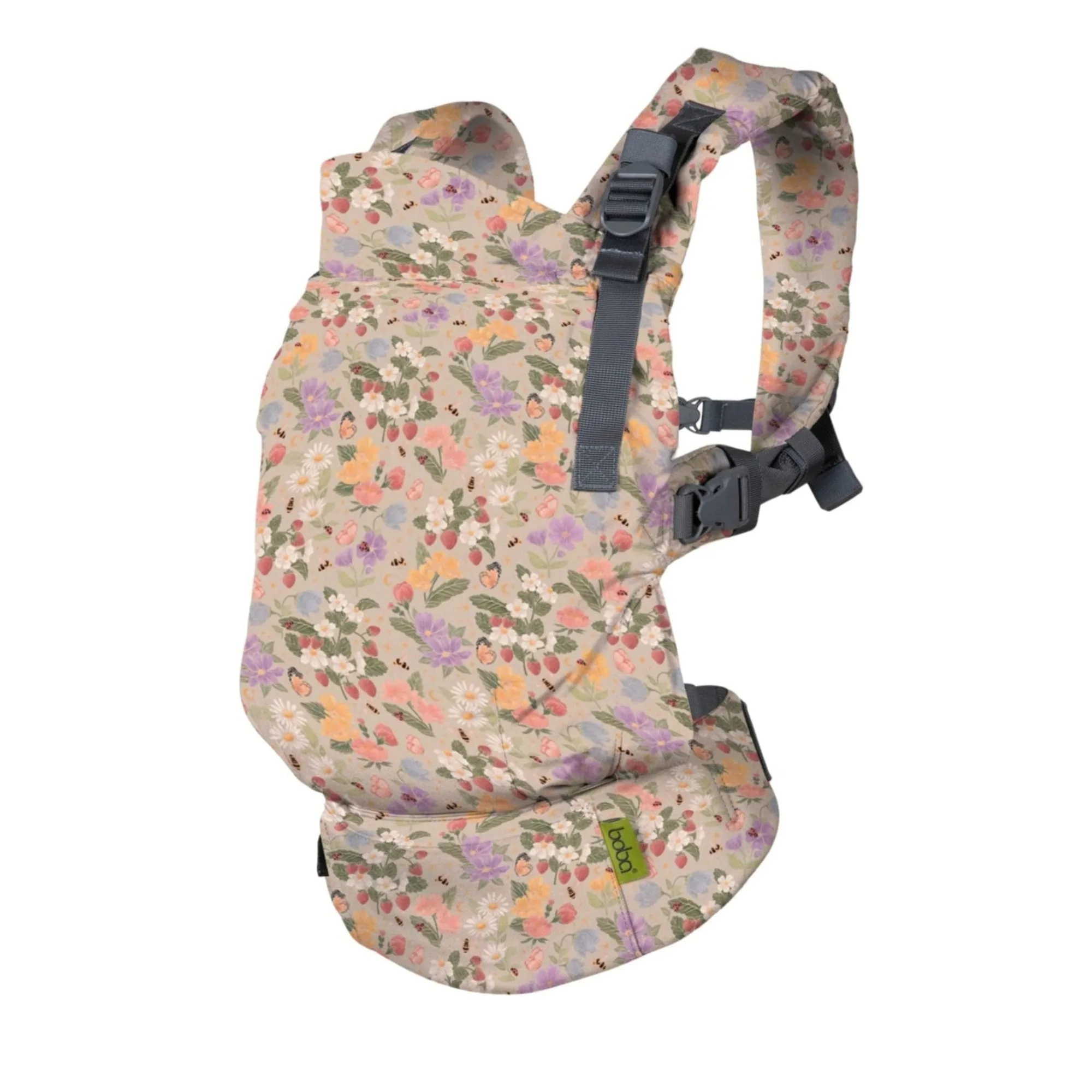
Piper Lark Baby Carrier: The Piper Lark Baby Carrier is a warm, clean tan chambray that coordinates with a wide range of baby and adult clothing. A neutral carrier you can leave by the door and grab without planning an outfit, which is what makes daily use realistic.

Piper Lark Baby Carrier
-
Piper Lark Baby Carrier: The Lark carries babies from 10 to 45 lbs, starting at size 3–6 months. Check your baby's weight and size before the first use, and plan to refit as they grow through that range.