Quick answer
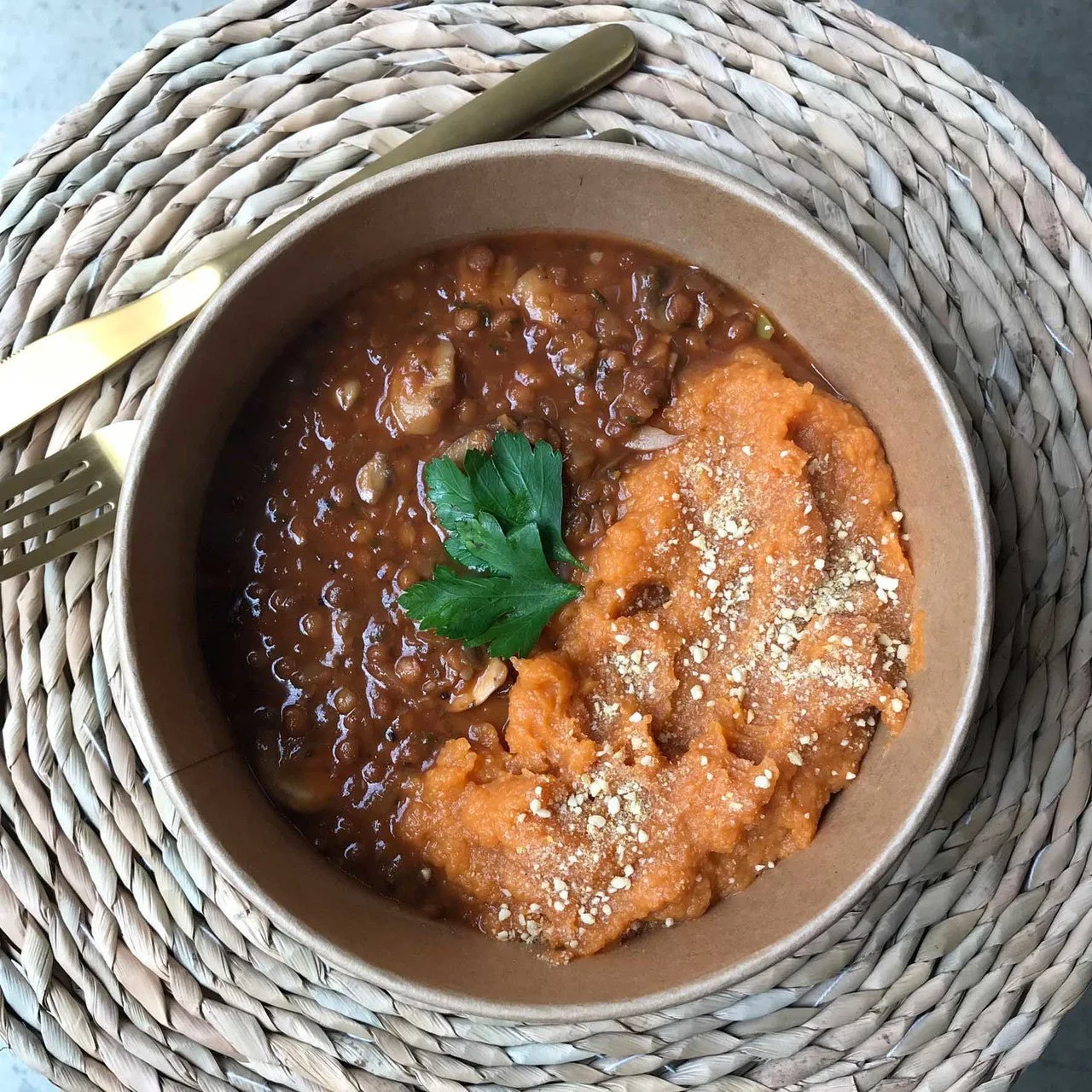
Cook one large pot of lentil stew on Sunday, cool it fast, and portion it into single-serve containers before freezing. For plant-based work lunches, reheat from frozen in a covered pan over medium-low heat with a splash of water, or microwave in a covered bowl, stirring halfway. If you would rather skip the pot, use a prepared meal such as Mushroom and Lentil Stew with Sweet Potato Mash as your base and build the week around it.
Why lentil stew works for batch lunches
Lentil stew holds up better than most batch-cooked meals because the lentils keep their shape when reheated gently and the flavour deepens overnight. Red lentils break down into a thick, spoonable texture, while brown or green lentils stay firmer and work better if you want distinct bites. Both freeze well, which is why a lentil stew is a practical base for plant-based work lunches rather than a one-night dinner.
The main limitation is that lentils continue to absorb liquid in the fridge and freezer. Plan for that by making the stew slightly looser than you want to eat it, then adjust after reheating. If you are short on time, a prepared Mushroom and Lentil Stew with Sweet Potato Mash is supplied frozen, so you can portion it straight from the freezer without cooking a pot first.
What to prep alongside the stew
A stew alone can leave you hungry by mid-afternoon if it is mostly liquid. Add one bulky carbohydrate and one protein-rich topping so each lunch holds its shape in the container. Cooked farro, barley, or brown rice sits well under a stew. A spoon of cashews, a scatter of feta, or a boiled egg on the side adds staying power without changing the stew itself.
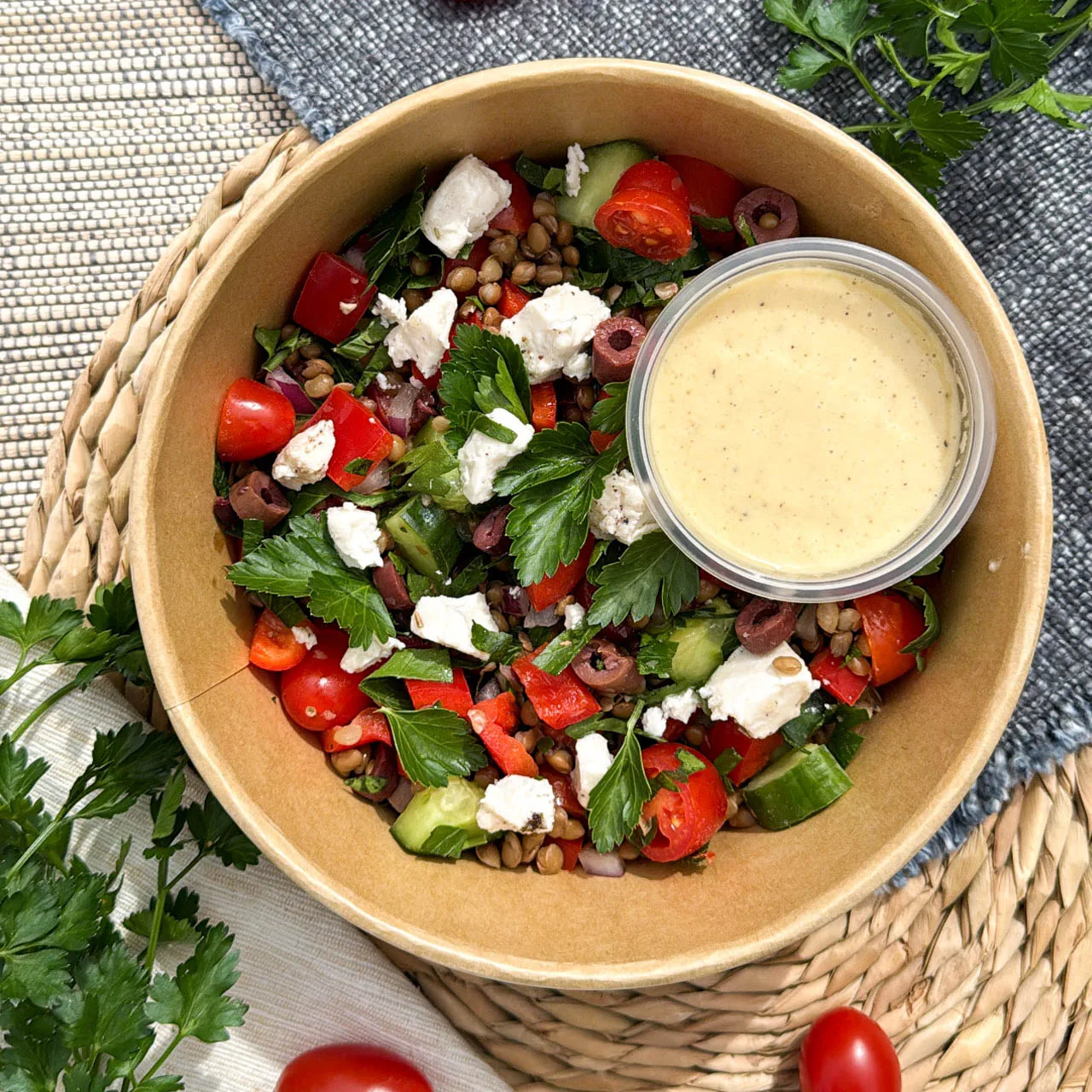
Keep watery extras separate. Cucumber, tomato, and dressed leaves should go in a small side container and be added after reheating, otherwise they turn the stew thin and dull. If you want a cold lunch instead, a Greek Lentil and Feta Salad is a useful contrast to a hot stew and can be packed on the days you do not want to reheat anything.
How to cool and store without spoiling texture
Do not put a full hot pot straight into the fridge. Divide the stew into shallow containers so it cools within about an hour, then lid and refrigerate. For freezer portions, leave a finger of headspace because the stew expands. Label with the date and the reheating method you prefer, since a stew that is perfect on the stove can turn mushy in a microwave if you blast it on high.
Frozen stew keeps its quality for about three months in a home freezer, though it stays safe longer. If you are using a supplied frozen meal, follow the pack guidance rather than guessing: consume within three weeks and do not refreeze once defrosted. That rule applies to any stew you have already thawed, so portion only what you will eat.
Step-by-step: batch lentil stew for the week
- 1. Cook a double batch and keep it loose: Simmer your lentil stew with about 20 percent more liquid than you would serve fresh. Lentils thicken as they sit, so a stew that looks perfect on the stove often turns pasty by Wednesday. Taste at the end and add salt, acid, or a pinch of spice before cooling. Checkpoint: the stew should spoon easily and still have visible liquid between the lentils.
- 2. Cool fast, then portion: Spread the stew into shallow containers and let it cool on the counter for no more than an hour before refrigerating. Portion into single-serve containers once cool, leaving headspace for freezing. If you are using a prepared Mushroom and Lentil Stew with Sweet Potato Mash, portion it while still frozen and move one portion to the fridge the night before you need it. Common mistake: sealing a hot pot and putting it straight in the fridge, which slows cooling and can affect texture.
- 3. Freeze flat and label: Freeze portions flat so they stack and thaw faster. Write the date and the reheating method on each lid. Keep no more than three or four portions in the fridge for the current week and freeze the rest. Checkpoint: frozen portions should be solid within a few hours; if not, they are packed too deep.
- 4. Reheat gently with a splash of water: From the fridge, warm the stew in a covered pan over medium-low heat, stirring now and then, and add a tablespoon of water if it looks thick. From frozen, either thaw overnight in the fridge or reheat covered on the stove with a little extra water. In the microwave, cover the bowl and heat in short bursts, stirring between them. Common mistake: boiling hard, which breaks the lentils down and makes the stew gluey.
- 5. Finish fresh, not cooked: Add fresh herbs, lemon, yoghurt, or a crunchy topping after reheating rather than before. These brighten a stew that has been stored and stop every lunch tasting the same. If you packed a side salad such as Greek Lentil and Feta Salad, keep it separate and add it cold. Next step: rotate two or three finishes across the week so batch cooking does not become boring.
Product facts for planning
- Mushroom and Lentil Stew with Sweet Potato Mash: Supplied frozen; defrost in the fridge overnight, or remove the lid and place the container in a hot oven to defrost and reheat, or microwave with the lid removed. Gives you a no-cook base for batch lunches and a clear reheating method when you have not planned ahead.
- Greek Lentil and Feta Salad: Heat gently, stove top preferred; contains cashews for plant-based protein and naturally occurring unsaturated fats. A cold-friendly option for days when you do not want to reheat a stew, and the cashews help make the lunch more filling.
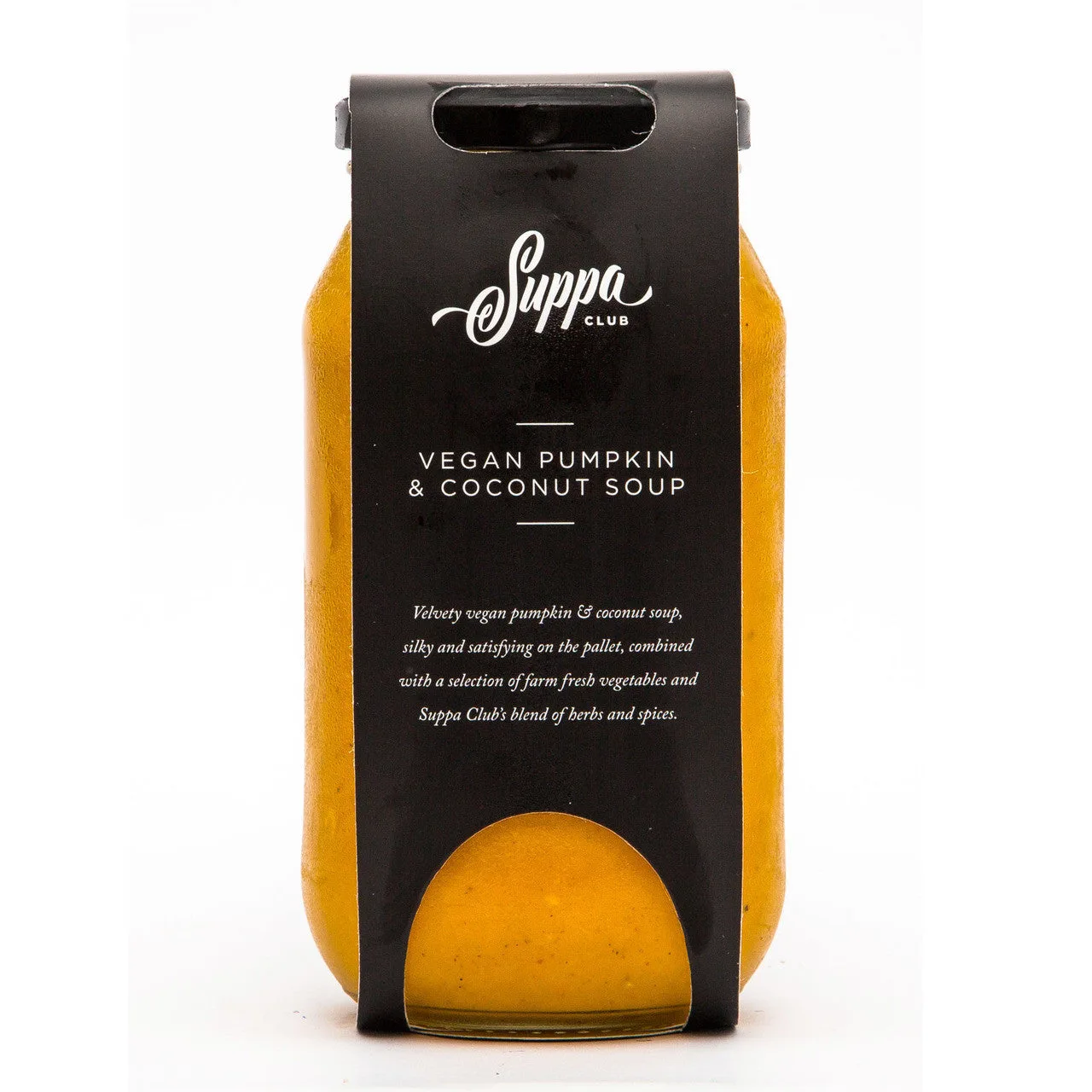
- Vegan Pumpkin and Coconut Soup: Heat gently, stove top preferred; pumpkin is high in betacarotene, a precursor to Vitamin A, and the soup is nutrient dense and low in calories. Useful as a lighter side or backup lunch on days when a dense lentil stew feels like too much.