Quick answer
A plant that droops within a day or two of repotting is almost always showing transplant shock, not dying. Leave it in bright, indirect light, keep the soil barely moist, and skip fertilizer for about two weeks. Most plants perk up in 3 to 14 days; if the stem turns mushy or the soil stays soggy, treat it as root rot instead.
You moved your plant into a bigger pot, watered it in, and by the next morning the leaves are hanging like wet laundry. It looks alarming, but drooping after repotting is one of the most predictable reactions in container gardening. Roots lose contact with the soil around them, fine root hairs tear, and the plant suddenly has more soil volume than it can drink from.
The good news is that transplant shock symptoms are usually temporary, and the fix is mostly about doing less, not more. The trick is telling normal droop apart from the problems that need action, which is what the diagnosis below walks through.
What transplant shock actually looks like
Transplant shock is a stress response, not a disease. Expect soft, drooping leaves, a slightly duller color, and maybe a few yellow lower leaves within 24 to 72 hours of repotting. New growth usually pauses for a week or two. The plant is still alive; it is redirecting energy into root repair instead of top growth.
A helpful test is the stem. In transplant shock, stems stay firm and flexible even when leaves droop. If stems or the crown feel mushy, brown, or collapse when you touch them, that is a different problem, usually rot or physical damage during the move. That distinction decides everything you do next.
- Firm stems plus drooping leaves: wait and water carefully.
- Mushy stems or a foul smell: unpot and inspect the roots today.
- Droop that appears 4 or more days later: check moisture before assuming shock.
Cause 1: root disturbance and lost root hairs
The fine root hairs that do most of the water uptake are the first thing damaged when you loosen a root ball. Even a careful repot shears some of them off. Until they regrow, the plant cannot pull enough water to keep leaves fully pressurized, so they droop. This is the single most common cause of a droopy plant after a new pot.
The fix is patience and humidity, not more water. Keep the plant out of direct sun for 5 to 7 days and mist the leaves or set the pot near a tray of water to raise local humidity. Roots typically re-establish within one to two weeks in warm weather.
- Do not fertilize during this window; salts stress damaged roots.
- Skip pruning healthy leaves even if they look sad; they are still photosynthesizing.
Cause 2: watering mistakes in both directions
Fresh potting mix holds water differently than the old root-bound soil, and that catches people out. Watering on your old schedule can leave the root zone saturated, which suffocates roots and causes droop that looks identical to underwatering. The reverse also happens: dry new mix can be hydrophobic and shed water down the sides of the pot without wetting the root ball at all.
Check with a finger or a moisture meter 2 inches down before watering. If it is wet, wait. If it is bone dry and water runs straight through, water slowly in two or three passes so the mix actually absorbs it. Aim for evenly moist, never soggy.
- Water the root ball zone, not just the outer ring of new soil.
- Empty any saucer or cachepot within 30 minutes so roots never sit in water.
Cause 3: pot size, drainage, and light change
A pot that is far too large holds a large volume of wet soil around a small root ball, which is a recipe for slow root rot and persistent drooping. As a rule, go up only 1 to 2 inches in diameter for houseplants. Drainage matters just as much: a decorative pot with no drainage hole needs a nursery pot inside it, or the water has nowhere to go.
Light is the other silent variable. A plant moved from a shaded spot to a bright one right after repotting has to repair roots and adjust to stronger light at the same time. Stage the move: indirect light for the first week, then gradually shift it to its long-term position.
- If the new pot is more than 3 inches wider than the old one, consider stepping down.
- Rotate the pot a quarter turn every few days so growth stays even.
When to stop waiting and intervene
Give a drooping plant 10 to 14 days of consistent, low-intervention care before you change course. If it is still declining after that, or if it gets worse rather than better, stop waiting. Unpot it, rinse the roots, cut away any brown or mushy sections with clean shears, and repot into fresh, well-draining mix in a properly sized container.
If you have already done that and the plant still collapses, the honest answer may be that the root loss was too severe, or that the plant was already struggling before the repot. In that case, take cuttings from any healthy stems so you keep the plant's genetics going rather than nursing a failing root system.
- Stop fertilizing entirely until you see new growth.
- If you must intervene, do it once, then leave the plant alone to recover.
Repotting droop diagnosis
- Symptom: leaves droop within 72 hours, stems firm: Classic transplant shock from root hair loss during the move. Do nothing drastic. Indirect light, even moisture, no fertilizer for two weeks.
- Symptom: droop plus yellowing lower leaves and wet soil: Likely overwatering in a pot that is too large or has no drainage. Stop watering, empty the saucer, and check the root ball within a few days.
- Symptom: droop plus mushy stem or foul smell: Root rot, not shock. Waiting will not fix it. Unpot now, trim damaged roots, repot in fresh mix with drainage.
- Symptom: no improvement after 14 days: The plant is not recovering on its own and needs intervention. Repot once into a correctly sized container, then leave it alone. If it still fails, propagate from healthy stems.
Planter choices that reduce repotting stress
- Low & Mid Rectangular Concrete Planter By Plantatorem: Rectangular concrete planter for indoor use, available in 12.0'' x 3.0'' x 5.0'' and 11.0'' x 3.5'' x 3.0'', as a single pot or a case of 6. The low, mid-profile shape gives shallow-rooted plants room to spread without burying them under a deep column of wet soil, which lowers the risk of the overwatering droop described above.
- Jewel Martini Planter By Plantatorem: A small, modern martini-shaped indoor planter suited to desks, side tables, windowsills, shelves, and fireplace tops. Small containers dry out faster, so if your plant drooped from soggy soil, a smaller pot with a modest soil volume is easier to manage while the roots recover.
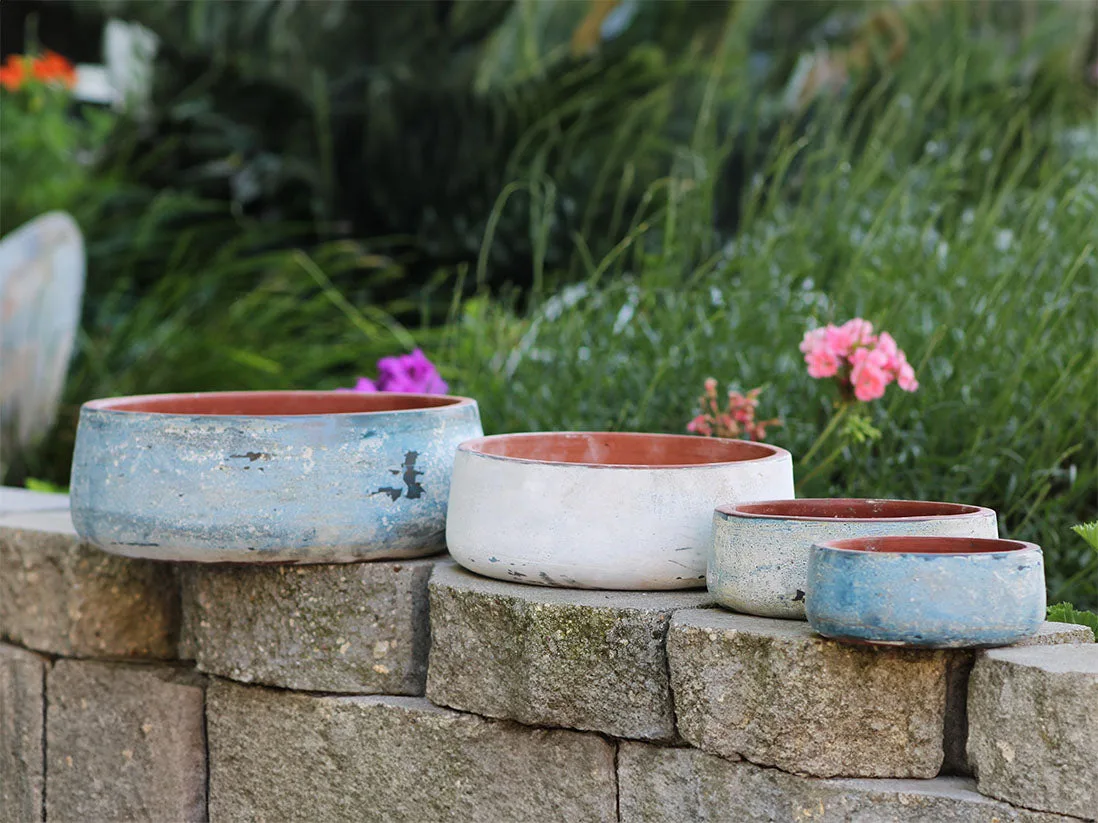
- Handthrown Smooth Bowls: Handthrown ceramic bowls from the Chelsea Gardener Collection, available in Aegean Green or Aegean Blue and sold as a set of four, suitable for indoor and outdoor planter use. Shallow bowls suit plants that resent being over-potted, and the set of four lets you separate recovering plants instead of crowding them into one container.
Drooping after repotting is usually a temporary stress response, and the most common mistake is reacting to it with more water and more fertilizer. Give the roots a quiet two weeks, keep the soil evenly moist, and let the plant tell you whether it is recovering. If stems stay firm and new growth appears, you are on track. If the plant keeps sliding backward, act once, decisively, and then let it rest.