Quick answer
For a first planter purchase, match the pot's width to the plant's mature root spread, choose a material based on where it will live (glazed ceramic outdoors, lighter decorative pots indoors), and make sure water can escape through a drainage hole or a riser system. If you get only one thing right, get drainage right; size and material are easier to adjust later.
Buying your first planter is less about picking a pretty pot and more about matching three variables: how big the roots will get, what the pot is made of, and where the water goes after you water. Get those three aligned and the plant does most of the work for you.
This beginner planter guide walks through concrete decision rules and trade-offs so you can make a first planter purchase without guessing. It also explains when a simple riser or pot feet solve a drainage problem that a new pot would not.
Start with size: match the pot to the root spread, not the plant's height
The most common first-planter mistake is buying a pot that looks proportional above the soil but is too small below it. As a rule, choose a container whose interior width is roughly two-thirds of the plant's expected mature spread. A plant that will spread 24 inches wants an interior width near 16 inches, not a 10-inch pot that fits the shelf today.
Height matters less than width for most shrubs and perennials, but it matters a lot for taprooted plants and for tall, top-heavy specimens. If a plant is taller than about twice the pot's height, it will tip in wind unless the pot is heavy or you add ballast. When you are unsure between two sizes, size up; a slightly oversized pot is easier to manage than a root-bound plant.
- Measure the nursery pot's top interior diameter, then add 2 to 4 inches for the next size up.
- For a first planter purchase, avoid novelty shapes with narrow openings that make repotting difficult.
- If the plant will stay in the pot for years, plan for the mature size, not the current size.
Choose material by location and weight tolerance
Material decides how the pot ages, how heavy it is, and how it handles freeze-thaw. Glazed ceramic holds up outdoors and resists fading, but it is heavy and can crack if water freezes inside a saturated pot. Unglazed or textured ceramic breathes slightly and looks weathered over time, which suits rustic settings but stains more easily. Resin and composite pots are lighter and easier to move, but they can fade or become brittle in strong sun over several seasons.
Indoors, weight matters less, so decorative ceramic and stone-look pots are practical. Outdoors on a balcony or rooftop, weight becomes a structural question: a large ceramic planter filled with wet soil can weigh more than a person, and many balconies have load limits. If you cannot move the pot once planted, decide that before you buy, not after.
- Glazed ceramic: best for outdoor patios where color retention matters.
- Textured or unglazed ceramic: best for rustic, natural-looking gardens.
- Resin or composite: best when you need to move the pot seasonally.
- Stone-look finishes: best for a natural, earthy look without the weight of real stone.
Drainage: the one feature you should not compromise on
A planter without a drainage hole is a container that will eventually drown its plant unless you treat it as a cachepot and keep the plant in a nested inner pot. For beginners, the simplest rule is: buy pots with drainage holes, then manage the runoff. That means a saucer indoors, or pot feet and a slight slope outdoors so water does not pool under the base.
If a pot has no hole and you cannot drill one, use a riser system to lift the inner nursery pot above any standing water. Pot feet are small accent pieces designed to lift planters off the surface, and they pair with both outdoor and indoor planters. They are also the cheapest fix for a pot that drains too slowly because the base sits flat on a patio.
- Check for a drainage hole before buying; if the listing does not mention it, assume it may not have one.
- Indoors, always pair a draining pot with a saucer to protect floors.
- Outdoors, lift pots slightly off the surface so water and air can move under the base.
Match the pot to the setting before you match it to the plant
A pot that looks right in a sunroom can look out of place on a gravel patio. Before you shop, note the setting: indoor, covered patio, open garden, or urban balcony. Indoor planters tend to be lighter and more decorative, while outdoor planters need to handle sun, rain, and temperature swings. Urban planters often need to be narrower and lighter because space and load capacity are limited.
This is also where shape matters. Round pots suit informal plantings and are easier to rotate for even light. Square and rectangular pots use space more efficiently against walls and in corners. Tall, narrow pots fit tight corners but dry out faster and tip more easily, so they suit compact, upright plants rather than wide, bushy ones.
- Indoor: prioritize weight, finish, and a saucer.
- Covered patio: glazed ceramic or resin both work; watch for wind.
- Open garden: prioritize freeze-thaw tolerance and weight for stability.
- Urban balcony: prioritize narrow footprints and lighter materials.
Decision rules for your first planter purchase
- If the plant will stay in the pot for more than one season: Size up by 2 to 4 inches over the current nursery pot width and choose a material rated for your climate, such as glazed ceramic outdoors or a decorative ceramic indoors. Checkpoint: can you move the planted pot if you need to? If not, confirm the surface can hold the wet weight.
- If the pot has no drainage hole: Treat it as a cachepot: keep the plant in a nested inner pot with holes, empty standing water after watering, or add pot feet to lift the base. Checkpoint: no hole plus no riser plus regular watering equals root rot risk.
- If you are buying for a balcony or rooftop: Choose a narrower footprint and a lighter material, and avoid very tall, top-heavy pots unless the plant is compact and the pot is stable. Checkpoint: measure the usable floor area and the path to get the pot there before ordering.
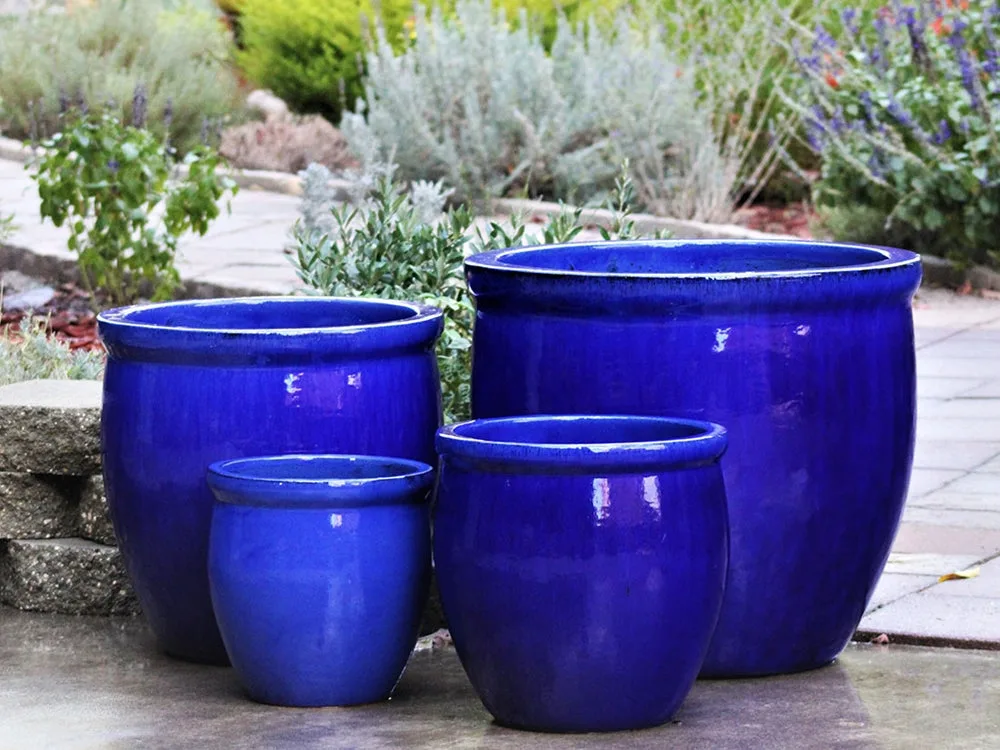
- If you are buying a set versus a single pot: Sets with graduating sizes, like the Manarola Planter Set, let you plant a large specimen and two smaller companions; a set of four, like the Large No Decor Planter Set of 4, suits filling a long patio edge consistently. Checkpoint: count how many planting spots you actually have before buying a set.
Product facts worth knowing
- Large No https://plantatoremez.com/products/decor-planter-758e522240cedd1ee976507e-2580653Decor Planter By Plantatorem: Large No Decor Planter – Set of 4 is a set of large outdoor ceramic planters with a simple, clean design and a glazed finish that catches the light; the catalog notes they are built to last outdoors without fading or cracking. Available options include Size and Color. A four-piece set in graduated or matching sizes lets a beginner fill a patio or garden bed consistently without hunting for matching pots, and the glazed ceramic finish is a reasonable choice for sun-exposed outdoor use.
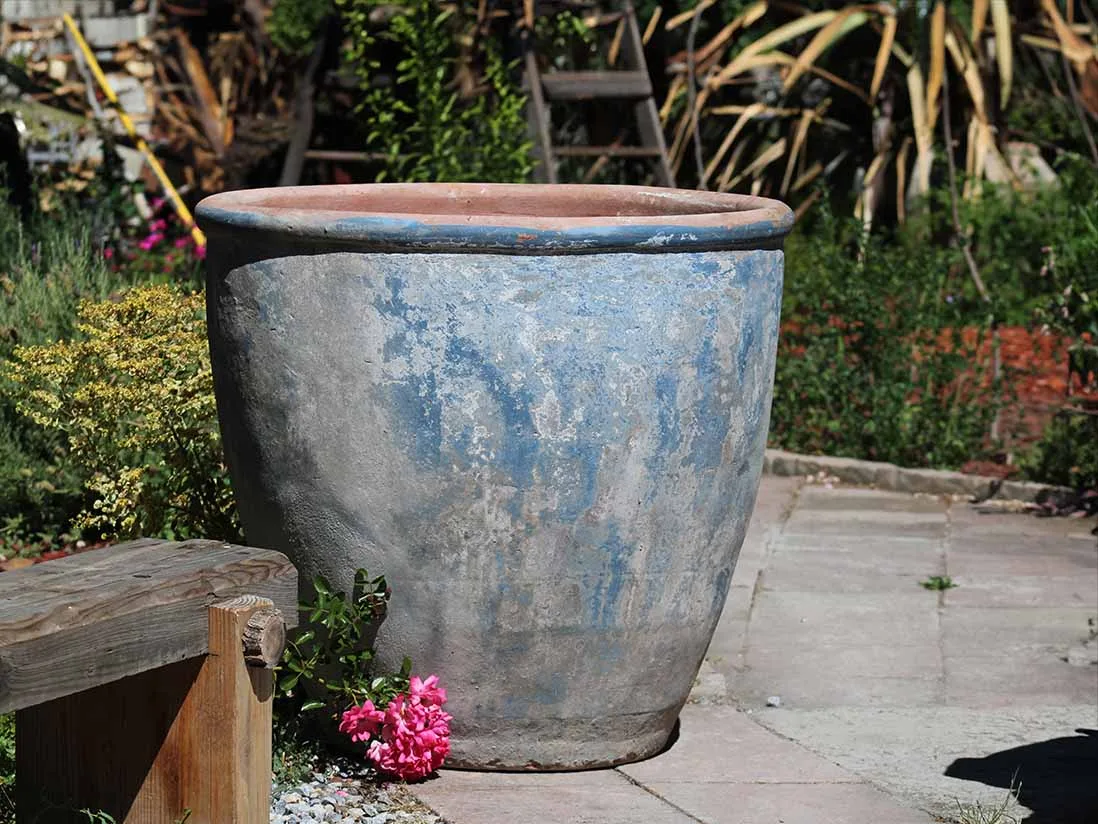
- Manarola Planter By Plantatorem: Manarola Planter Set is a decorative set of three with a distressed, textured body and a smooth, natural-looking lip; the raw top edge gives a rustic look, and the set comes in three graduating sizes. Available options include Color and Size. Graduating sizes are useful for beginners because you can put a larger plant in the biggest pot and use the smaller two for companion plantings, keeping a patio visually coordinated without buying three unrelated pots.
- POT FEET- Verandah: POT FEET - Verandah from PLANTATOREM are small accent pieces designed to lift planters off the surface; they pair with both outdoor and indoor planters and come in Black, Falling Blue, Jade, Oxide, Silver, Turquoise Blue, Tropical Red, and White Speckle. If your first pot drains slowly or sits flat on a patio or floor, pot feet are a low-cost fix that improves airflow and reduces standing water without replacing the planter.
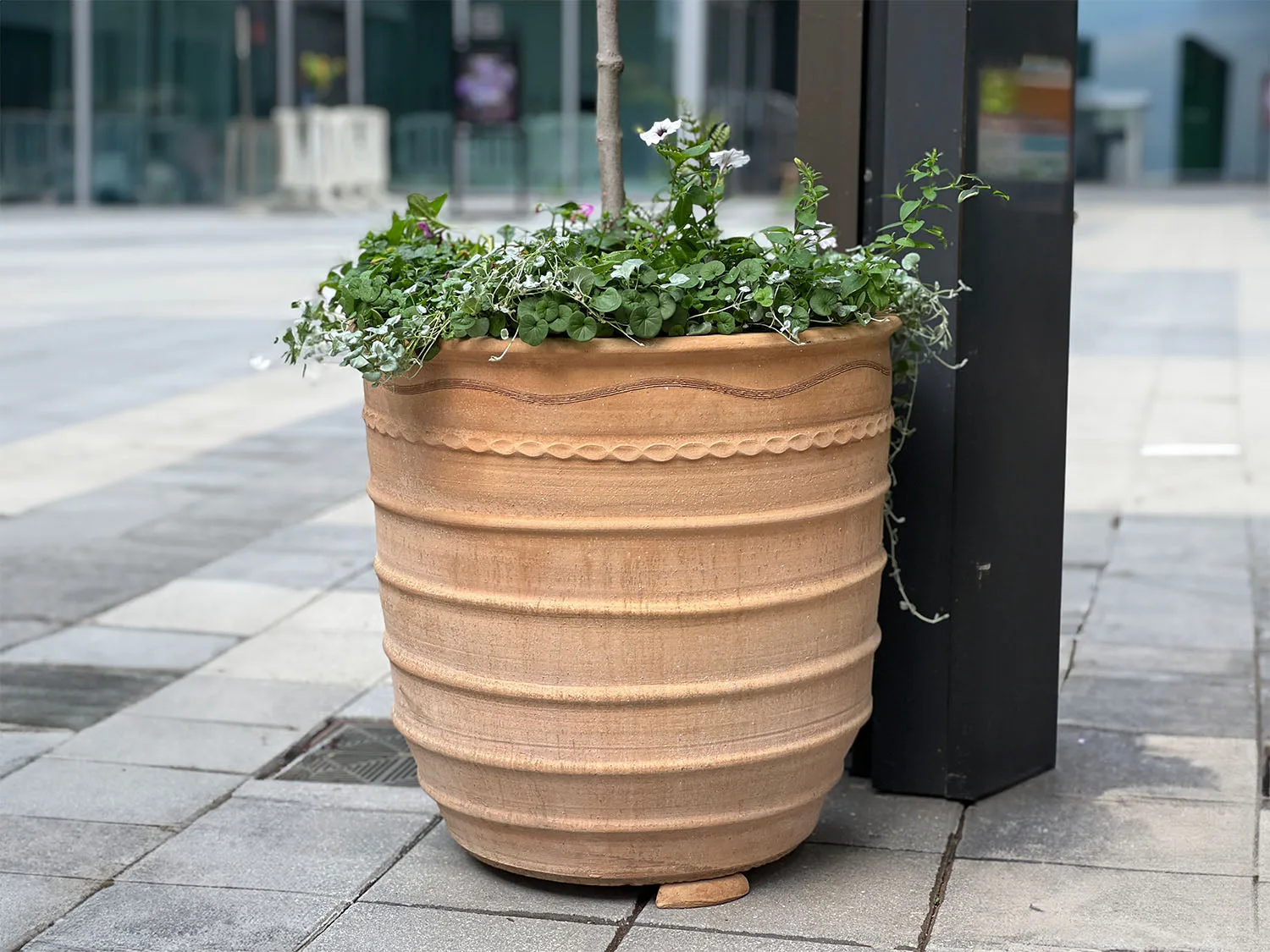
- BASIN PLANTER: BASIN PLANTER is an Urban Planter with a rough, textured finish that looks like old stone, a sturdy round shape, and horizontal lines around the middle; it comes in three natural colors, including Green Lime Stone. Available options include Size and Color. A stone-look urban planter gives beginners a natural, earthy look without real stone weight, which matters on balconies and rooftops where load capacity is limited.
Who this beginner approach fits
Best for
- First-time planter buyers who want a simple size, material, and drainage checklist
- Balcony, patio, and indoor growers who need to balance weight, space, and watering
- Shoppers comparing sets versus single pots for a coordinated look
Not for
- Experienced growers looking for advanced soil mixes, irrigation, or repotting schedules
- Buyers who need a specific plant-care diagnosis rather than a purchasing framework
- Anyone shopping for fountains or garden accents rather than planters
Buy the pot that fits the plant's mature roots, matches the setting it will live in, and lets water escape. If you start with drainage and size, material becomes a style choice rather than a risk, and your first planter purchase is far more likely to last.