Quick answer
For most potted plants, use a saucer indoors to protect surfaces and pot feet outdoors to lift the pot above wet ground. Risers work best for heavy planters that need airflow underneath or for leveling on uneven patios. The right choice depends on where the planter sits and how much water it receives.
Water that cannot escape a planter will eventually suffocate roots and rot them. Saucers, pot feet, and risers are the three common ways to manage that water, but they do different jobs. A saucer catches runoff; pot feet lift the pot; risers raise and stabilize it. Choosing the wrong one can leave your plant sitting in a puddle or your floor stained.
This guide walks through a practical process for improving drainage for potted plants, from checking the pot's drainage holes to picking the right accessory for your space. You will also see how specific planters in our catalog handle drainage so you can match the solution to the pot you already own.
Start by checking the drainage holes
Before buying anything, turn the pot over and confirm it has at least one drainage hole. A planter without holes traps water no matter what you put under it. If the pot is a cache pot or decorative cover, it likely has no holes and should be used as a sleeve around a smaller potted plant that does drain.
Check that the holes are not blocked by a saucer pressed tight against the bottom or by a layer of pebbles. Pebbles in the bottom of a pot do not improve drainage; they raise the saturated zone closer to the roots. Remove them and let water flow freely out of the holes.
- If the pot has no holes, treat it as a cache pot and never plant directly into it.
- If holes are small, clear them with a skewer before each watering season.
Match the accessory to the location
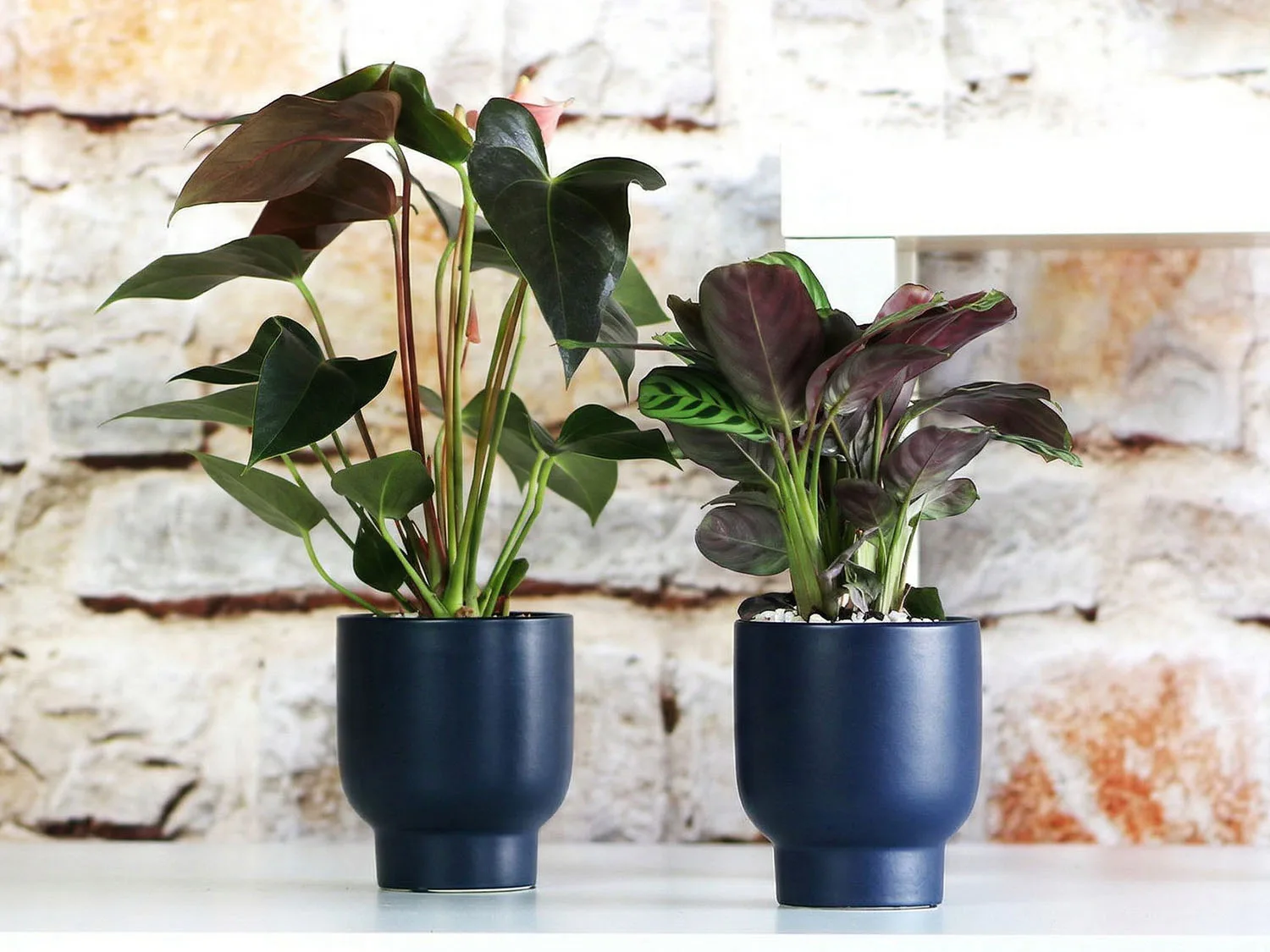
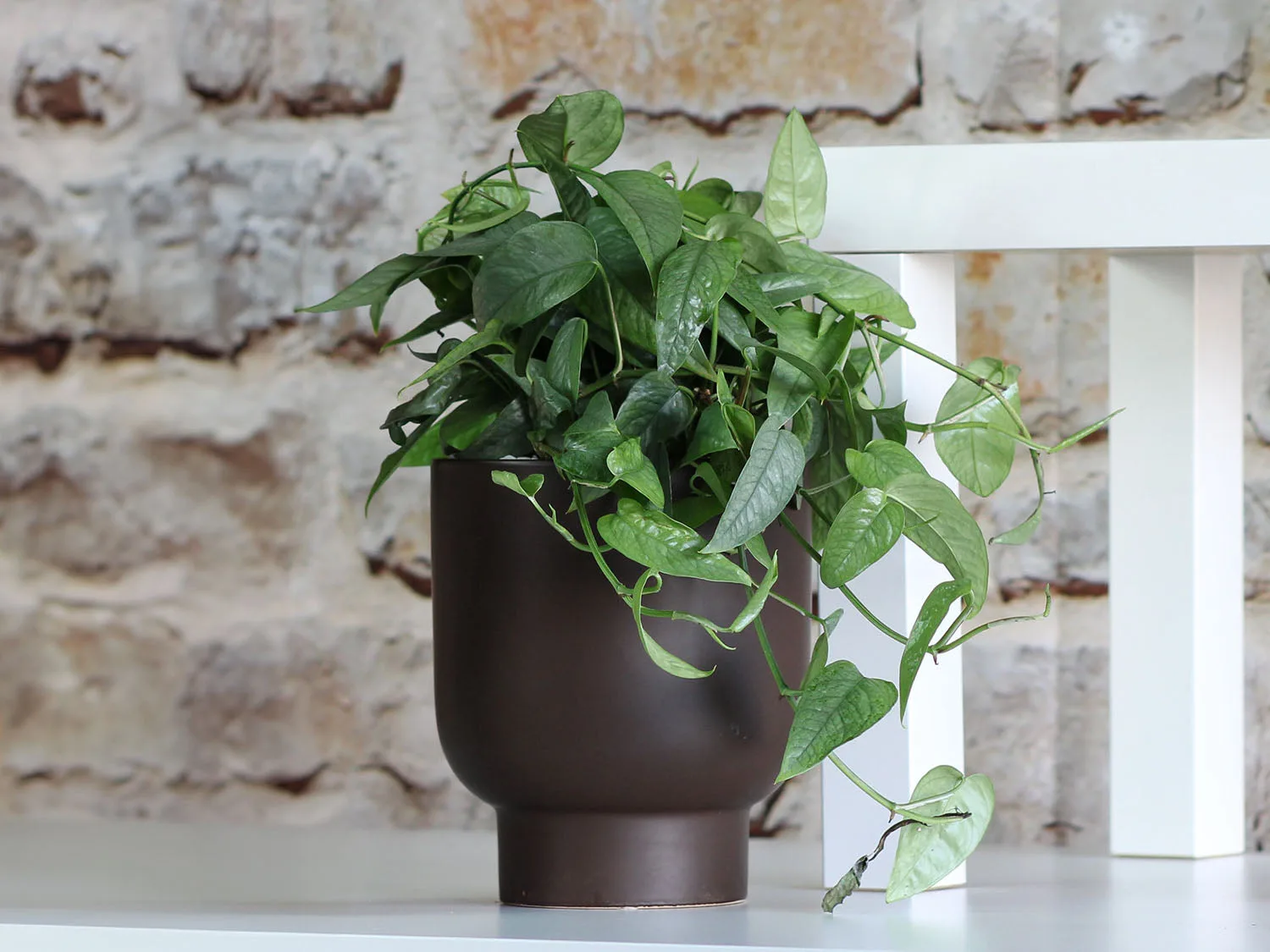
Indoors, a saucer is usually the right call. It catches overflow so water does not ruin wood floors or carpets. The tradeoff is that the pot sits in the captured water until you empty it. Check saucers after watering and pour out any standing water within an hour. The https://plantatoremez.com/products/monstera-cache-pot-case-of-6-2e5d484cc25555b41272608f-2580442https://plantatoremez.com/products/monstera-cache-pot-9862e07cc4cd358b388478e5-2580456https://plantatoremez.com/products/monstera-cache-pot-case-of-8-4dd021cc8706cec1158a42c7-2580460Monstera Cache Pot By Plantatorem is a decorative indoor ceramic planter, but it is still a cache pot, so use it with a drop-in nursery pot that drains and empty the cache pot after watering.
Outdoors, pot feet are often better because they lift the pot off the ground, allowing air to move under it and preventing the bottom from staying wet. On a patio, pot feet also reduce staining from tannins and minerals. Risers are the third option and are useful for very large planters that need to be leveled or kept off a hot deck.
- Use a saucer indoors where water damage is the main risk.
- Use pot feet outdoors where airflow and ground contact are the main concerns.
- Use risers for heavy pots that need stability or height.
Choose the right size and material
A saucer should be wider than the pot's base but not so wide that it becomes a trip hazard. For a 10-inch pot, a 12-inch saucer is usually about right. Pot feet come in different heights; one inch of lift is enough for most outdoor pots, while taller feet help on uneven surfaces. Risers should be rated for the weight of the pot plus wet soil, which can be surprisingly heavy.
Material matters too. Ceramic saucers look good indoors but can crack outdoors in freezing weather. Plastic saucers are cheap and light but can become brittle. Pot feet in stone or metal hold up well outside. If you are unsure about a material's frost resistance, check the product details rather than guessing.
- Measure the pot's base diameter before ordering a saucer.
- For heavy planters, choose risers with a wide base to spread the load.
Set up the pot so water actually leaves
Place the pot on its feet or riser first, then water slowly until water runs out the bottom. If you use a saucer, tilt the pot slightly after watering to drain excess into the saucer, then empty the saucer. Outdoors, aim the drainage away from the pot's base so the root zone does not stay soggy.
For large outdoor planters, a slight slope helps. If the pot sits on a solid surface, water can pool around the base even with feet. A riser that lifts the pot an inch or two allows air to dry the bottom and reduces the chance of rot. The Solina Planter With Handles By Plantatorem is a large clay planter with two handles for moving; because it is clay and likely porous, pair it with pot feet so the base is not sitting in a puddle after rain.
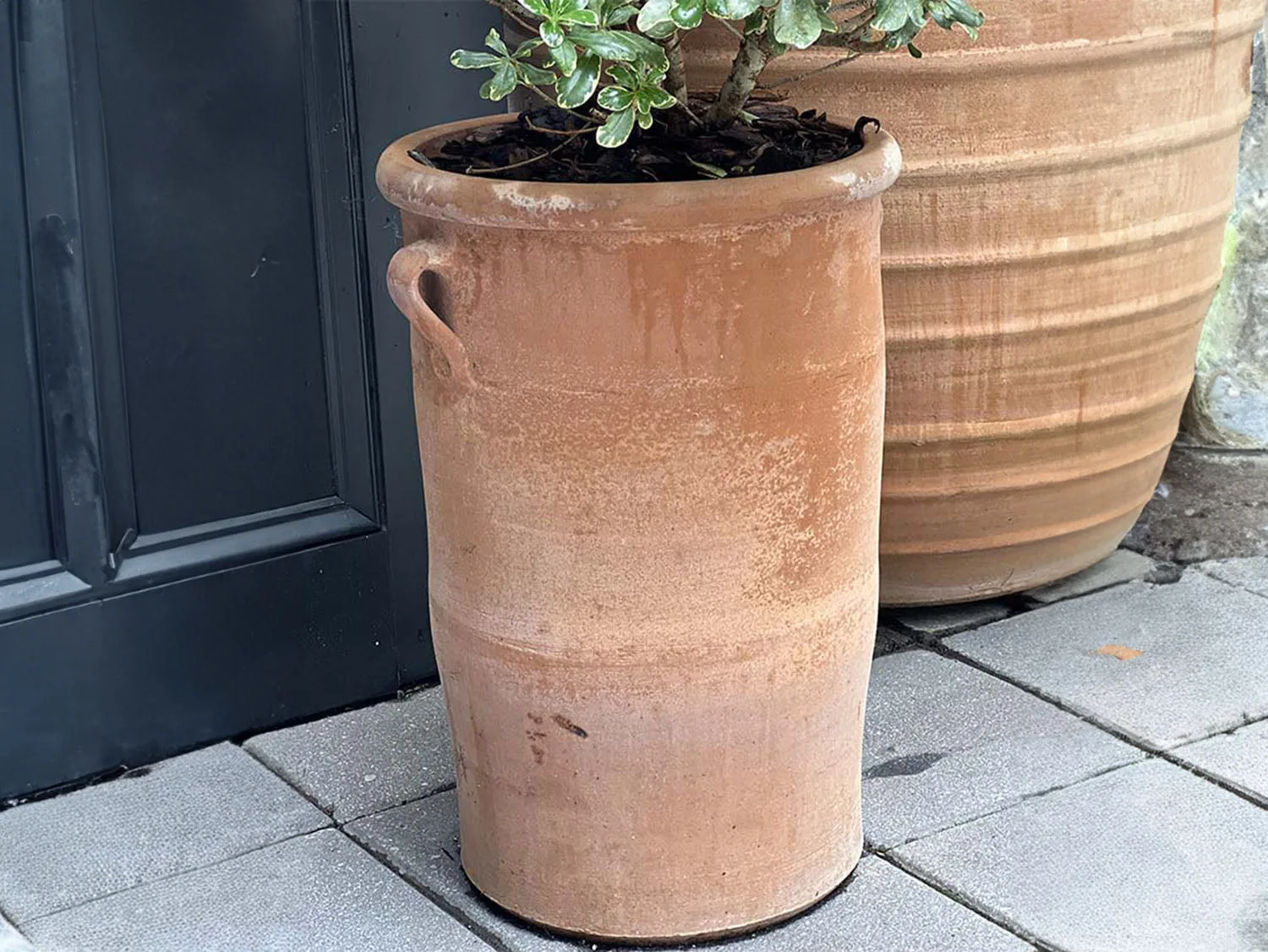
Solina Planter With Handles By Plantatorem
- Water until you see flow from the drainage holes, not on a schedule.
- Empty saucers within an hour of watering to prevent root rot.
Adjust for seasonal changes and heavy rain
In rainy seasons, outdoor saucers can fill and keep the pot waterlogged. Many gardeners remove saucers entirely during wet months and rely on pot feet. If you cannot remove the saucer, tip it out after each storm. Indoors, humidity and slower evaporation mean you should check saucers more often, especially in winter when plants use less water.
For very large planters that cannot be moved, a riser plus a clear drainage path is the best defense. If the pot sits on a deck, make sure water can flow away from the house. A simple check after a heavy rain will tell you whether your current setup is working or needs a change.
- Remove saucers outdoors during prolonged rain.
- After a storm, empty any saucer that holds standing water.
Step-by-step plan for better planter drainage
- Check the pot: Turn the pot over and confirm it has open drainage holes. If it does not, treat it as a cache pot and use a drop-in pot with holes. Common mistake: assuming a decorative pot drains just because it looks like a planter.
- Pick the accessory: Choose a saucer for indoors, pot feet for outdoors, or a riser for heavy pots that need lift and stability. Checkpoint: the accessory should match the main risk, water damage inside or soggy ground outside.
- Size it correctly: Measure the pot's base and choose a saucer slightly wider, or pot feet rated for the pot's weight. For risers, check the weight limit. Common mistake: buying a saucer that is too small, so water misses it and stains the floor.
- Set up and water: Place the pot on its feet or riser, then water slowly until water exits the drainage holes. Empty any saucer within an hour. Checkpoint: if water does not run out, the holes are blocked or the pot is too full of soil.
- Adjust for weather: During rainy periods, remove outdoor saucers or tip them out after storms. Indoors, check saucers more often in winter. Next step: after a heavy rain, verify the pot is not sitting in water and adjust as needed.
Drainage details from our catalog
- Monstera Cache Pot By Plantatorem: The Plantatorem monstera cache pot is a decorative indoor ceramic planter, hand-casted and high-fired, and it is frost-resistant. Because it is a cache pot, it is designed to hold a drop-in pot rather than be planted directly. Use an inner pot with drainage holes and empty the cache pot after watering to protect roots and indoor surfaces.
- Solina Planter With Handles By Plantatorem: The Solina clay planter has a simple, elegant design and two durable handles for transporting these large garden vessels. The handles make it easier to tip and move the planter when you need to clear a blocked drainage hole or empty a saucer. For a large clay pot, pot feet are a practical addition to keep the base out of standing water.
- GEO PLANTER: The Geo Planter is available in two finishes, Grey Stone and White Sand, and is designed as a geometric outdoor planter with clean lines. Its architectural shape and outdoor intent mean it will likely sit on a patio or deck. Pair it with pot feet or a riser to improve airflow underneath and reduce staining on hard surfaces.
Good drainage is less about a single product and more about matching the accessory to the pot and the place. Start by checking the holes, then choose a saucer, pot feet, or riser based on where the planter lives. A few minutes of setup now prevents root rot and stained floors later.