Why the Kitchen Puts Rugs to the Test
The kitchen is one of the hardest rooms for any rug. Spills, foot traffic, and daily cleaning mean you need a material that can handle real life. Two common choices are plastic rugs and wool rugs. Each has strengths and trade-offs. This comparison looks at how they perform in a kitchen setting, using the Pappelina ADA Dark Olive Runner Rug as an example of a modern plastic option.
Plastic Rug vs Wool Rug: Key Differences for Kitchens
Here is how plastic and wool rugs compare on the factors that matter most in a kitchen.
- Water and stain resistance: Plastic rugs are naturally waterproof and resist stains from spills. Wool rugs absorb moisture and require prompt blotting to avoid stains. For a kitchen where spills happen daily, plastic has a clear advantage.
- Cleaning and maintenance: A plastic rug like the Pappelina ADA can be wiped down or hosed off. Wool rugs need vacuuming, spot cleaning, and professional cleaning for deep stains. Plastic is far easier to keep clean in a high-spill zone.
- Durability and wear: Wool is durable but can wear in high-traffic areas, especially if not rotated. Plastic rugs are tightly woven for durability and resist crushing. The ADA rug, for example, is described as tightly woven for durability and has welded edges for a strong finish.
- Comfort underfoot: Wool is soft and warm, making it more comfortable to stand on for long periods. Plastic rugs are firmer and less cushioned. If you stand at the counter for extended time, wool may be more comfortable.
- Cost: Wool rugs range widely in price, but quality wool is generally expensive. Plastic rugs from brands like Pappelina are also an investment, but often lower than high-end wool. The ADA Dark Olive Runner Rug (70 x 150 cm) has a catalog price of $1491, with a comparison price of $2100.
- Style and design options: Wool offers a vast range of colors and patterns, including traditional and hand-knotted designs. Plastic rugs are limited to woven or printed patterns. The ADA rug features a clean grid pattern with evenly spaced lines, creating a composed and structured surface that suits modern and Scandinavian interiors.
What the Pappelina ADA Dark Olive Runner Rug Offers
-
ADA Dark Olive - Runner Rug: ADA is defined by a clean grid pattern where evenly spaced lines intersect to create a composed and structured surface. The repeating squares build a clear rhythm across the design, giving it a strong yet balanced graphic expression. This structured pattern works well in a kitchen where you want a rug that adds order without competing with other elements. The geometric design is timeless and easy to coordinate.
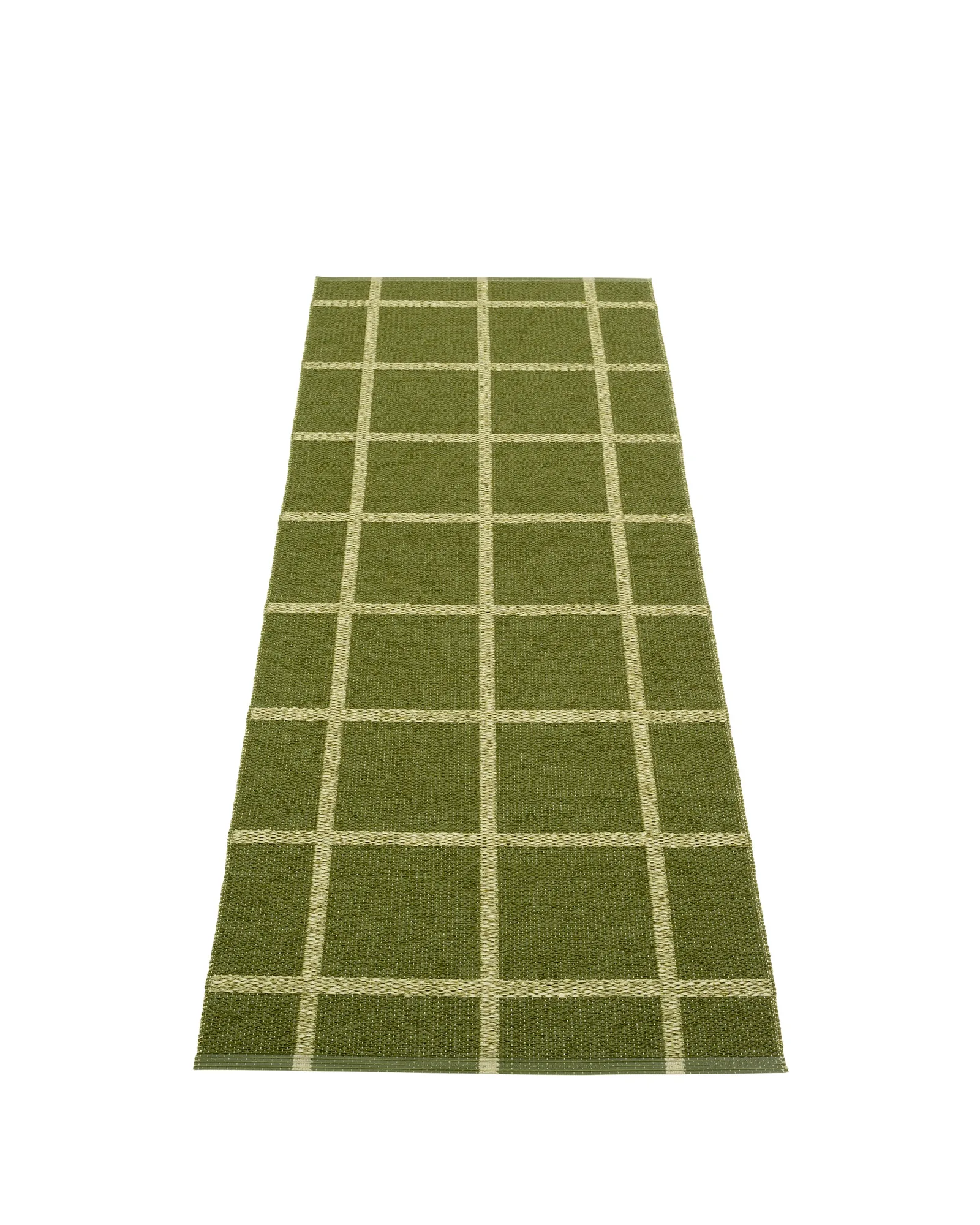
ADA Dark Olive - Runner Rug
-
ADA Dark Olive - Runner Rug: The reversible construction offers two harmonious expressions in one rug, while the welded edges ensure a strong, defined finish that supports the geometry of the design. Reversibility doubles the rug's life and lets you change the look without buying a new rug. Welded edges prevent fraying, a common issue with wool rugs in high-traffic areas.
-
ADA Dark Olive - Runner Rug: Tightly woven for durability, ADA brings quiet order and timeless Scandinavian simplicity to any space. Tight weave means the rug can handle foot traffic and cleaning without losing its shape or pattern. This is especially important in a kitchen where rugs are cleaned often.
When Wool Makes Sense in a Kitchen
Wool rugs are a good choice if your kitchen sees minimal spills and you prioritize softness and warmth. They also offer more traditional or ornate designs. However, you will need to be diligent about cleaning and accept that stains may set in. Wool is also more likely to shed and can be damaged by moisture from spills or high humidity.
When a Plastic Rug Is the Better Kitchen Choice
If your kitchen is a high-activity zone with kids, pets, or frequent cooking, a plastic rug like the Pappelina ADA is the more practical option. It resists water, stains, and odors. It is easy to clean with a damp cloth or by hosing it off outdoors. The reversible design adds longevity. The trade-off is a firmer feel underfoot and a more limited design palette, but the clean Scandinavian look fits many modern kitchens.