What the Play Guide for Months 43, 44, and 45 is
-
Play Guide for Months 43, 44, 45: The Play Guide for Months 43, 44, and 45 from Lovevery offers a curated resource of ways to play, expert tips, development information, and at-home activity ideas tailored to this specific age range. This is the core of what you are buying: a printed resource rather than a toy or a kit component with moving parts.
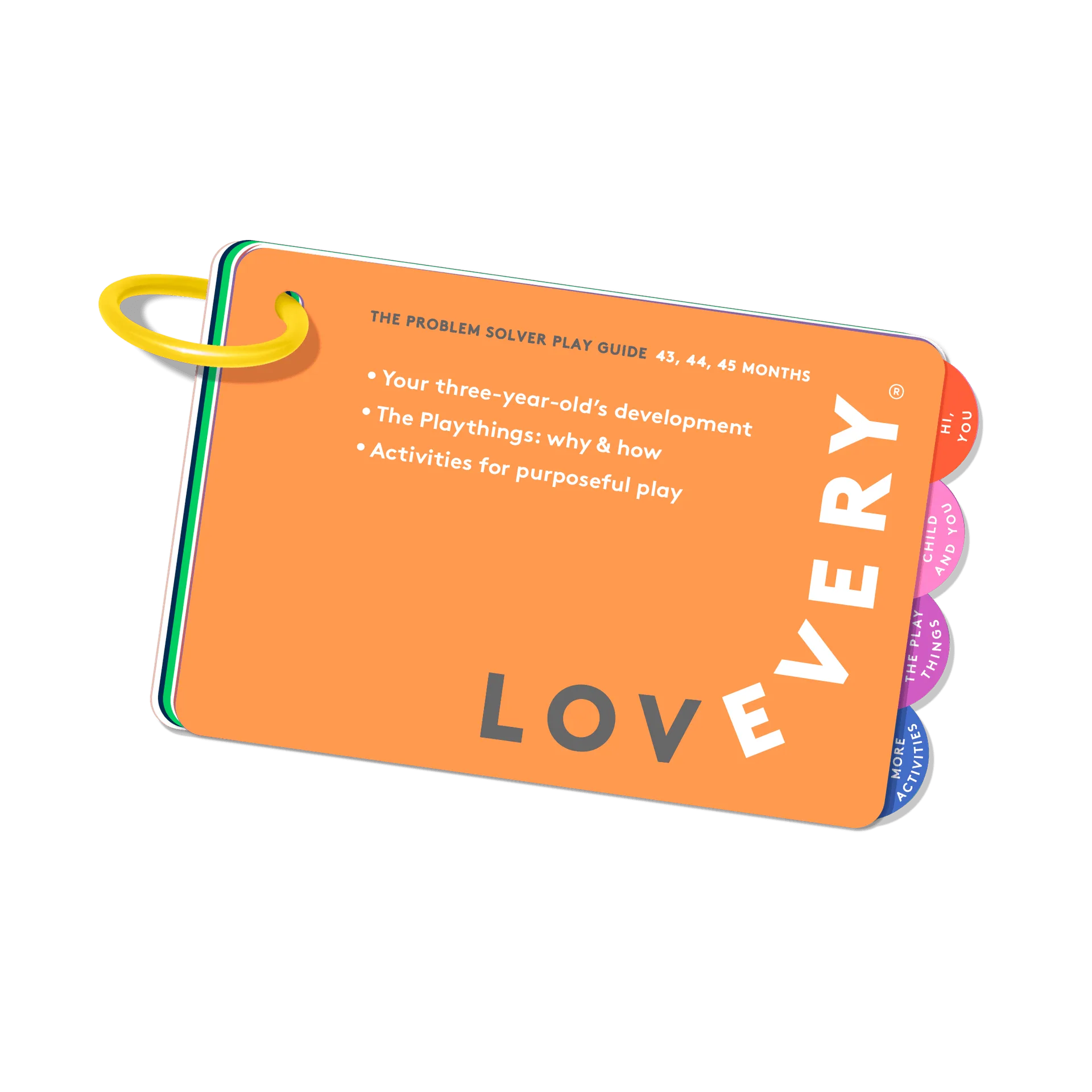
Play Guide for Months 43, 44, 45
-
Play Guide for Months 43, 44, 45: Includes expert tips and development information for months 43, 44, and 45. The guide is organized around those three months, so you can match ideas to the stage your child is in right now.
-
Play Guide for Months 43, 44, 45: Offers at-home activity ideas to encourage learning through play. It is designed for use at home with materials and routines you already have, not for a classroom or therapy setting.
Questions parents ask before buying
Is this a toy or a book of activities?
It is a play guide, not a toy. The supplied record describes it as a curated resource of ways to play, expert tips, development information, and at-home activity ideas. The activities themselves are suggestions for you and your child to do together, not a physical plaything included in the guide.
Which months does it cover?
The guide covers months 43, 44, and 45. That is the full scope described in the supplied information, so it is not a general guide for the whole third year or for older children.
Does it tell me exactly what my child should be doing each month?
The supplied record says the guide includes development information for those months, but it does not list specific milestones or a month-by-month checklist. Treat it as a source of ideas and context rather than a screening tool or a milestone tracker.
Do I need special materials to use it?
The supplied information describes at-home activity ideas, which suggests ordinary household play, but it does not list required materials. Check the guide itself before planning an activity so you know what to gather.
Is it a replacement for a pediatrician's advice?
No. The guide offers play ideas and general development information. It is not a medical resource, and the supplied information contains no screening, diagnostic, or therapeutic claims. If you have concerns about your child's development, raise them with your pediatrician.
How to use the guide without turning it into a checklist
The guide is designed to be dipped into, not worked through in order. A simple routine keeps it useful without adding pressure.
- Pick the month you are in: Start with the section for your child's current month so the ideas line up with where they are now, rather than reading ahead.
- Choose one activity idea: The guide offers at-home activity ideas; pick a single one that fits the time and materials you have today.
- Read the expert tip alongside it: The supplied record lists expert tips and development information as part of the guide. Reading the tip with the activity helps you understand what the play is supporting, not just what to do.
- Repeat what works before moving on: There is no supplied instruction to complete every idea. Repeating a favorite activity is a legitimate way to use the guide.
What the supplied information does not cover
The supplied record does not include a page count, a list of specific activities, required materials, safety warnings, or a stated reading level. It also does not confirm any certification or developmental outcome. If you need those details before buying, they are worth checking on the product page or with the seller rather than assuming them.
The guide is also not described as a subscription or a kit component with physical play pieces. It is a standalone resource for parents and caregivers, priced separately from the play kits. That matters if you are trying to decide whether it adds something your current kit does not already include.
When this guide is the right buy, and when it is not
- Good fit: You want structured, age-appropriate play suggestions for a child in months 43, 44, or 45 and prefer a parent-facing resource with expert tips and development information.
- Good fit: You already have toys and materials at home and want ideas for using them, rather than another object to store.
- Less useful: You are looking for a toy, a milestone checklist, or a diagnostic tool. The supplied information describes none of those.
- Less useful: Your child is well outside months 43 to 45. The guide is tailored to that specific range, so the ideas are not presented as suitable for other ages.