What the Play Plants Bonsai Puzzles Are
The Play Plants Bonsai Puzzles are plywood building sets that let you create three classic bonsai silhouettes: Pine Tree, Japanese Apricot, and Japanese Maple. Unlike a fixed model, each puzzle offers hundreds of assembly options, so you can change the look as often as you like. The finished piece measures approximately W250 x H250 x D150 mm and weighs about 160 g, making it a lightweight desk decoration that fits on a shelf, monitor stand, or side table.
Each puzzle comes as a flat plywood sheet (package size about W218 x H218 x D10 mm) that you pop out and assemble. There are no glue or tools required, and the design encourages experimentation rather than following a single correct layout.
Play Plants Bonsai Puzzles Details
-
Play Plants Bonsai Puzzles: Material: Plywood Plywood is lightweight and sturdy enough for repeated assembly, but it can splinter if forced. Handle the pieces gently when popping them out.
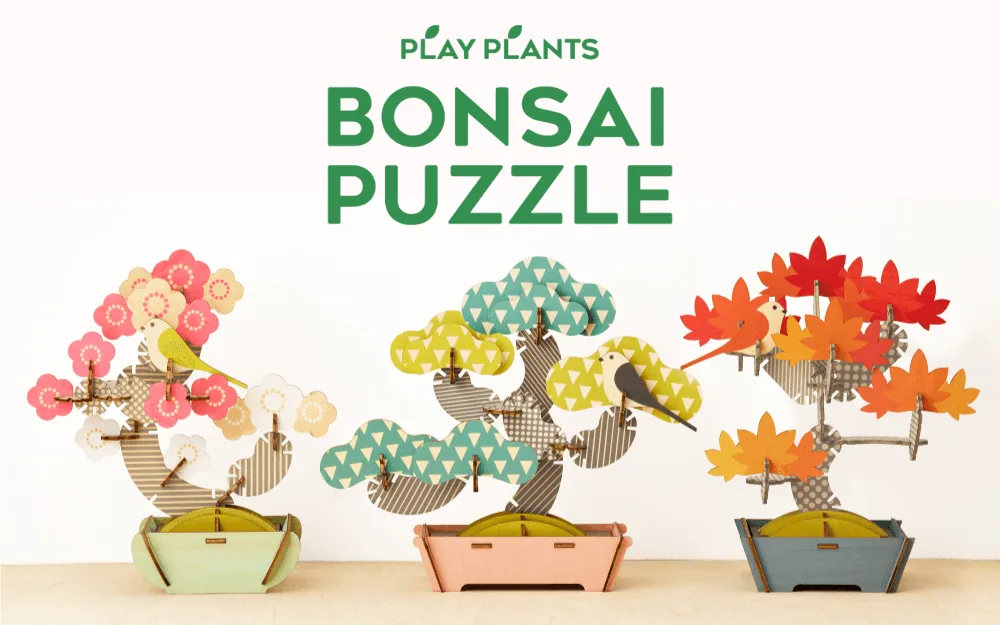
Play Plants Bonsai Puzzles
-
Play Plants Bonsai Puzzles: 3 variations: Pine Tree, Japanese Apricot, Japanese Maple Each variation creates a different silhouette, so you can match the puzzle to your room's aesthetic or collect multiple styles.
-
Play Plants Bonsai Puzzles: With hundreds of ways to assemble, you can change the way these Play Plants Bonsai Puzzles look as often as you want. This means no single instruction sheet is needed—you decide the branch angles and arrangement each time you build.
How to Build Your Bonsai Puzzle
Assembly is straightforward, but because the pieces fit together in many ways, you may want to start with a simple shape and adjust later.
- Pop out the pieces: Gently press each plywood shape from the flat sheet. If a piece resists, use a small flat tool (like a butter knife) to help—avoid bending the wood.
- Sort by shape: Lay out the pieces on a flat surface. You'll see trunk sections, branch pieces, and small connectors. Grouping them helps you plan the tree structure.
- Start with the trunk: Connect the trunk pieces first. The slots should fit together snugly but not tightly. If a joint feels loose, try a different branch slot—the design allows many combinations.
- Add branches and adjust: Insert branch pieces into the trunk slots. Rotate or swap branches to change the tree's shape. There is no wrong way—just what looks balanced to you.
- Experiment with different looks: Once you have a basic tree, try rearranging branches to create a windswept, upright, or cascading silhouette. The puzzle is meant to be rebuilt, so feel free to change it weekly.
Display Tips for Your Bonsai Puzzle
Because the puzzle is made of plywood and weighs only 160 g, it sits well on most surfaces without slipping. Place it on a desk, bookshelf, or nightstand where it won't be knocked over. Direct sunlight may fade the wood over time, so avoid window sills.
If you want to keep a particular arrangement permanent, you can apply a small amount of removable adhesive (like museum putty) to the base joints. Otherwise, leave it loose so you can rebuild it later. The puzzle's open design also makes it a good conversation piece—visitors may want to rearrange the branches themselves.
Choosing a Variation
The three options—Pine Tree, Japanese Apricot, and Japanese Maple—differ in branch shape and overall outline. Pine Tree has a conical form, Japanese Apricot has a more rounded, spreading canopy, and Japanese Maple features the iconic palmate leaves. Your choice depends on which silhouette fits your room's decor. All three use the same plywood material and assembly method.
If you're unsure, start with the Japanese Maple for its recognizable leaf shape, or pick the Pine Tree for a minimalist look. The price is the same for each variation, so you can collect multiple without worrying about cost differences.