Quick Answer
A simple pop-up play tunnel gives your baby a safe, engaging space to practice crawling, build strength and balance, and explore cause-and-effect through open-ended play.
Why a Tunnel Supports Crawling and Gross Motor Skills
Crawling requires coordination, core strength, and spatial awareness. A tunnel creates a clear visual goal that motivates babies to move forward, and the enclosed sides naturally guide their path, reducing frustration. As your child grows, the tunnel can also be used for standing, balancing, and imaginative play, making it a versatile tool that adapts with their development.
Choosing the Right Tunnel for Your Home
Look for a tunnel made from breathable, washable materials that can withstand daily use. An organic cotton option is gentle on sensitive skin and easy to clean. A collapsible design is convenient for storage and travel, while a pop-up structure sets up in seconds. The Lovevery Play Tunnel, for example, is made from organic cotton and comes with its own carrying case, making it simple to bring along to a playdate or pack away when not in use.
How to Use the Play Tunnel for Crawling and Exploration
- Step 1: Set Up a Clear Path: Place the tunnel on a flat, non-slip surface like a carpet or play mat. Open it fully so the ends are visible. Position a favorite toy or yourself at the far end to encourage your baby to crawl through. Common mistake: placing the tunnel on a slippery floor. Always use a grippy surface to prevent the tunnel from sliding.
- Step 2: Encourage First Attempts: Kneel at one end and gently coax your baby with a toy or your voice. Let them explore the tunnel opening with their hands before attempting to crawl inside. Keep the session short—just a few minutes—to avoid overstimulation. Checkpoint: if your baby seems hesitant, sit inside the tunnel yourself and peek out. Your presence builds confidence.
- Step 3: Add Sensory Play Variations: Once your baby is comfortable crawling through, introduce variety: scrunch the tunnel up and watch it bounce back, tie one side together to make a corner, or stand inside and pretend to be a silly creature. These actions teach cause-and-effect and spark imaginative play. Common mistake: leaving the tunnel in the same position every time. Changing the shape or location keeps the activity fresh and supports problem-solving.
- Step 4: Transition to Standing and Balance: After your toddler has started walking, use the tunnel as a low obstacle to step over or a support to pull up on. You can also lay it flat and have them walk along the edge, which challenges their balance in a safe, padded environment. Checkpoint: always supervise standing play near the tunnel to ensure your child doesn't topple over the sides.
Product Highlight
-
The Play Tunnel: The Organic Cotton Play Tunnel is perfect for playing hide and seek. Use it as a crawl-through tunnel to help develop strength and balance, even after your toddler has started walking. This means the tunnel grows with your child, supporting gross motor skills from early crawling through toddlerhood, and offering multiple play modes beyond just crawling.
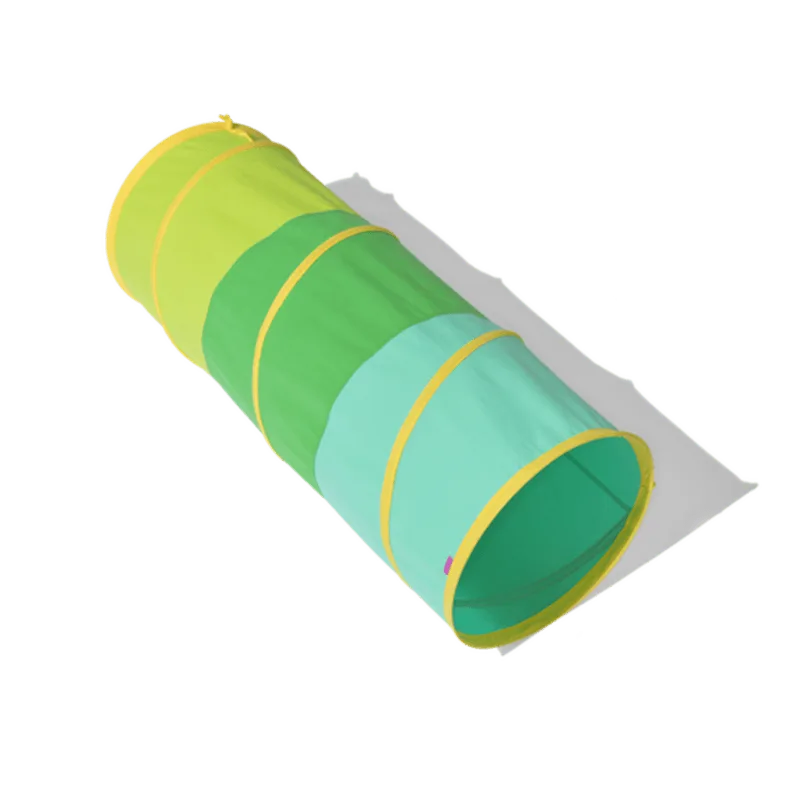
The Play Tunnel