Quick answer
Use a play tunnel as a sensory play tool by adding textured objects, lights, sounds, and movement challenges. It turns crawling into a multi-sensory adventure.
Why a play tunnel works for sensory play
A play tunnel naturally engages several senses at once: touch from the tunnel fabric, sight from peeking in and out, and the proprioceptive feedback of crawling. Adding simple props turns it into a rich sensory environment without overwhelming your child.
Steps to set up sensory play with a play tunnel
- Add textured objects inside: Place a few fabric squares, crinkly paper, or a soft brush along the tunnel floor. Let your child crawl over them to discover different textures. Avoid sharp or small objects that could be swallowed.
- Use lights and shadows: Shine a flashlight into one end of the tunnel or hang a string of battery-operated fairy lights near the opening. The changing light patterns stimulate visual tracking. Keep lights low and never use heat-emitting bulbs inside the tunnel.
- Incorporate sound: Attach a few jingle bells or a small rattle to the tunnel's exterior. As your child crawls, the sounds change, teaching cause and effect. Secure items tightly so they don't become choking hazards.
- Pair with a ball pit: Place a small ball pit at one end of the tunnel. Crawling through to reach the balls adds a reward and extra tactile input. Use only age-appropriate play balls and supervise to prevent mouthing.
Product facts
-
Tiny Land® Discovery 5-in-1 Play Tunnel With no Balls: Made from premium peachskin polyester, this toddler play tunnel feels softer and more skin-friendly than standard stiff polyester. The soft fabric makes crawling comfortable and reduces sensory resistance for sensitive toddlers, encouraging longer exploration.
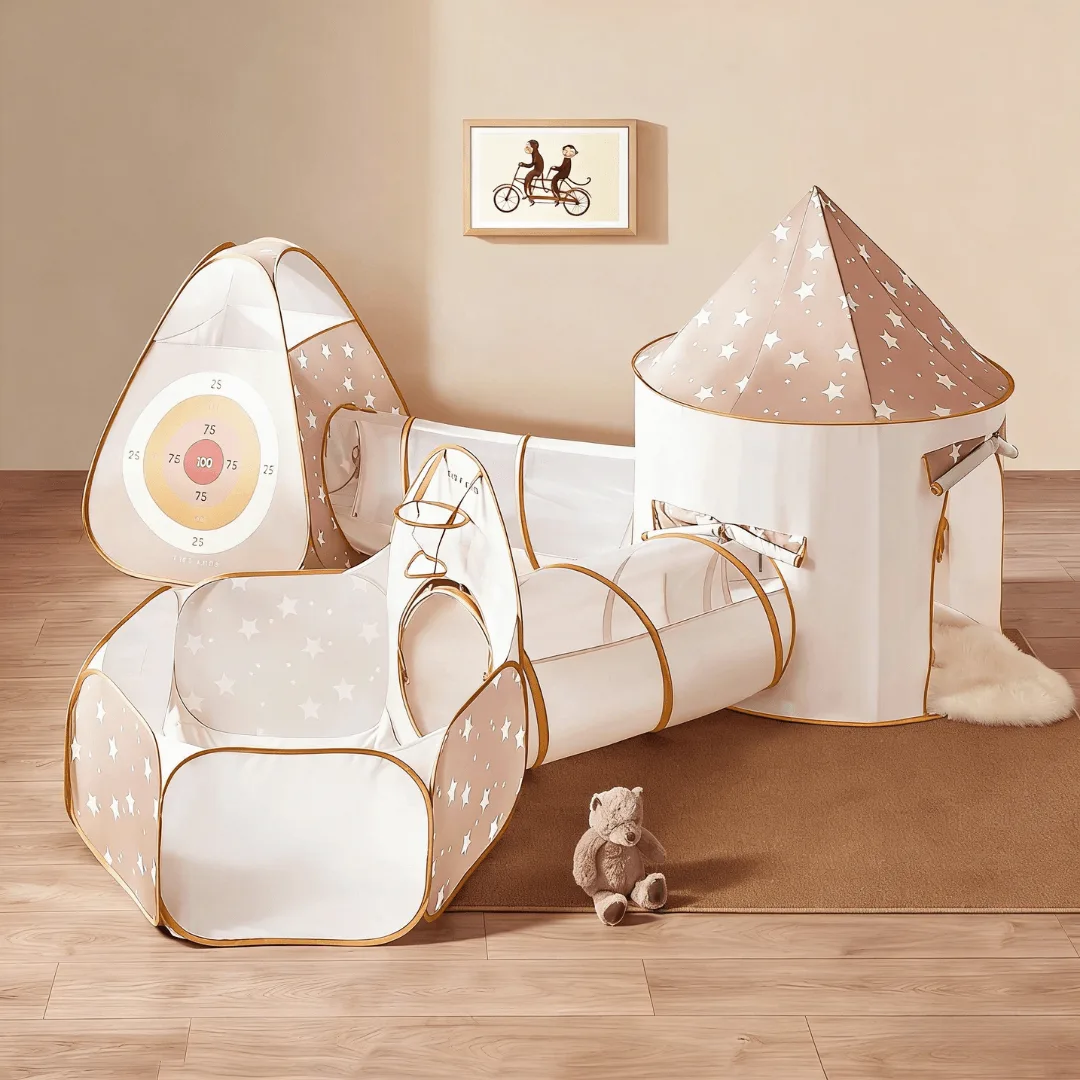
Tiny Land® Discovery 5-in-1 Play Tunnel With no Balls