Quick answer
Play2Read: SocraTeaser is the better pick when you want a compact, replayable card game that drills Greek roots and multi-syllable word building through a modified rummy routine. Traditional classroom-style learning games are the better pick when you need a scripted, worksheet-aligned lesson with a clear paper trail. If vocabulary depth and table talk matter more than seatwork, choose SocraTeaser.
What SocraTeaser actually asks players to do
SocraTeaser is a modified rummy routine built around morpheme awareness. Players examine words carefully for spellings and word forms, then practice multi-syllable words by working with Greek roots that show up in math and science vocabulary. The box copy says every round will expand your vocabulary, and the rummy frame means the same deck keeps producing new hands rather than running out after one pass.
That structure matters because it turns vocabulary practice into a decision loop. You are not filling in a blank; you are choosing which root combinations to keep, which to discard, and how to read the table. For a child who already reads at grade level but stalls on longer words, that repeated choice-making is the useful part.
Where traditional classroom games still win
Traditional learning games usually come with a teacher script, an answer key, and a direct tie to a unit of study. If you need to show progress against a specific standard, or if a substitute teacher has to run the room with no prep, that scaffolding is hard to beat. The trade-off is replay value: once the answers are known, the game often becomes a memory exercise rather than a thinking exercise.
SocraTeaser does not ship with a grade-level alignment chart in the supplied catalog facts, so if your school requires documented standard mapping, treat that as a gap you would need to fill yourself. It is a game first, not a curriculum kit.
Choosing by group size and attention span
SocraTeaser's supplied facts do not list a player count or a play time, so plan around the rummy format: it works at a small table and can be stretched or shortened by adjusting how many rounds you play. That flexibility is useful for tutoring sessions and family game nights, but it is a limitation if you need a fixed 20-minute rotation for a full class.
If you want a game with printed player counts and times already on the box, look at Re-Extinction (2-4 players, ages 7+, 10-20 minutes) for a quick filler, Aura (2-4 players, ages 8+, 20-40 minutes) for a bluffing card game, or The Big Box of Magic (2+ players, ages 8+, time varies, adult supervision, matches included) for a performance-style activity. None of those teach Greek roots, but they solve the scheduling problem that SocraTeaser leaves open.
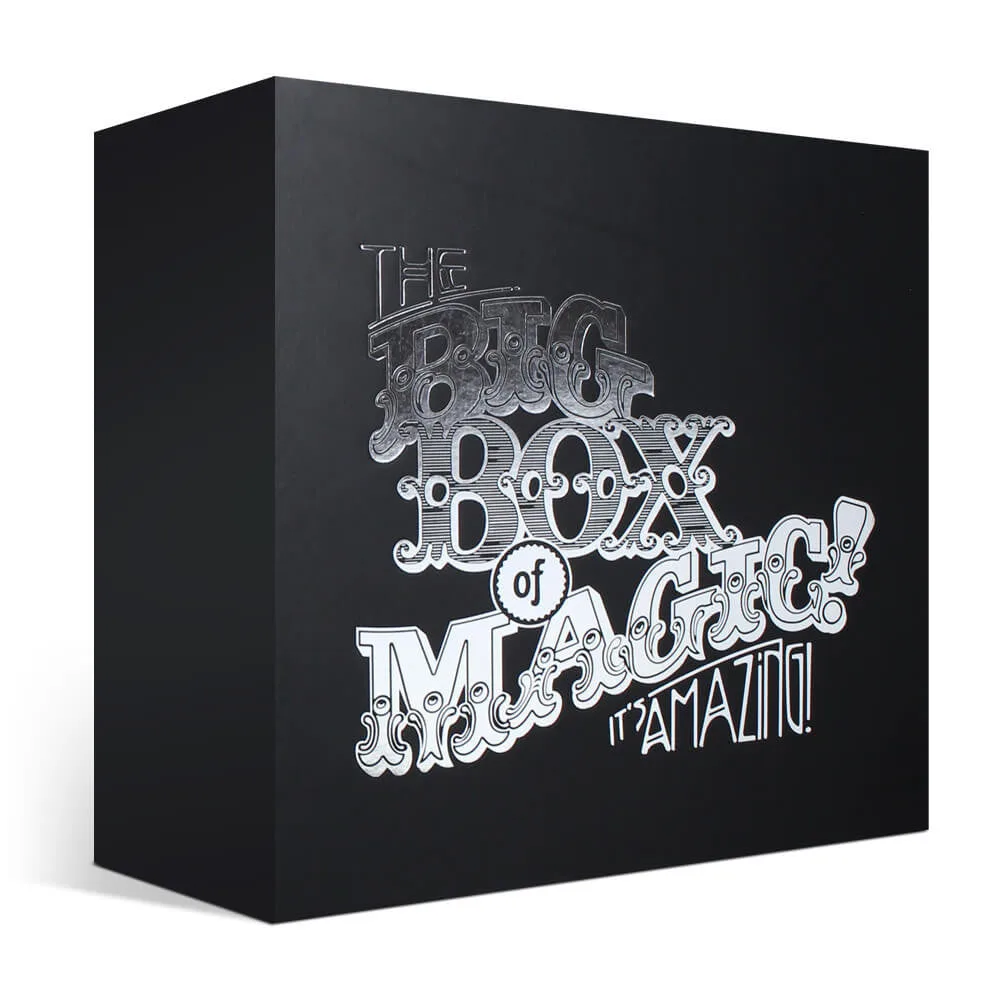
The Big Box of Magic
Cost per useful repetition
At a catalog price of USD 7.93 against a comparison price of USD 13.00, SocraTeaser is cheap enough to keep in a bag for waiting rooms and car rides. Traditional workbook-and-game sets usually cost more because you are paying for the printed alignment materials as well as the game pieces.
The honest tradeoff is that cheap and open-ended puts more work on the adult. You will need to explain the rummy routine the first time and maybe seed a few Greek roots to get things moving. A scripted classroom game does that work for you, but you pay for it in dollars and in replay fatigue.
Tradeoffs: SocraTeaser vs traditional learning games
- Replay value: SocraTeaser's modified rummy routine reshuffles into new hands, while many classroom games are exhausted once the answer key is memorized. Choose SocraTeaser if the same group will play weekly.
- Teacher scaffolding: Traditional learning games typically include scripts and alignment materials; SocraTeaser's supplied facts list vocabulary goals but no grade-level mapping. Choose a classroom kit if you must document standard coverage.
- Scheduling certainty: SocraTeaser does not list a player count or play time, while Re-Extinction (2-4 players, 10-20 minutes) and Aura (2-4 players, 20-40 minutes) print both. Pick a printed-time game when you run fixed classroom rotations.
- Adult prep time: SocraTeaser costs less but asks the adult to teach the rummy routine and seed Greek roots; scripted games front-load that work for you. Budget ten minutes of first-play teaching either way.
Product facts that change the decision
- Play2Read: SocraTeaser: Play2Read: SocraTeaser is a challenging modified rummy routine focused on Greek roots, morpheme awareness, multi-syllable word practice, and vocabulary growth. The rummy frame gives you repeat play from one deck, which is the main advantage over one-and-done worksheet games.
- Re-Extinction: Re-Extinction supports 2-4 players, ages 7+, and runs 10-20 minutes. If you need a fixed short rotation for a group, this printed time and player count removes the guesswork SocraTeaser leaves open.
- Aura: Aura supports 2-4 players, ages 8+, runs 20-40 minutes, and is described as a gateway into modern card games that is easy to learn and difficult to master. Aura is the better choice when the goal is bluffing and table skills rather than vocabulary, and its printed time fits a longer club or family slot.
Who should choose which
Best for
- Parents and tutors who want repeated Greek-root and multi-syllable word practice from one small deck
- Small groups that already know rummy and can start playing with a short explanation
- Buyers who want a low-cost vocabulary game at the USD 7.93 catalog price
Not for
- Teachers who need a scripted lesson with a standards alignment chart
- Full-class rotations that require a printed player count and fixed play time
- Groups looking for bluffing or party-style play rather than vocabulary work