Why standard decks bow and how to read the curve
A deck that rocks on the table or fans unevenly is usually showing you a storage problem, not a manufacturing defect. Standard playing cards are thin coated paper, and paper responds to moisture and pressure. When one side of the deck takes on more humidity than the other, or when cards sit under uneven weight, the stack can develop a gentle curve. That is why playing cards 2.5x3.5 warped at the edges is such a common complaint: the size is standard, but the care is not always standard.
Before you try to fix anything, diagnose the curve. Place the deck on a flat, clean surface and look at it from the side. A deck that bows in one direction and springs back when you flex it gently is usually responding to moisture. A deck that stays bent after gentle flexing may have been stored under something heavy and uneven. If only the top few cards are curved, the problem is likely the case or the way the deck was put away, not the whole deck. If every card is curved the same way, the whole stack has been exposed to the same conditions.
One honest limitation: the supplied product information for the Playing Cards 2.5"x3.5" set does not include a care or flattening procedure. The habits below are general paper-care principles, not manufacturer instructions. Use them as a starting point and stop if a card feels brittle or the coating starts to flake.
How to flatten a warped deck without making it worse
Work gently. Paper cards can crack or delaminate if you force them, and a deck that has been wet may never return to perfectly flat.
- 1. Move the deck to a dry, room-temperature spot: Damp air keeps feeding the curve. A dry room with normal household humidity gives the paper a chance to settle. Avoid radiators, direct sun, and steamy kitchens or bathrooms.
- 2. Square the deck and place it under even, light weight: A clean, flat board or a heavy book works if the weight is spread across the whole deck, not just the middle. Leave it for a day, then check the curve. Even pressure encourages the stack to relax without creasing individual cards.
- 3. Flip the deck and repeat if the curve persists: If the bow is still there, turn the deck over and apply the same even weight for another day. Alternating sides helps when one face has absorbed more moisture than the other.
- 4. Store the flattened deck in its case, flat: The cardboard case included with the Playing Cards 2.5"x3.5" set is a useful shape-holder. Keep the deck in the case and lay it flat rather than standing it on edge, which can let the cards slump.
Habits that keep a 2.5x3.5 deck flat
Storing playing cards flat is the single most reliable habit. A deck that lives in a drawer under a book or in its case on a shelf holds its shape better than one that rides loose in a bag or stands upright in a cup. When you travel, pack the cased deck between clothes or in a pocket of your bag where it will not be crushed or bent around other objects.
Keep the deck away from drinks and damp surfaces during play. Coated paper resists a light spill, but moisture at the edges is what starts the slow warp that shows up days later. If a card does get damp, separate it from the deck and let it air-dry flat before returning it. Do not iron, microwave, or apply direct heat; those methods can melt the coating or scorch the paper, and the supplied information does not support any heat-based flattening method.
Finally, avoid leaving the deck in a hot car or on a sunny windowsill. Heat softens the coating and can make the cards more willing to take a set. A stable, dry, room-temperature spot is boring, but it is what keeps a standard deck playing the same way month after month.
What the Playing Cards 2.5"x3.5" set actually includes
-
Playing Cards 2.5"x3.5": 54 playing cards, each 2.5" x 3.5" A full standard-size deck gives you enough cards to square the stack evenly when you apply weight; a partial deck can flatten unevenly.
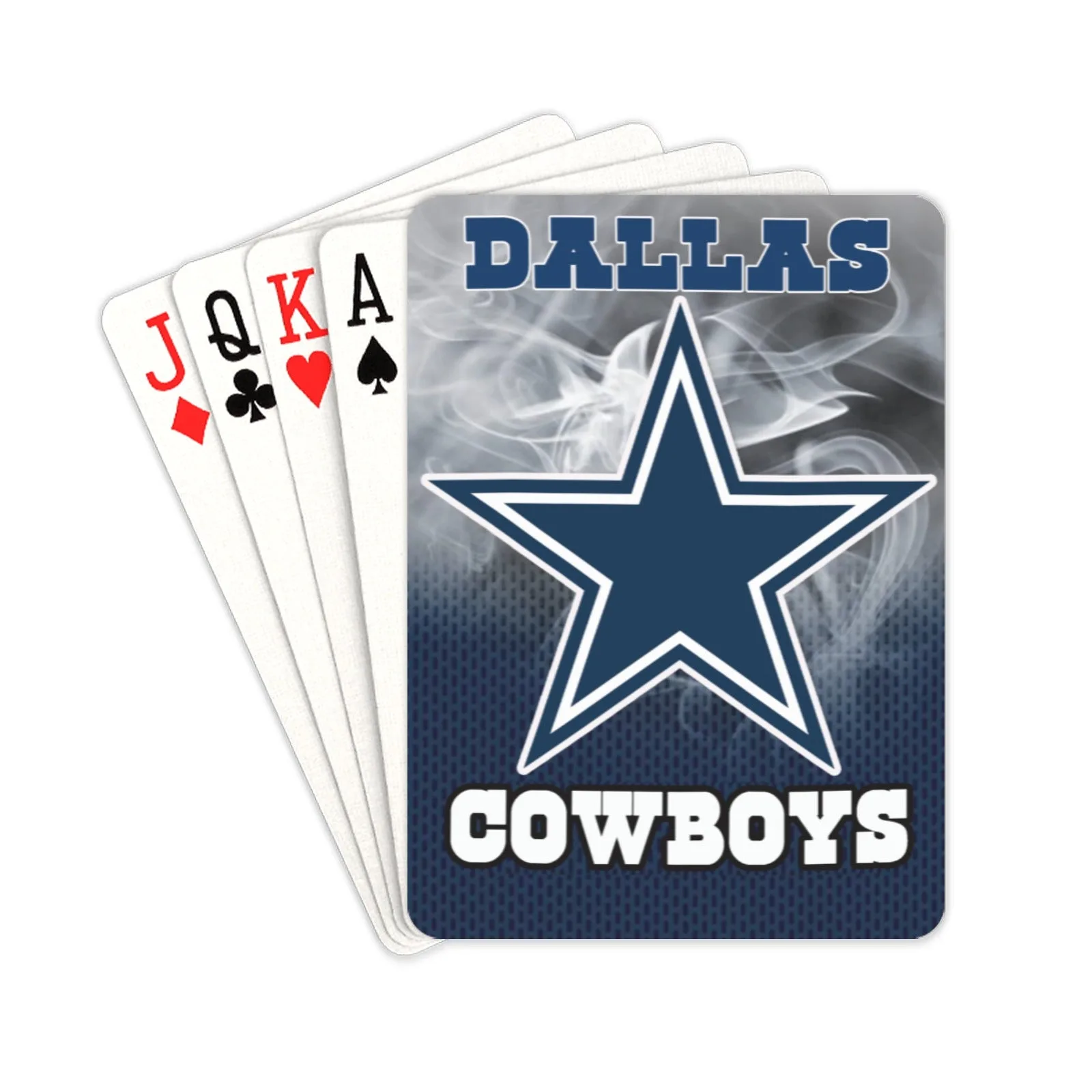
Playing Cards 2.5"x3.5"
-
Playing Cards 2.5"x3.5": Made of firm coated paper The coated paper surface is what makes the deck feel smooth and shuffle well, but it also means moisture and heat are the main enemies of a flat deck.
-
Playing Cards 2.5"x3.5": High quality, cardboard case included The case is a built-in shape holder. Storing the deck in its case, laid flat, is the simplest way to prevent a curve from setting in.
When a curve is not worth fixing
Some decks are past the point where flattening helps. If the cards feel soft, smell musty, or show dark edges, moisture has likely reached the paper core. In that case, replacing the deck is more honest than trying to press it back into shape. The same goes for cards that have been creased by a tight rubber band or a heavy object: a sharp fold will not press out, and the deck will always fan unevenly.
- Soft or musty cards: These signs point to moisture in the paper, not just a surface curve. Flattening will not reverse it.
- Sharp creases or bent corners: A crease is a permanent fold in the paper fibers. Weight will not remove it, and the card will still catch when you shuffle.
- Coating that flakes or sticks: If the surface is tacky or shedding, the deck has moved beyond a simple warp. Replace it rather than pressing it.