Why your 2022+ WRX VB may need a manifold-to-turbo gasket
The joint between the exhaust manifold and the turbocharger on the FA24 engine is a known leak point, especially if you've removed the turbo for an upgrade or reinstalled the factory gasket. A failing gasket causes a ticking exhaust leak under boost, reduced turbo spool, and potential exhaust gas contamination under the hood. The PLM Subaru FA24 Manifold To Turbo Gasket is a direct replacement designed to seal this connection more reliably than the stock part.
What the PLM gasket offers over OEM
-
PLM Subaru FA24 Manifold To Turbo Gasket 2022+ WRX VB 44616AA310: 200% thicker than other aftermarket gaskets and 22% thicker than OEM Subaru gaskets. Extra thickness helps the gasket crush and conform to minor surface irregularities on the manifold and turbo flange, reducing the chance of a leak after installation.
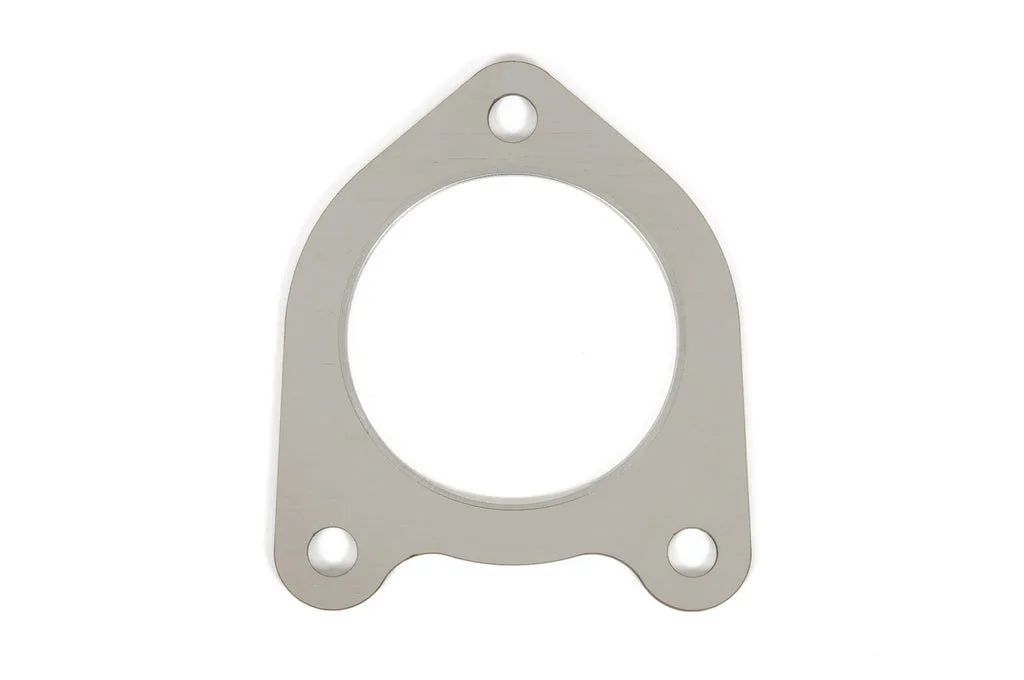
PLM Subaru FA24 Manifold To Turbo Gasket 2022+ WRX VB 44616AA310
-
PLM Subaru FA24 Manifold To Turbo Gasket 2022+ WRX VB 44616AA310: Constructed with a 304 Stainless Steel Fire-Ring and 7 layers of stainless steel. The multi-layer steel (MLS) design resists the high heat and pressure cycles of the FA24 turbo system, and the fire ring provides a concentrated seal around the exhaust port opening.
-
PLM Subaru FA24 Manifold To Turbo Gasket 2022+ WRX VB 44616AA310: Reference to Subaru Part Number 44616AA310. This confirms the gasket is designed to the same flange dimensions as the OEM part, so it fits the 2022+ WRX VB manifold and turbo without modification.
Signs your manifold-to-turbo gasket is leaking
The most common symptom is a ticking or puffing sound from the turbo area that gets louder under load. You may also notice a sulfur smell from unburned exhaust gases, lower-than-normal boost pressure on your gauge, or soot around the manifold-to-turbo flange. If you've recently reinstalled the turbo or manifold, the original gasket may not seal a second time—replacing it with a thicker, multi-layer gasket is a smart preventive step.
Replacement steps for the PLM FA24 manifold-to-turbo gasket
The following steps are based on general turbo gasket replacement practice. The supplied catalog does not include installation instructions, so verify torque specs and procedures with a factory service manual for your 2022+ WRX VB.
- 1. Access the manifold-to-turbo connection: Remove the turbo heat shield (if equipped) and any intercooler piping that blocks access to the manifold outlet flange. On the FA24, the turbo sits close to the manifold, so you may need to loosen the turbo mounting bolts to create clearance.
- 2. Remove the old gasket and clean the flanges: Unbolt the manifold from the turbo (typically 3 or 4 bolts). Carefully scrape off all old gasket material from both the manifold outlet and the turbo inlet flange. Use a razor blade or non-abrasive pad; avoid scratching the sealing surfaces.
- 3. Install the new PLM gasket: Position the PLM gasket with the fire-ring side facing the turbo (or as indicated by any orientation marks). The 7-layer construction should sit evenly between the flanges. Do not apply sealant—MLS gaskets seal dry.
- 4. Reassemble and torque to spec: Reattach the manifold to the turbo using new fasteners if recommended. Tighten in a crisscross pattern to the factory torque specification (not supplied here—consult your service manual). Reinstall heat shields and piping.
- 5. Leak test: Start the engine and let it idle. Listen for ticking at the flange. If you have a boost leak tester, pressurize the intake system to check for leaks at the manifold-to-turbo joint. Retorque after a heat cycle if needed.
What the catalog does not tell you
The PLM gasket listing confirms it fits the 2022+ WRX VB with FA24 engines and references OEM part number 44616AA310. It does not include torque specs, bolt sizes, or whether new bolts are required. The gasket is thicker than OEM, so ensure your manifold and turbo flanges are flat and free of deep gouges—if they're warped, even a thicker gasket may not seal. This gasket is for the manifold-to-turbo connection only, not the turbo-to-downpipe or manifold-to-head gaskets.