Quick answer
If your audio components have balanced outputs and inputs, the PLUS Balanced Interconnect is a worthwhile upgrade over standard cables. It delivers cleaner signal transfer and better dynamics, especially in longer runs.
Balanced vs unbalanced: the core difference
Balanced connections use three conductors—positive, negative, and ground—to carry the audio signal. This design rejects noise and interference more effectively than unbalanced cables, which use a single conductor and a shield. The practical result is a quieter background and clearer signal, especially over longer cable runs.
Unbalanced cables are fine for short runs and most home setups, but they are more susceptible to hum and radio frequency interference. If your gear has balanced outputs, using a balanced cable lets you take full advantage of that circuitry.
What the PLUS Balanced Interconnect adds
The PLUS Balanced Interconnect is designed to work with other Transparent Audio components to deliver more powerful and refined dynamics. It's a great addition to an upgraded music or film system, helping you feel closer to the performance.
Compared to a standard unbalanced cable, the PLUS Balanced Interconnect offers the inherent benefits of balanced topology plus Transparent's tuning. You get lower noise and improved spatial cues, which can make your system sound more open and precise.
When balanced might not be worth it
Balanced only helps if both the source and the destination have balanced connections. If your gear is single-ended only, a balanced cable won't work without an adapter, and adapters can negate the benefits.
For very short runs (under 2 meters), the audible difference between balanced and unbalanced is often minimal. If your system is entry-level, the cost of a balanced upgrade might be better spent elsewhere.
Balanced vs standard: the trade-offs
- Noise rejection: Balanced cables reject interference better than unbalanced. Choose balanced if you have long cable runs or a noisy environment. Check your cable run length—balanced matters more over 3 meters.
- System compatibility: Balanced only works when both source and destination have balanced connections. Verify your gear has XLR or TRS balanced outputs and inputs. Confirm balanced connections on all components before buying.
- Cost vs benefit: PLUS Balanced Interconnect costs more than a standard cable. It's worth it if you have a high-resolution system and want the lowest noise floor. If your system is entry-level, consider upgrading speakers or sources first.
Product facts
-
PLUS Balanced Interconnect: PLUS Balanced Interconnects are a great addition to any upgraded music or film system and work well with other Transparent System Companions. If you're building a Transparent-based system, the PLUS Balanced Interconnect is designed to integrate seamlessly, enhancing dynamics and spatial presentation.
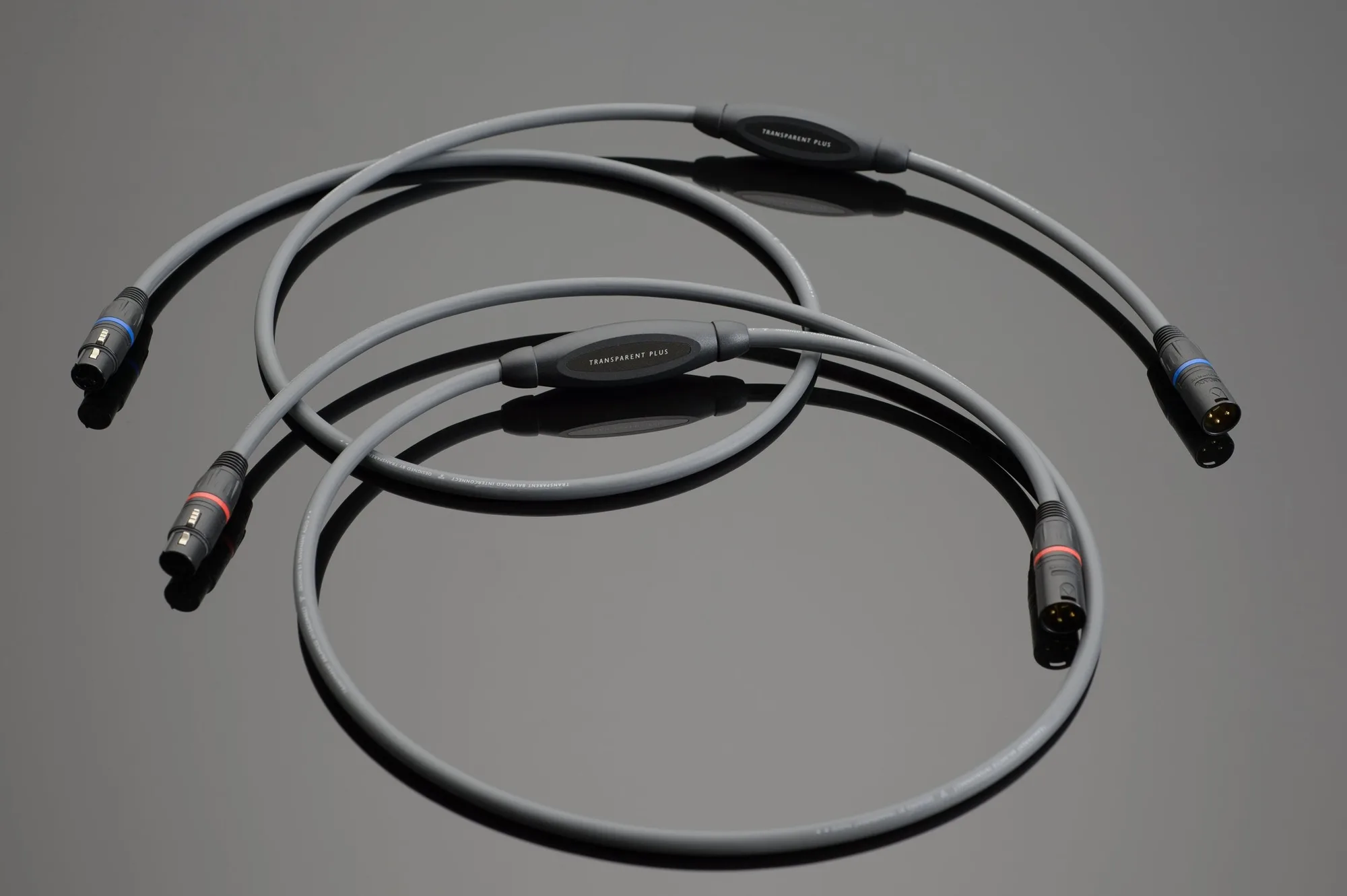
PLUS Balanced Interconnect
Who should choose what
Best for
- Audiophiles with balanced-capable components who want maximum noise rejection
- Home theater enthusiasts with long cable runs between components
Not for
- Systems with only unbalanced connections—use standard RCA cables instead
- Very short runs where the audible difference is minimal