Quick answer
For a cleaner, more professional finish on exposed pocket holes, solid-wood plugs win. They match the surrounding grain, accept stain and finish like the parent wood, and stay put. Wood filler is faster and cheaper, but it can shrink, dry a different color, and look like a patch. Use plugs where the hole will be seen; use filler only on hidden joints or as a quick touch-up.
What each method actually does to the hole
A pocket-hole plug is a small, trimmable solid-wood dowel shaped to fit the pocket. You glue it in, let it set, then trim and sand it flush. Because it is real wood, it moves and finishes with the surrounding material. Kreg's MicroTM Solid-Wood Pocket-Hole Plugs--Oak are made for materials from 1/2" to 1 1/2" thick, so they suit everything from small trim to thicker stock. Wood filler, by contrast, is a paste you press into the hole. It cures in place and is sanded flush. It does not have grain, and many fillers dry to a slightly different color or sheen than the wood around them.
Time, cost, and the finishing trade-off
Plugs take more steps: glue, insert, wait, trim, sand. Filler takes one pass, dries, and sands. But the time you save with filler often comes back as color matching problems, especially on oak, walnut, or any wood with strong grain. If you plan to stain, plugs are the safer choice because they absorb stain like the parent wood. Filler can reject stain or turn blotchy. If you are painting, filler is more forgiving, but it can still telegraph through as a dull spot. On a budget, filler costs less per hole, but plugs are not expensive when you consider the finish quality. For a middle ground, use Zinc Pocket-Hole Screws for indoor projects with limited exposure to the elements; they are an affordable alternative to more protective coatings, and the screw head sits below the surface so the plug or filler sits cleanly on top.
When to choose plugs over filler (and vice versa)
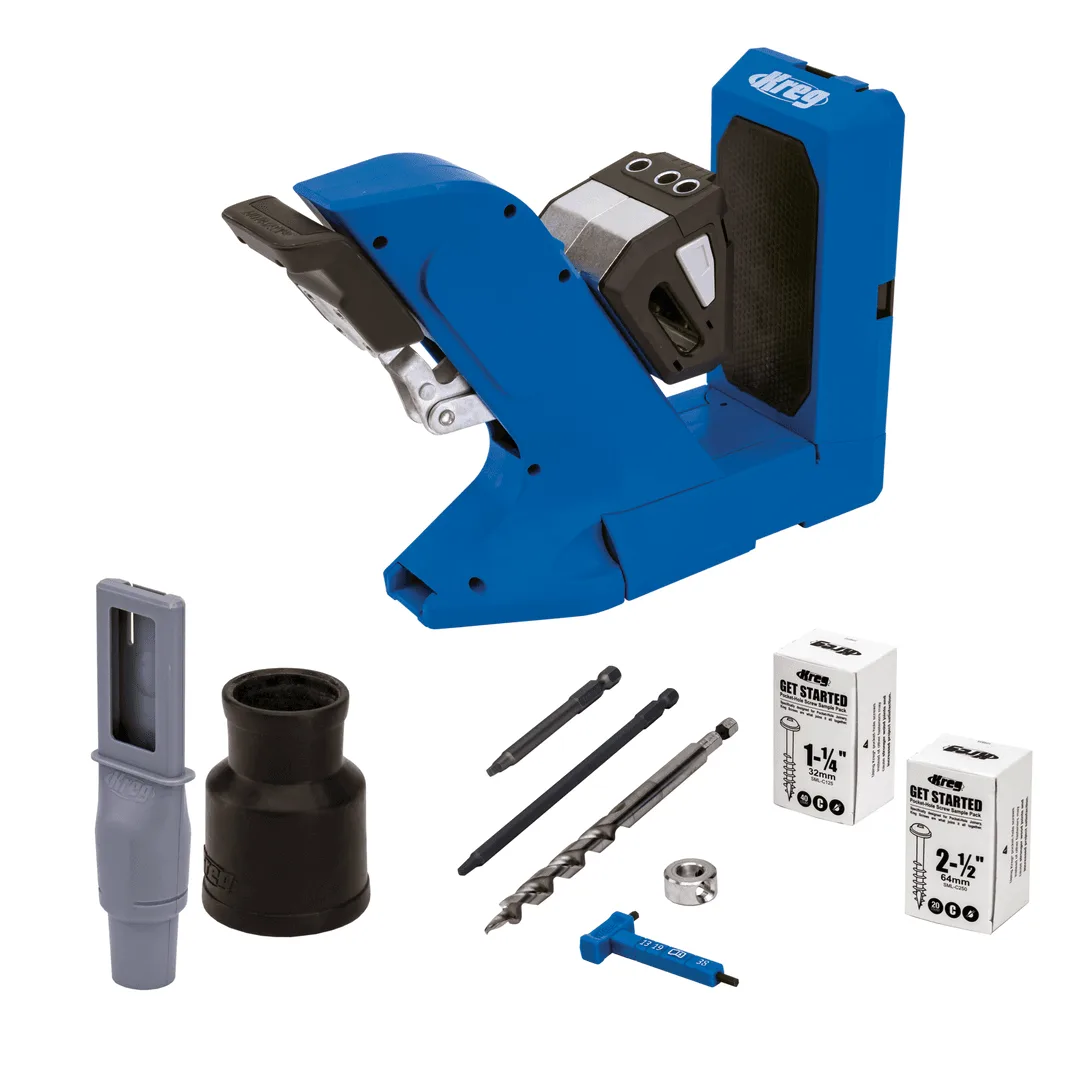
Choose plugs when the pocket hole is visible: face frames, cabinet interiors, furniture sides, or any surface that will be seen and finished. Choose filler when the hole is hidden, when you are painting over it, or when you need a fast fix on a non-structural joint. If you are working with a jig like the Kreg® Pocket-Hole Jig 720 Systainer SET, which handles materials from 12 mm to 38 mm, you can drill consistent pockets and then decide per project whether plugs or filler make sense. The jig's Automaxx® clamping and GripMaxxTM surface help keep the pocket consistent, which makes plug fit more predictable.
Trade-offs at a glance
- Plugs: finish quality: Solid wood matches grain and takes stain like the parent material. Best for visible joints on furniture and cabinets.
- Plugs: time and steps: Requires glue, insertion, drying, trimming, and sanding. Plan for extra finishing time per hole.
- Filler: speed and cost: One-step application and lower upfront cost. Best for hidden joints or painted surfaces.
- Filler: color and shrinkage: Can dry a different color and may shrink or crack over time. Test on scrap before committing to a visible surface.
Product facts that affect your choice
- Micro™ Solid-Wood Pocket-Hole Plugs--Oak: MicroTM Solid-Wood Pocket-Hole Plugs--Oak are trimmable solid-wood plugs for Micro pocket holes in materials from 1/2" to 1 1/2" thick. They match the wood and can be sanded flush, giving a cleaner look on exposed joints.
- Zinc Pocket-Hole Screws: Zinc Pocket-Hole Screws are a good choice for indoor projects with limited exposure to the elements and provide adequate rust protection as an affordable alternative. They keep the screw head below the surface so your plug or filler sits flat, and they suit indoor furniture where exposure is low.
- Kreg® Pocket-Hole Jig 720 Systainer SET: The Kreg® Pocket-Hole Jig 720 Systainer SET creates pocket-hole joints in materials from 12 mm to 38 mm with Automaxx® dual-action clamping and a GripMaxxTM anti-slip clamping surface. Consistent pocket depth and clamping make plug installation more predictable and reduce filler touch-ups.
Which should you use?
Choose plugs if you...
- Need a clean, stainable finish on exposed pocket holes
- Work with oak or other woods with distinct grain
- Are building furniture or cabinets where the joint will be seen
Choose filler if you...
- Are covering hidden joints that will never be seen
- Are painting the project and want the fastest possible fill
- Need a quick, low-cost touch-up on a non-structural repair