Why this comparison matters
If you carry multiple sets of tent poles, tarp poles, or extension poles, you know the struggle of untangling and sorting them at camp. A standard tent bag (often the sack your tent came in) is designed for one specific pole set and offers no internal organization. The DOD Pole Case aims to solve that with a dedicated design. This comparison helps you decide whether the upgrade is worth it for your camping style.
Pole Case at a glance
-
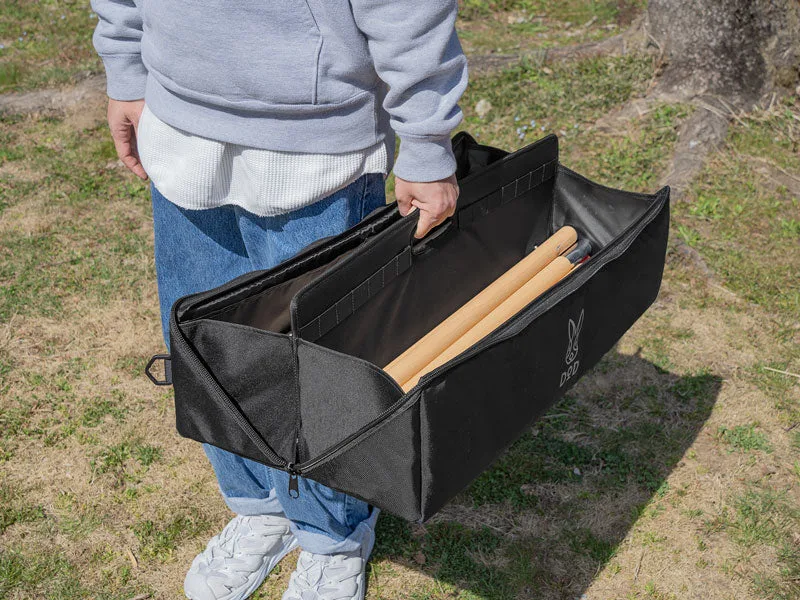
Pole Case: The Pole Case features a diagonal zipper opening for easy access and a two-chamber design to prevent clutter. The diagonal zip lets you grab poles without pulling everything out, and the dual chambers keep poles separated by length or type.
Pole Case
-
Pole Case: It accommodates poles with up to 24-inch sections and fits 4 sets of big tarp poles plus additional equipment. This capacity is much larger than a standard tent bag, which typically only holds one set of poles.
-
Pole Case: The case is box-shaped with a sturdy core material that maintains its shape and reduces rattling. Poles stay organized and quiet during transport, unlike in a floppy tent bag where they shift and clatter.
Pole Case vs standard tent bag: key differences
The following points highlight the practical differences between the DOD Pole Case and a typical tent bag.
- Organization: The Pole Case has two chambers to separate poles by length or type. A standard tent bag has one compartment, so poles mix together.
- Access: Diagonal zipper opening on the Pole Case lets you reach poles near the bottom without unloading everything. A standard tent bag opens at the top, requiring you to pull out all contents to find a specific pole.
- Capacity: The Pole Case holds poles up to 24 inches long and fits 4 sets of big tarp poles plus extras. A standard tent bag is sized for one specific pole set and usually can't accommodate additional poles.
- Shape and stability: Box-shaped with sturdy core material, the Pole Case keeps its form and reduces rattling. A standard tent bag is soft-sided and allows poles to shift and clank together.
- Carrying comfort: The Pole Case includes an inner handle with cushioning. Standard tent bags often have a simple webbing loop or no handle at all.
When the Pole Case makes sense
If you regularly bring multiple pole sets (e.g., for a large tarp, a separate tent, and extension poles), the Pole Case's dual chambers and high capacity keep everything sorted. The diagonal zip is a real time-saver when you need only one pole section without unpacking the whole bag. Campers who hike or drive with poles loose in the car will appreciate the reduced rattling and secure shape.
When a standard tent bag is sufficient
If you only carry the poles that came with your tent and don't need to mix pole sets, the original tent bag works fine. It is lighter and doesn't require an extra purchase. The Pole Case is a specialized organizer, so it adds weight and bulk compared to a simple sack. For minimalists or those with a single pole set, the upgrade may not be necessary. For exact weight details, refer to the product instructions.
What the supplied information does not cover
The catalog does not specify whether the Pole Case is waterproof or water-resistant. If you camp in wet conditions, you may want to use a dry bag or liner inside the case. The material (2520D polyester outer, 210D polyester lining) suggests durability, but no water protection rating is provided. Also, the case is available only in one color (Black) and one size variant, so if you need a smaller or larger organizer, this may not fit.