Quick answer
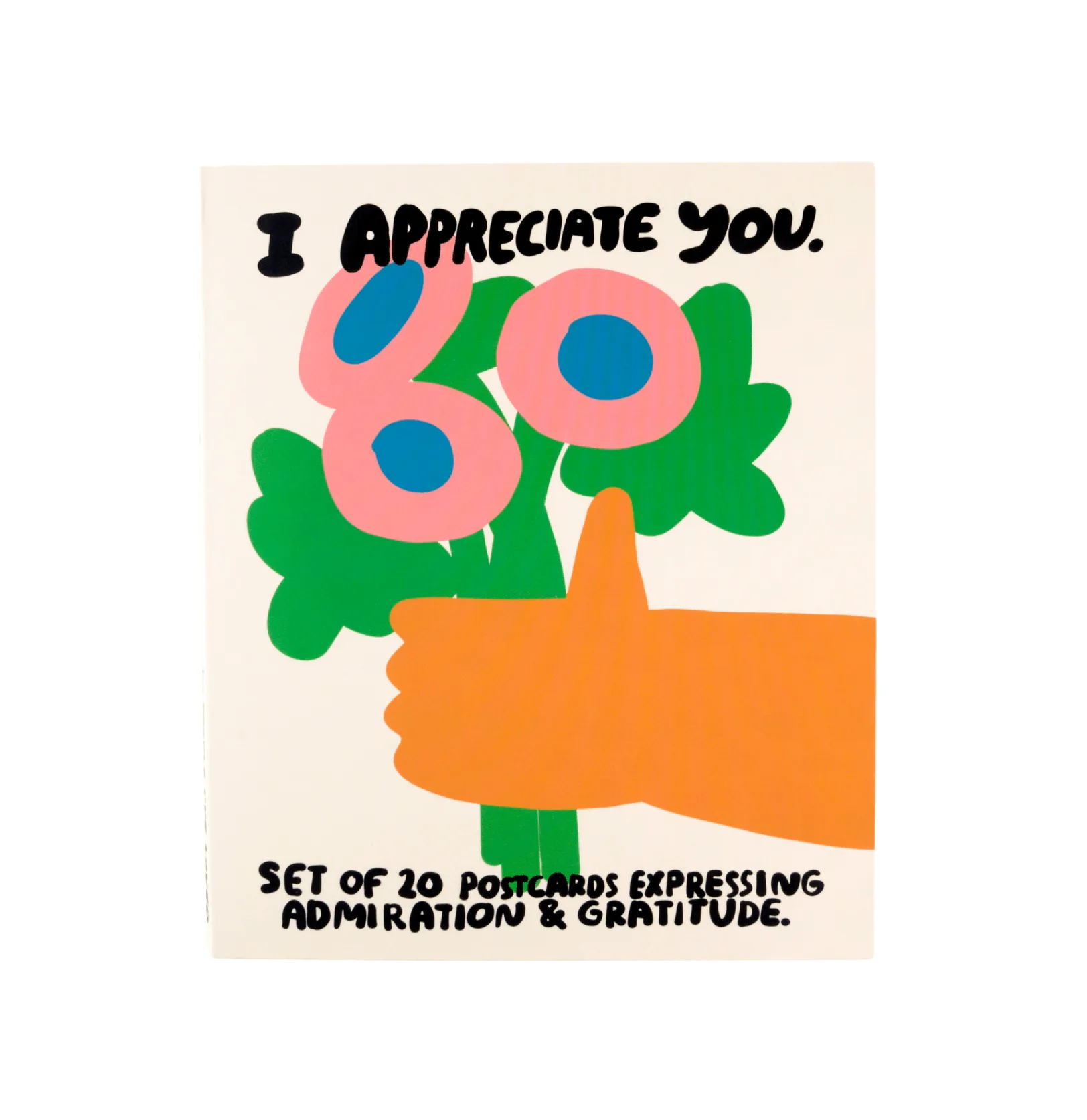
Send a postcard when the message is short, the moment is small, or you want to reach several people without buying several cards. Send a greeting card when the message needs room, privacy, or a formal occasion. A deck like the I Appreciate You Postcard Deck covers repeatable gratitude; a single greeting card covers one big, personal moment.
The real difference is space, not sentiment
A standard greeting card gives you two or more inside panels for a handwritten note, plus an envelope that keeps the message private. A postcard gives you one small side for the address and one small side for writing. That single constraint changes what you can say: postcards suit a sentence or two, greeting cards suit a paragraph or a page.
The I Appreciate You Postcard Deck measures 4.25 x 5.5 inches per card, with twenty postcards in the set. That size fits a short, specific note well, but it will not hold a long letter. If your message runs past a few lines, a greeting card or a notebook page is the better container.
When to send a postcard instead of a card
Postcards work best when the message is simple and the timing is casual. Use them for thank-you notes after a dinner, a quick note to a friend who moved, or a midweek check-in that does not need an occasion. Because the writing space is public-facing, postcards also push you toward a warm, uncomplicated sentence rather than a long explanation.
A deck also solves a practical problem: you buy once and send twenty times. If you regularly owe people thanks, a deck keeps notes on hand instead of sending you to the store for a single card each time. The trade-off is that every note looks similar, so the message itself has to carry the personalization.
- Thank-you postcard ideas: name one specific thing the person did, then one sentence about why it mattered.
- Keep a pen with the deck so writing a note takes under a minute.
- Use postcards for people you thank often; save cards for people you thank once, deeply.
When a greeting card is the better choice
Choose a greeting card for milestones, condolences, weddings, and any message you would not want a mail carrier or roommate to read. Envelopes protect privacy, and the extra panels give you room to tell a story, apologize, or explain something complicated. Cards also carry more weight as an object: a card with a handwritten page inside reads as an occasion, while a postcard reads as a note.
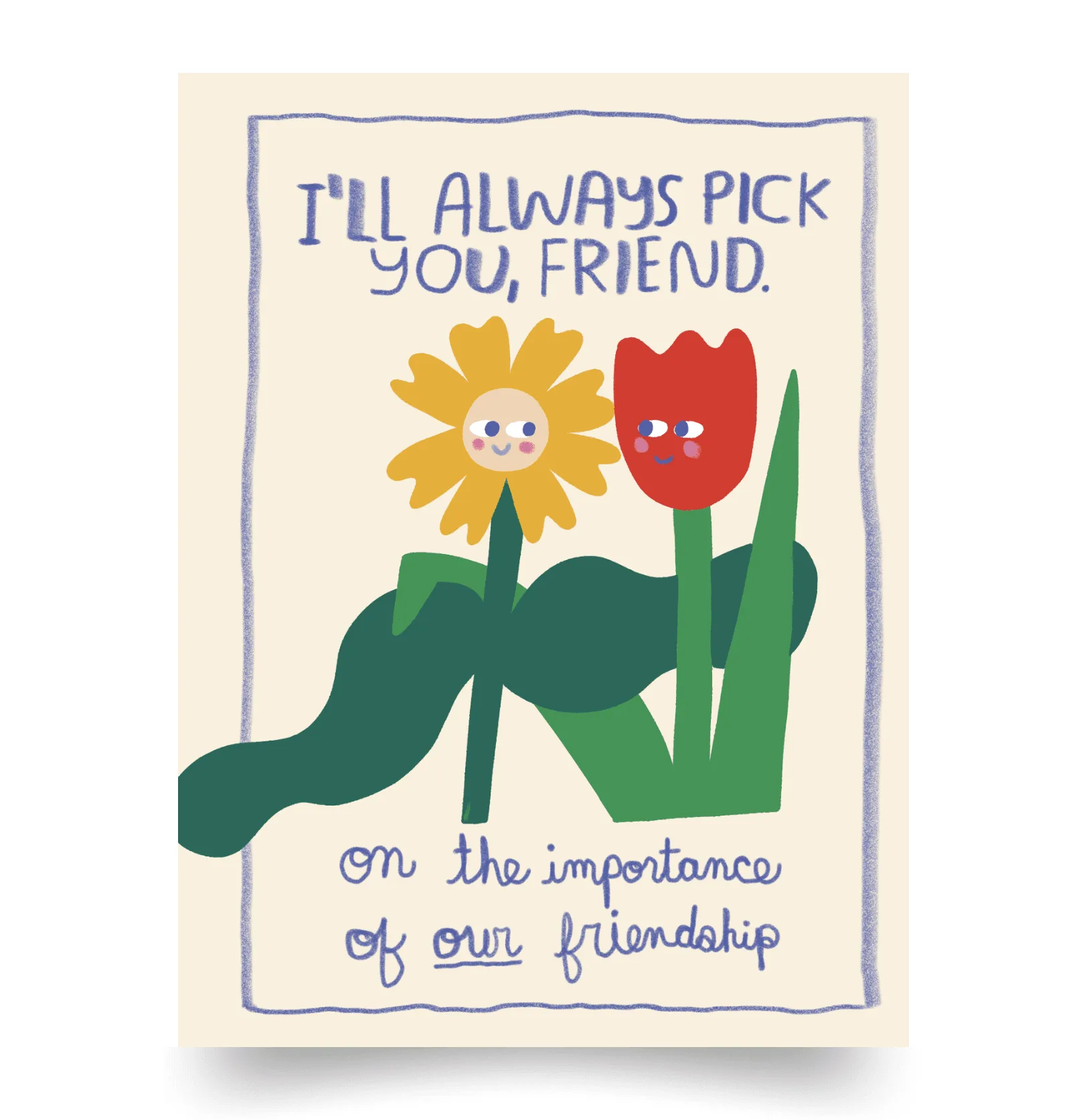
If you want a card-like object that still holds a longer message, the I'll Always Pick You, Friend Book works as a friendship-focused alternative. It is an illustrated book rather than a card, and it ends with a Friendship Commitment Certificate, so it fits a deliberate, once-in-a-while gesture more than a quick thank-you.
Cost and effort compared
On a per-message basis, a deck is usually the cheaper route because one purchase covers twenty notes. A single greeting card costs less upfront but only covers one recipient. Postcards also need no envelope, which saves a step, though they offer no privacy and can be damaged in transit more easily than a card inside an envelope.
Effort is the other trade-off. A postcard asks for one good sentence. A greeting card asks for a paragraph, which is harder but lands harder when the occasion deserves it. Match the effort to the relationship and the moment, not to which format you happen to have in a drawer.
Trade-offs at a glance
- Writing space: A postcard gives you one small side; a greeting card gives you multiple panels. If your note runs past a few sentences, choose the card.
- Privacy: Postcards travel without an envelope, so anyone handling the mail can read them; cards stay sealed. Choose a card for anything personal, sad, or sensitive.
- Cost per message: A twenty-card deck spreads one purchase across many recipients; a single card covers one person. Buy a deck if you send notes often, a card if you send rarely.
- Occasion fit: Postcards suit casual gratitude and check-ins; cards suit milestones, condolences, and formal events. Match the format to the weight of the moment, not to what is in stock.
Products that fit each format
- I Appreciate You Postcard Deck: Twenty postcards, 4.25 x 5.5 inches, made for sharing love, deepening bonds, and expanding gratitude. One purchase covers twenty short notes, so it suits people who send thank-yous regularly rather than once a year.
- I'll Always Pick You, Friend Book: An illustrated book about why friendship is essential, ending with a Friendship Commitment Certificate. It holds a longer, more deliberate message than a postcard and works as a keepsake rather than a quick note.
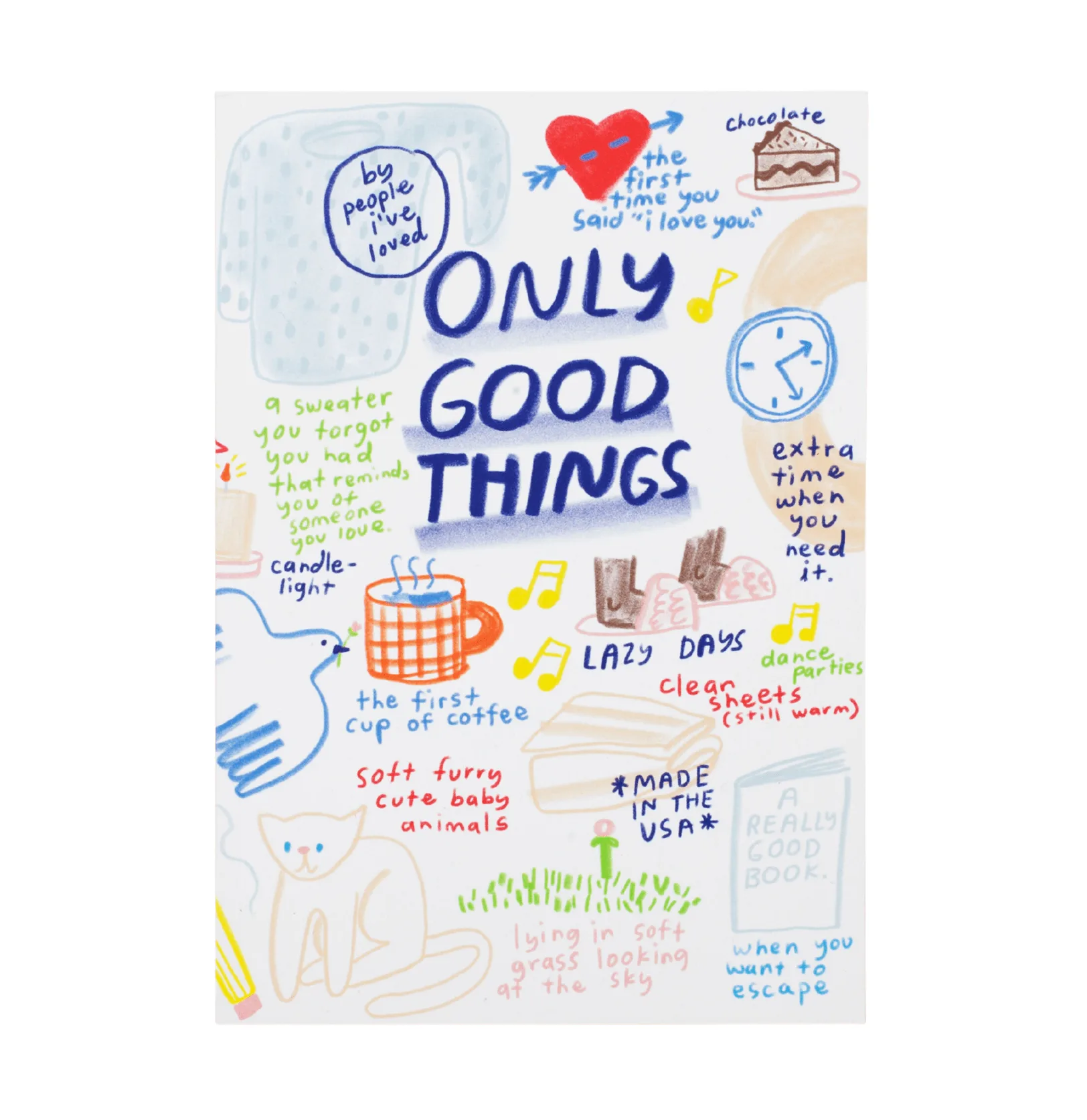
- Only Good Things Notebook: A 6 x 8.5 inch notebook with 100 blank pages, made in the USA. If your message keeps outgrowing a postcard, blank pages let you write at any length before deciding what to send.
Which should you send?
Choose a postcard deck if
- You send short thank-yous or check-ins several times a month.
- You want one purchase that covers many recipients.
- Your message is one or two warm, specific sentences.
Choose a greeting card instead if
- The message is private, sad, or longer than a few lines.
- The occasion is a milestone, condolence, or formal event.
- You want the note to feel like a keepsake rather than a quick hello.