Quick answer
For the first days and weeks after birth, choose dedicated postpartum pads like the Organic Cotton Cover Post-Partum Pads rather than regular period pads. They are designed for heavier post-birth flow and longer coverage, while regular pads work better once bleeding lightens.
Why post-birth flow changes the pad you need
After delivery, bleeding is often heavier and more continuous than a typical period, especially in the first week. Regular period pads are sized for menstrual flow and may need frequent changing, which can be disruptive during recovery. Postpartum pads are built with longer length and higher capacity to handle that early flow with fewer changes.
The trade-off is bulk. Postpartum pads are noticeably thicker and longer than regular pads, so they may feel cumbersome under everyday clothes. That extra coverage is the point: it reduces leaks and gives you more time between changes when you are resting or caring for a newborn.
Comfort and skin sensitivity after birth
The skin around the perineum can be tender, swollen, or stitched after a vaginal birth, and even a cesarean birth leaves abdominal sensitivity. A soft cover matters more than it does during a regular period. Organic cotton covers are a practical choice because they feel gentler against irritated skin.
Some postpartum pads also include a cooling sensation from herbal ingredients such as mint, lavender, and aloe. That can feel soothing, but it is not for everyone. If you have sensitive skin or known plant allergies, patch-test or ask your clinician before using a pad with botanicals.
When regular pads are the better fit
As postpartum bleeding tapers to light spotting, regular pads and liners become more comfortable and less bulky. Many people switch back to their usual period pads around the second or third week, depending on flow. There is no rule that you must finish a whole pack of postpartum pads before switching.
Regular pads are also cheaper per pad and easier to find in a pinch. The trade-off is that they may not provide enough length or absorbency for overnight or heavy-flow days early on. Keep a few regular pads on hand for the transition, but do not rely on them for the first few days.
Key trade-offs between postpartum and regular pads
- Absorbency vs. bulk: Postpartum pads hold more and need fewer changes, but they are thicker and longer than regular pads. Choose postpartum pads for heavy early flow; switch to regular pads when flow lightens to avoid unnecessary bulk. Match pad type to flow, not to a fixed timeline.
- Skin comfort vs. simplicity: Organic cotton covers and herbal cooling blends can soothe tender skin, but botanical ingredients may irritate sensitive skin. Regular pads without added botanicals are a simpler option if you prefer unscented, unmedicated products. If you have sensitive skin, start with a small pack before committing to a full case.
- Cost vs. coverage: Postpartum pads typically cost more per pad than regular period pads, but you need fewer of them per day during heavy flow. Regular pads are cheaper but may require more frequent changes early on. Buy one pack of postpartum pads for the first week and keep regular pads for the taper.
Product facts
-
Organic Cotton Cover Post-Partum Pads: Certified organic cotton cover with wings, plus a herbal blend of mint, lavender, and aloe that creates a cooling sensation. The soft cover and cooling effect can make early postpartum days more comfortable, while wings help keep the pad in place during rest or night use.
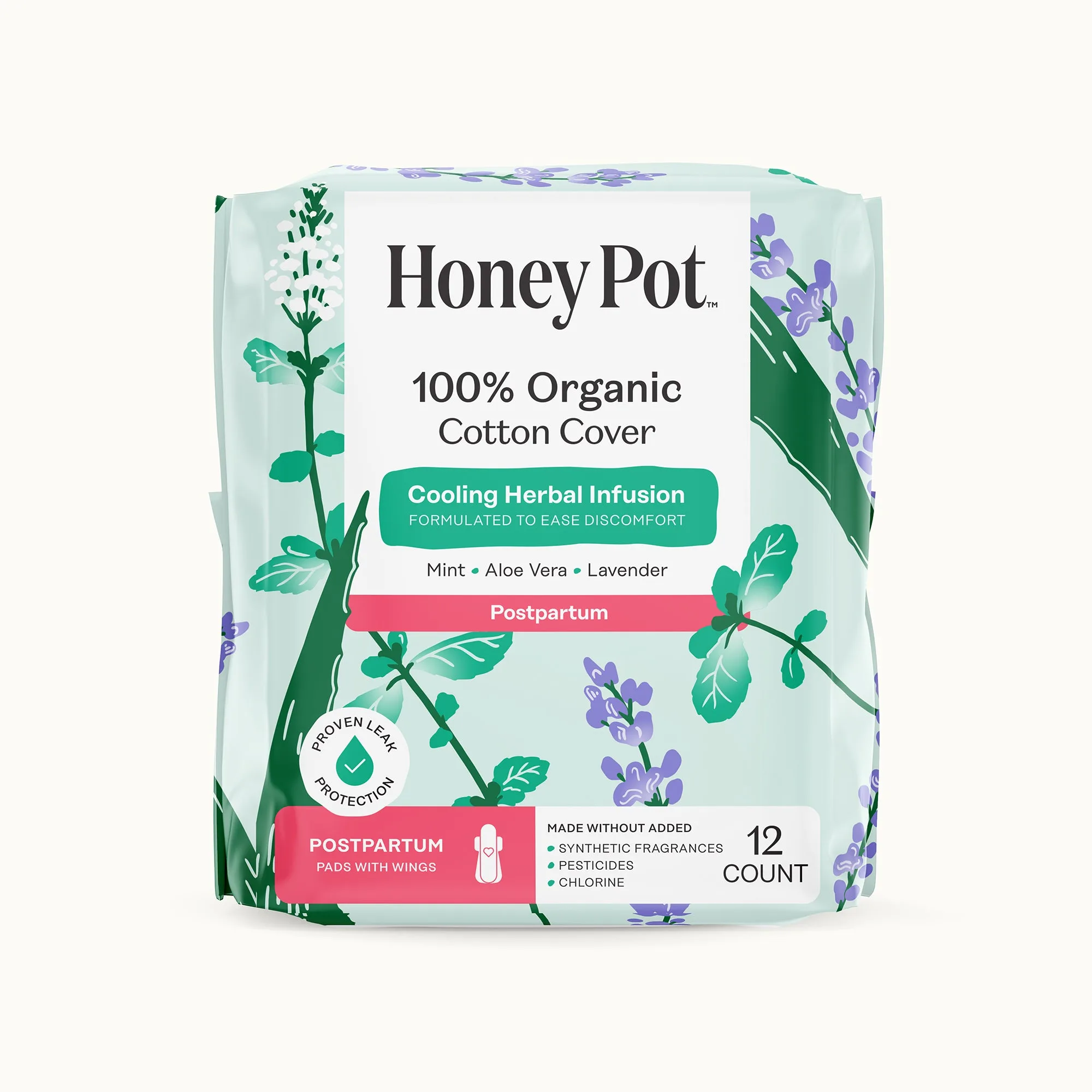
Organic Cotton Cover Post-Partum Pads
Who should choose which
Best for
- New moms in the first days to two weeks after birth, especially with heavier flow
- Anyone with perineal tenderness who wants a soft organic cotton cover and optional cooling sensation
Not for
- People with known allergies to mint, lavender, or aloe who need unscented, unmedicated pads
- Light-flow days later in postpartum when a regular pad or liner is more comfortable