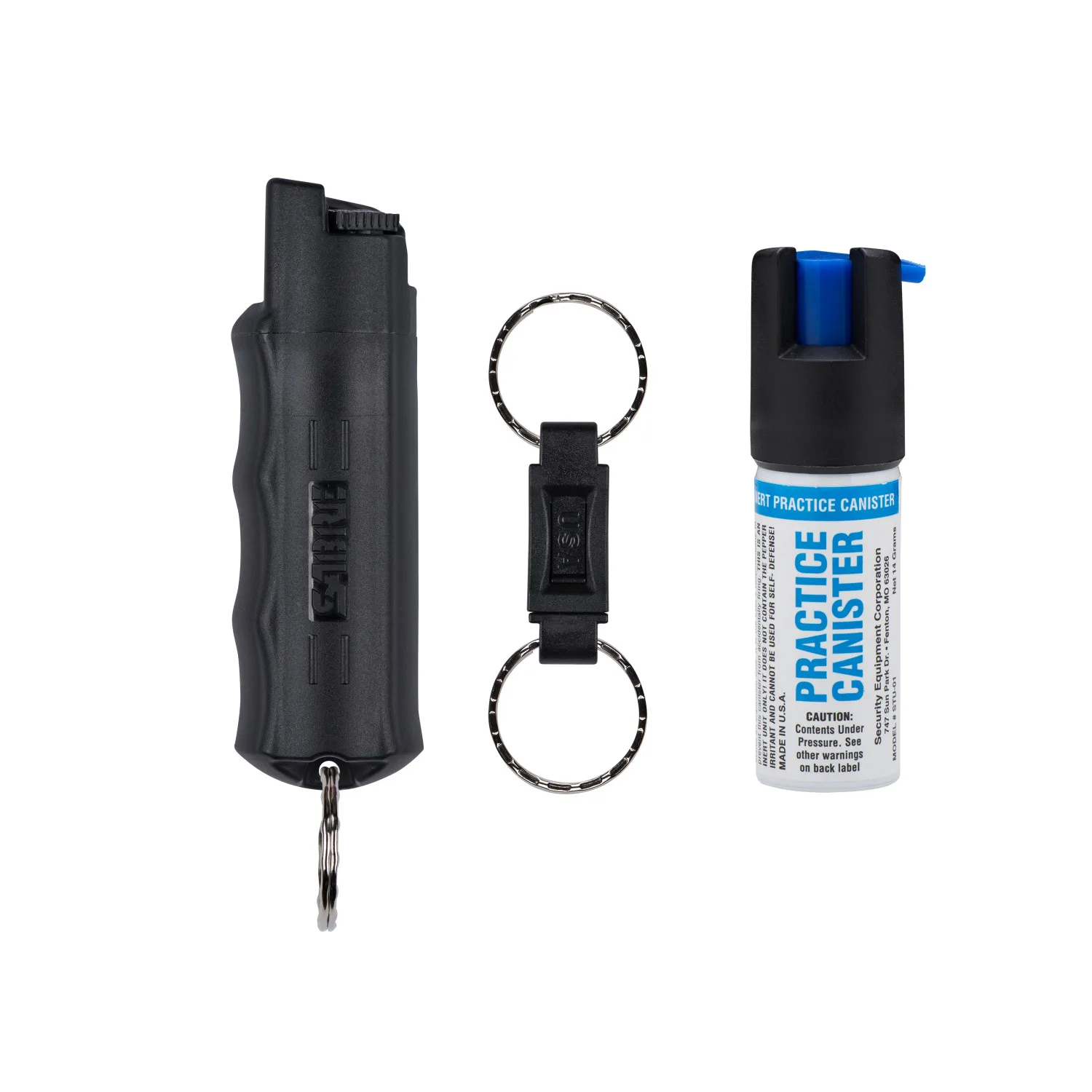
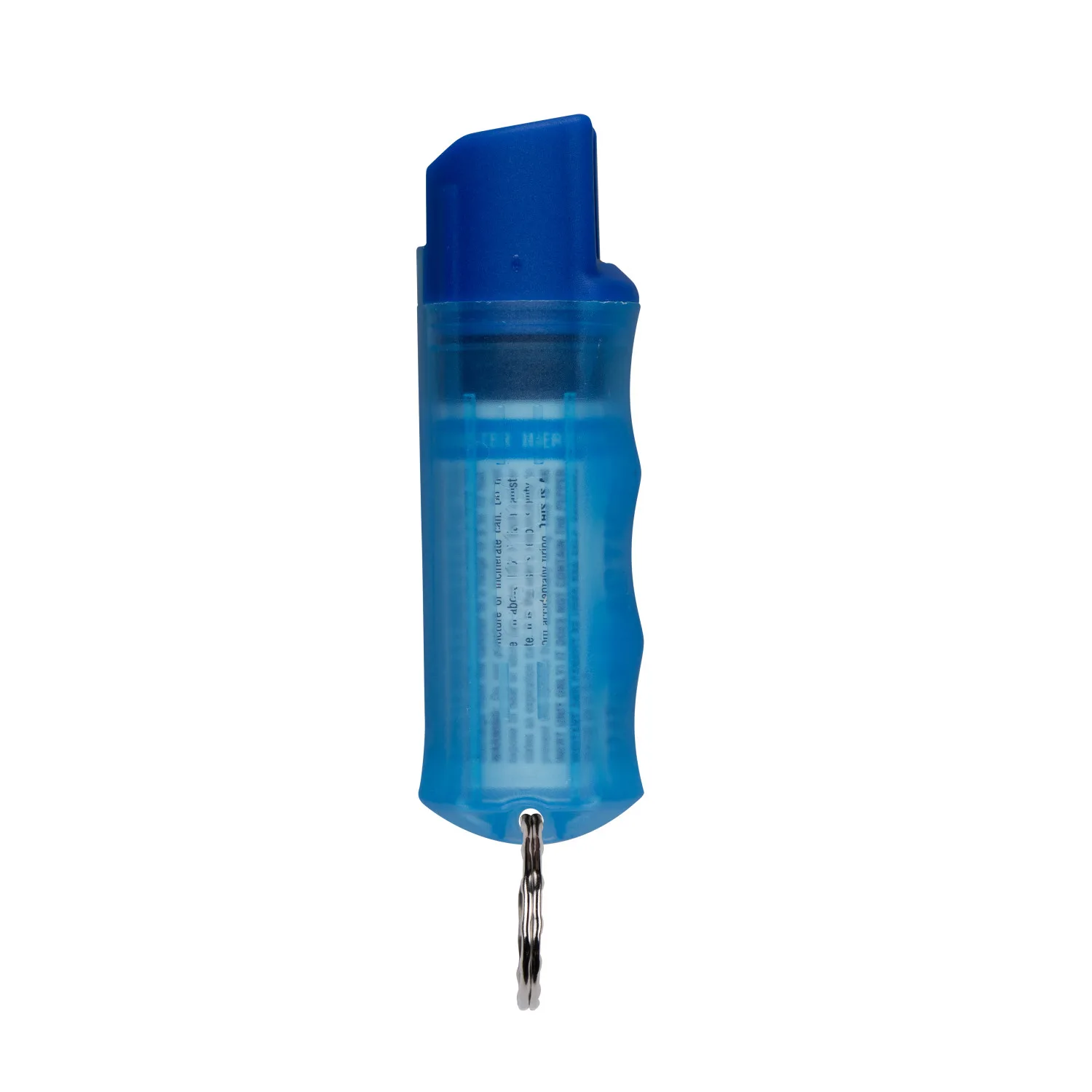
Owning a pepper spray is a smart step toward personal safety, but carrying it without practicing is like having a fire extinguisher you've never used. In an emergency, you need to act without thinking. That's where a practice spray canister comes in. It lets you train with the same size, weight, and action as your real pepper spray, but with inert ingredients that are safe to use indoors or on a target.
One of the most popular designs is the practice spray canister with a twist lock. This mechanism prevents accidental discharge while still allowing quick deployment when you need it. In this guide, we'll walk you through everything you need to know about using a twist lock practice spray canister for effective training.
What Is a Practice Spray Canister with Twist Lock?
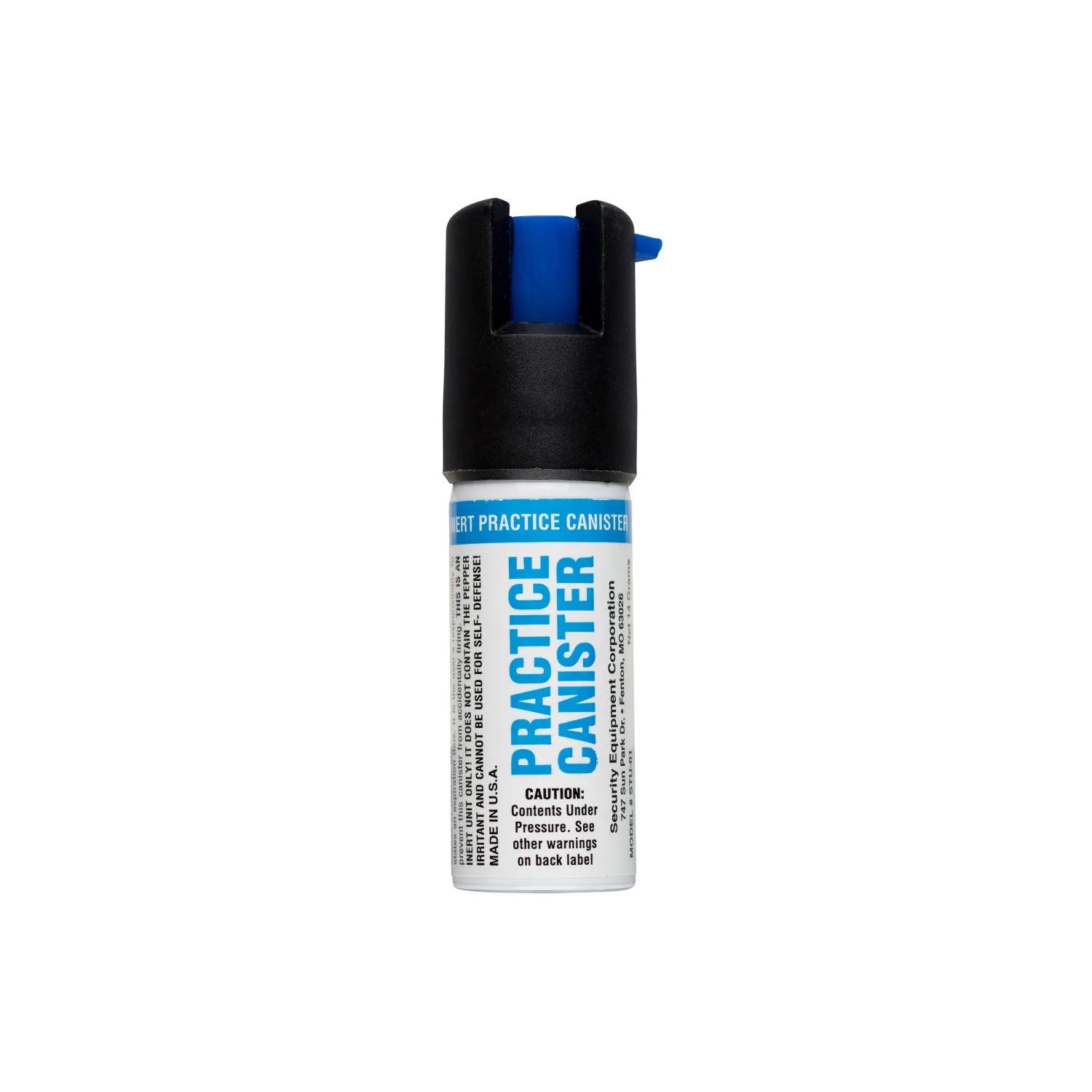
Practice Spray Canister with Twist Lock
A practice spray canister is a training tool that mimics the look, feel, and spray pattern of your actual pepper spray. It uses a harmless solution (usually water or a saline mix) so you can practice safely without the risk of getting OC (oleoresin capsicum) in your eyes or on your skin. The twist lock mechanism is a safety feature that requires you to rotate the top of the canister to align the nozzle before pressing the actuator. This prevents accidental sprays when the canister is in your pocket or purse.
The twist lock is especially useful for training because it forces you to develop the muscle memory needed to unlock and spray quickly. In a real situation, you won't have time to fumble. By practicing with a twist lock canister, you'll learn to make the unlocking motion second nature.
- Practice canisters are typically filled with inert liquid, so they're safe for indoor training.
- The twist lock adds a realistic step that mimics many real pepper spray models.
- Regular practice builds confidence and ensures you can deploy your spray under stress.
Step-by-Step Guide to Using a Twist Lock Practice Canister
Start by holding the practice canister in your dominant hand, with your thumb resting on the top. The twist lock is usually a rotating collar or a cap that needs to be turned to align the nozzle with the actuator. Depending on your canister, you may need to twist clockwise or counterclockwise. Check the markings on your canister—many have arrows indicating the unlock direction.
Once the nozzle is aligned, you can press the actuator. Practice this motion slowly at first, then gradually increase your speed. Aim at a target (like a paper target or a cardboard box) from a distance of 5 to 8 feet. Remember to spray in short bursts, as you would in a real encounter, to conserve your pepper spray and increase accuracy.
- Practice both right-hand and left-hand deployment, in case your dominant hand is injured.
- Wear safety glasses during practice to avoid accidental spray in your eyes.
- Practice in a well-ventilated area to avoid inhaling the mist.
Why Training with a Practice Canister Matters
In a high-stress situation, fine motor skills deteriorate. You might forget which way to twist the lock or how to position your thumb. Training with a practice canister helps you build the muscle memory needed to operate your pepper spray automatically. It also lets you test your draw speed and accuracy, so you know what to expect when it counts.
Many self-defense experts recommend practicing at least once a month. Regular practice also helps you become familiar with the spray pattern and range of your canister, so you can make better decisions about when to deploy it. For example, you'll learn that pepper spray has a limited range and that wind can affect the spray, which is crucial information when you're outdoors.
- Practice drawing your canister from your pocket, purse, or holster to simulate real-world access.
- Set up a training routine: practice once a week for the first month, then monthly thereafter.
- Use a practice canister that matches your real pepper spray model for the most realistic training.
Choosing the Right Practice Canister for Your Needs
When selecting a practice canister, consider the model of your actual pepper spray. Ideally, the practice canister should be the same size and shape so that your training translates directly to your defensive tool. For example, if you carry a fast flip top pepper spray, look for a practice canister with a similar flip top mechanism. If you use a keychain model, practice with a canister that attaches the same way.
SABRE offers several practice canisters that pair with their popular pepper spray models. For instance, the Practice Spray with Twist Lock is designed to mimic the twist lock mechanism found on many SABRE sprays. The Defense Spray New User Kit with Pepper Spray and Practice Spray includes both a live pepper spray and a practice canister, so you can train with the exact same model you carry. This is ideal for beginners who want a complete solution.
- Match your practice canister to your real pepper spray for realistic training.
- Consider a kit that includes both a practice canister and a live spray for convenience.
- Check the twist lock mechanism to ensure it feels similar to your everyday carry.
Safety Tips for Practice Spray Training
Even though practice spray is inert, it's still a liquid that can cause slipping if it lands on the floor. Always practice outdoors or in a designated training area with a non-slip surface. If you're practicing indoors, place a drop cloth or old towel down to catch the spray. Ensure that children and pets are not in the area during training.
After each practice session, clean the nozzle with a damp cloth to prevent clogging. Store the practice canister in a cool, dry place away from direct sunlight. Check the expiration date on the canister—practice spray can lose pressure over time, so replace it periodically to ensure realistic performance.
- Never point the practice canister at a person or animal, even though it's inert.
- Wash your hands after handling the practice canister.
- Keep the practice canister separate from your live pepper spray to avoid confusion.
Integrating Practice into Your Self-Defense Routine
Now that you know how to use a practice canister, it's time to make it part of your regular self-defense training. Start by practicing the twist lock motion without spraying—just draw the canister, unlock it, and re-holster it. This builds familiarity with the mechanism. Then, add a target and practice spraying with accuracy.
You can also practice different scenarios, such as an attacker approaching from the front or side. Remember to keep your pepper spray accessible and practice drawing it quickly. The more you practice, the more confident you'll feel in your ability to defend yourself.
- Set a monthly reminder to practice your pepper spray skills.
- Incorporate practice into a broader self-defense routine, such as situational awareness drills.
- Consider taking a self-defense class that includes pepper spray training.
Training with a practice spray canister with a twist lock is one of the best ways to prepare for a real self-defense situation. By mastering the twist lock mechanism and practicing regularly, you'll build the muscle memory and confidence needed to deploy your pepper spray effectively under stress. Remember to choose a practice canister that matches your everyday carry, and always prioritize safety during training. Ready to start? Explore the Practice Spray with Twist Lock to begin your training today.