Start with what the practice canister actually is
The SABRE Practice Spray with Twist Lock is a non-lethal training tool. It is not a defensive pepper spray, and the catalog does not present it as one. That distinction matters before you count drills: you are rehearsing the movements of carry and deployment, not testing the effects of a defensive formula.
The record also does not list a capacity, spray duration, range, or a recommended number of practice repetitions. Any drill count below is a practical starting point for building a habit, not a manufacturer specification. Treat it as a way to structure repetition, then adjust to your own comfort and routine.
What the catalog confirms about the practice spray
-
Practice Spray with Twist Lock: SABRE Blue Practice Spray with a twist lock, described as a non-lethal training tool. Confirms the canister is for rehearsal, so your drill plan should focus on handling and deployment habits rather than defensive outcomes.
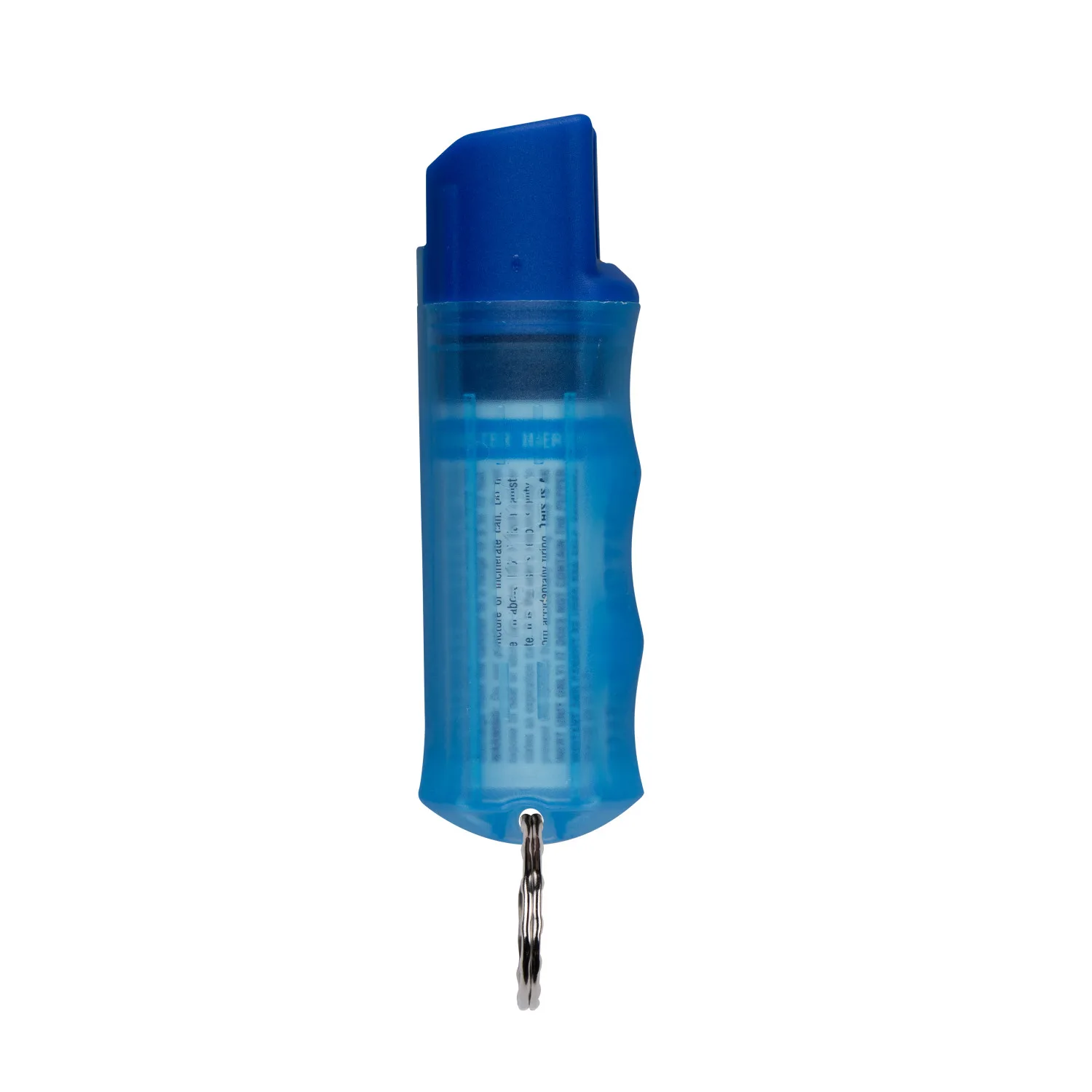
Practice Spray with Twist Lock
-
Practice Spray with Twist Lock: Compact design and easy-to-use self-defense solution, per the catalog description. A compact canister is suited to repeated carry-position practice, which is the part of the routine most worth drilling.
A drill sequence you can repeat in short sessions
Run these in order during each session. Keep sessions short enough that you can repeat them often; the goal is a reliable sequence, not fatigue.
- 1. Grip and draw: Start with the canister in your normal carry position. Bring it to a firing grip without looking down. Repeat until the draw feels the same each time.
- 2. Twist lock release: Practice rotating the twist lock from the stored position to the ready position. The catalog confirms the twist lock exists but does not specify its rotation direction or force, so follow the markings on your canister and keep the motion consistent.
- 3. Aim from a stable stance: Point the canister toward a safe, non-human target area. Rehearse bringing the unit up and aligning it without fumbling. Because the record does not state a spray distance, do not assume a specific range; practice the aiming motion itself.
- 4. Trigger and follow-through: Press the trigger as you would in a real deployment, then return the canister to a ready position. Repeat the full sequence rather than isolating the trigger press.
- 5. Reset and re-holster: Return the canister to its carry position and re-engage the twist lock. A drill is not complete until the tool is back in its stored state.
How many drills before you carry
There is no catalog-stated drill count, so use a progressive target that emphasizes consistency over volume. The numbers below are a practical framework, not a requirement.
- First session: 5 to 10 slow repetitions: Focus on the full sequence from draw to re-holster. Slow is fine; accuracy of the motion matters more than speed.
- Next few sessions: 10 to 15 repetitions each: Add a little speed only when the twist lock release and grip feel automatic. Stop if you notice yourself skipping the re-holster step.
- Before you rely on your carry spray: at least three separate sessions: Spacing practice across days tests whether the habit sticks. A single long session is less useful than several short ones.
- Ongoing: a short refresher each time you handle your carry spray: The catalog does not give a maintenance schedule. A brief rehearsal whenever you pick up your defensive canister keeps the draw and lock motion familiar.
What the practice canister cannot tell you
The SABRE Practice Spray with Twist Lock rehearses handling, not outcomes. The supplied record does not include spray pattern, range, duration, or formulation details, so practice sessions cannot confirm how a defensive canister will perform. Do not treat a clean practice run as evidence of effectiveness.
The record also does not specify care instructions, storage temperatures, or a replacement interval for the practice canister. If the canister becomes difficult to operate or the twist lock feels inconsistent, that is a reason to stop using it for drills rather than to push through. Check the canister itself for any markings or instructions that came with it.
Checkpoints that keep the routine honest
Use these checkpoints after each session to decide whether to repeat the same drill or move on.
- The draw is consistent: You reach the same grip from your normal carry position without looking.
- The twist lock moves without hesitation: You can release and re-engage the lock in one motion, following the canister's markings.
- The full sequence finishes with a re-holster: Every repetition ends with the canister stored and locked, not left in a ready position.
- You can explain each step out loud: If you cannot describe the sequence without the canister in hand, repeat the drill before adding speed.