Quick answer
Choose WS-1 for the slowest flow when your baby tires easily or needs more control; choose WS-2 when your baby feeds with more stamina but still needs a gentle preemie flow.
Why flow size matters for preemies
Premature babies often have weaker suck and less endurance. A nipple that delivers milk too fast can cause choking, coughing, or feeding aversion, while one that is too slow may frustrate your baby and reduce intake.
Pigeon offers two preemie nipple sizes—WS-1 and WS-2—so you can adjust flow as your baby grows. The exact flow rate difference isn't published, so observe your baby's feeding cues to decide when to switch.
Signs it's time to move from WS-1 to WS-2
Watch for these cues during feeding: your baby falls asleep before finishing, takes a long time to complete a bottle, or seems frustrated and fussy even though the latch is correct.
If you see these signs consistently, a slightly faster flow like WS-2 may help your baby finish feeds more efficiently while still being gentle on a delicate mouth.
Compatibility and single-nipple packaging
Both nipples are sold individually, so you can mix sizes without buying a full set. That's handy when you're still figuring out which flow your baby prefers.
Check that the nipple fits your Pigeon bottle—compatibility isn't guaranteed across all bottle systems, so confirm before purchasing.
Decision rules for choosing WS-1 or WS-2
- Start with WS-1 if…: Your baby is very young, tires quickly, or has trouble keeping up with a faster flow. WS-1 gives them more control and reduces the risk of choking. Use WS-1 until your baby can sustain active sucking for at least 10 minutes without falling asleep.
- Move to WS-2 when…: Your baby consistently finishes bottles but takes a long time, or shows frustration during feeds. WS-2 provides a slightly faster flow to help complete feeds more efficiently. Try WS-2 for a few feeds and watch for coughing or milk leaking from the mouth—if that happens, return to WS-1.
- If unsure, alternate…: Buy both nipples and test them during different feeds. Observe your baby's cues—contentment, feeding time, and whether they finish the bottle—to decide which flow suits them best. Keep both sizes on hand; your baby's needs may change as they grow.
Product facts
-
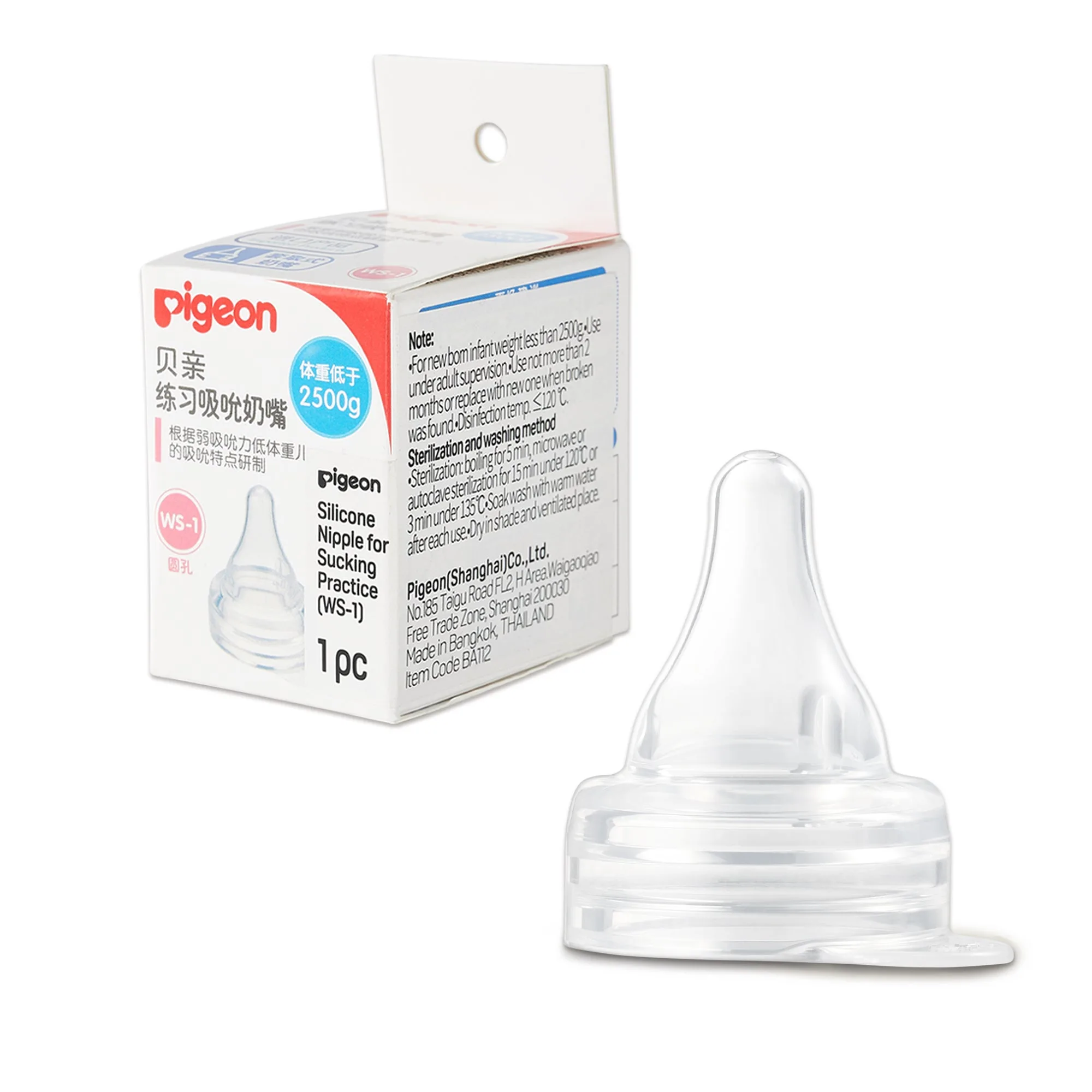
Preemie Silicone Nipple(WS-1) 1 Count: WS-1 is a preemie size designed for smaller or early babies, made from soft, flexible silicone. Its gentler flow suits babies who need more time to coordinate sucking, swallowing, and breathing.
Preemie Silicone Nipple(WS-1) 1 Count
-
Preemie Silicone Nipple(WS-2), 1 Count: WS-2 is also a preemie size, made from durable, flexible silicone for comfortable feeding. It offers a slightly faster flow for preemies who have built more feeding stamina but still need a small nipple.
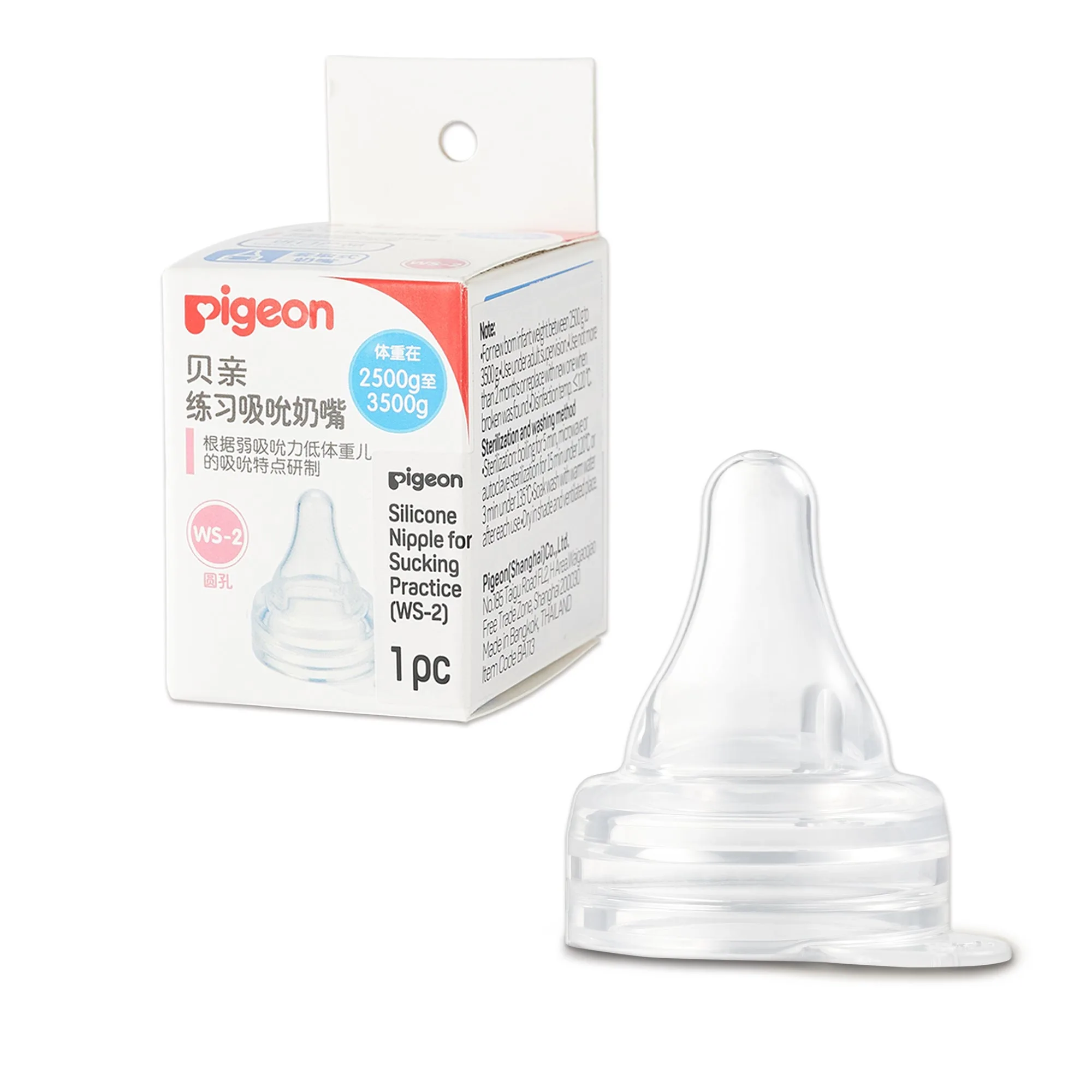
Preemie Silicone Nipple(WS-2), 1 Count
Who should choose which
Best for
- WS-1: Premature babies who tire easily, need a slower flow, or are just starting bottle feeding.
- WS-2: Preemies who have developed more stamina but still need a gentle, preemie-specific flow.
Not for
- Full-term babies or older infants who need a standard or faster flow nipple—consider Pigeon's other flow sizes instead.