What the Premium Upper Rod Actually Changes
The upper rod is the part of your ACUiTY shifter that sits between the adjustment mechanism and the shift knob. Swapping it does not change the shifter's internal geometry or how the gears engage. What it changes is knob height and, by extension, the reach and leverage you feel at the knob.
ACUiTY Premium Upper Rods are sold individually and fit all shift knob height-adjustable ACUiTY shifters. Each rod offers 25mm of height adjustment between the Max and Min markings, and two height styles (Short and Tall) let you go taller or lower than the default rod included with your shifter. Exact height change depends on your application, so the comparison below uses ACUiTY's published fitment data for specific shifter SKUs.
Premium Upper Rod: Key Specifications
-
Premium Upper Rods: Titanium variants are made from Grade 5 titanium; the stainless variant is made from 304 stainless steel. Material choice affects weight, finish options, and how the rod feels in hand—titanium for anodized colors, stainless for a classic machined look.
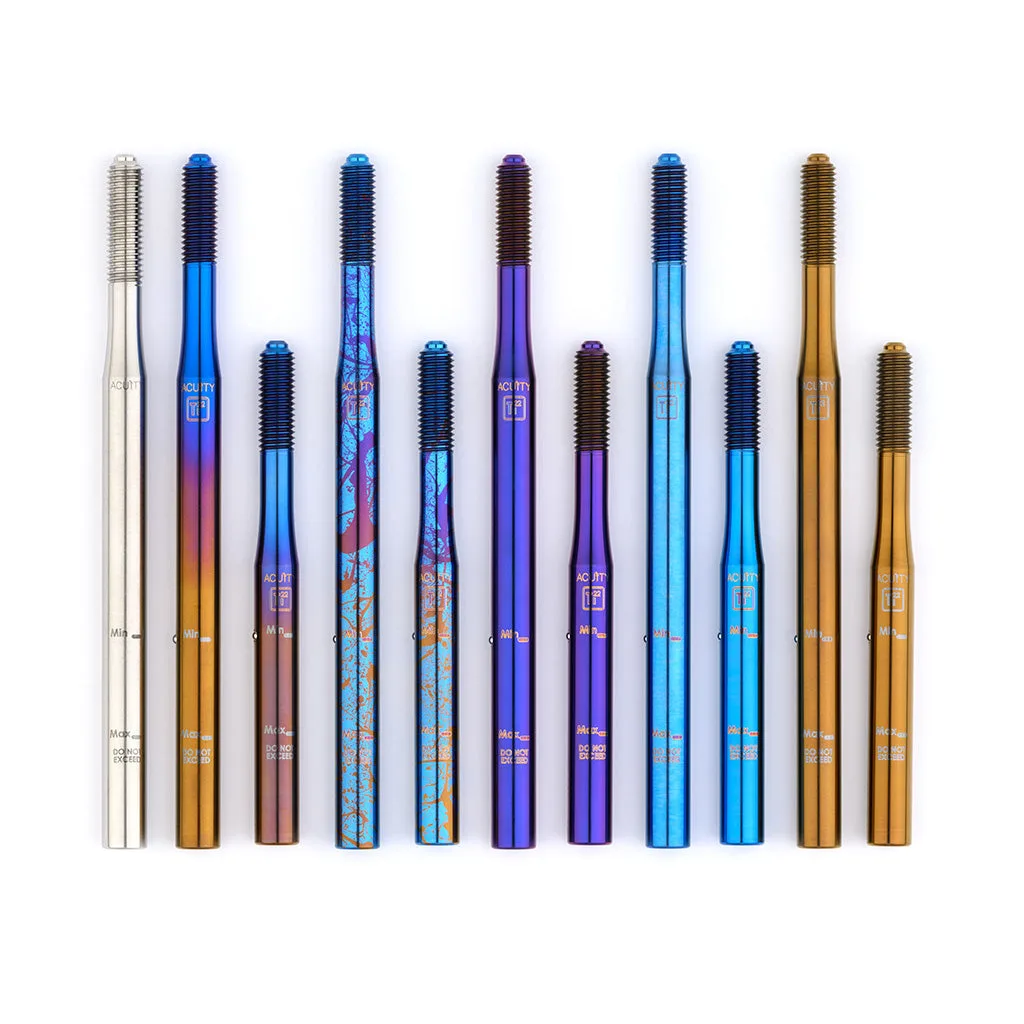
Premium Upper Rods
-
Premium Upper Rods: Each rod features rolled threads and an integrated depth stop, plus 25mm of height adjustment range between the Max and Min markings. Rolled threads and a depth stop help with consistent installation, while the adjustment range lets you fine-tune knob height without swapping rods.
-
Premium Upper Rods: Titanium variants have an anodized finish in five options (three solid colors, two multi-color designs); the stainless variant has an as-machined finish. Finish is purely visual, but it lets you match or contrast your shift knob and interior.
Short vs Tall Style: Height Differences by Shifter
ACUiTY publishes height comparisons for each Premium Upper Rod style against the stock upper rod at its reference setting. Use these to estimate whether a rod will sit higher or lower than what you have. Negative numbers mean shorter than stock; positive means taller.
- 9th Gen Civic (SKU 1880): Short Style: at Max, 1mm shorter than stock at setting 5; at Min, 15mm taller than stock at setting 1. Tall Style: at Max, 49mm taller than stock at setting 5; at Min, 65mm taller than stock at setting 1.
- 10th Gen Civic (SKU 1892): Short Style: at Max, 9mm shorter than stock at setting 5; at Min, 0mm taller than stock at setting 1. Tall Style: at Max, 41mm taller than stock at setting 5; at Min, 49mm taller than stock at setting 1.
- 8th Gen Civic 1-Way (SKU 1960-1W): Short Style: at Max, 19mm shorter than stock at setting 4; at Min, 7mm shorter than stock at setting 1. Tall Style: at Max, 31mm taller than stock at setting 4; at Min, 42mm taller than stock at setting 1.
- 8th Gen Civic 3-Way (SKU 1960-3W): Short Style: at Max, 19mm shorter than stock at setting 5; at Min, 5mm taller than stock at setting 1. Tall Style: at Max, 31mm taller than stock at setting 5; at Min, 55mm taller than stock at setting 1.
- 11th Gen Civic / 5th Gen Integra LHD (SKU 1981-LHD): Short Style: at Max, 37mm shorter than stock at setting 5; at Min, 12mm taller than stock at setting 1. Tall Style: at Max, 13mm taller than stock at setting 5; at Min, 62mm taller than stock at setting 1.
- 11th Gen Civic RHD (SKU 1981-RHD): Short Style: at Max, 37mm shorter than stock at setting 5; at Min, 12mm taller than stock at setting 1. Tall Style: at Max, 13mm taller than stock at setting 5; at Min, 62mm taller than stock at setting 1.
What This Means for Shift Feel
A taller knob increases the distance your hand travels between gears and can give a more relaxed, upright reach—many drivers find this comfortable for daily driving. A shorter knob reduces throw distance and can feel more direct, though the effort at the knob may increase slightly because you have less leverage. These are general ergonomic effects, not claims about improved shift precision or reduced throws beyond what the height change itself provides.
Because the Premium Upper Rod only alters knob position, it will not fix worn bushings, cables, or internal shifter wear. If your shifter feels vague or notchy, address those components first; a rod swap is a fit-and-feel customization, not a repair.
Finish and Care: Titanium vs Stainless
The titanium variants' anodized finishes are visually striking but can show oil and dirt over time. ACUiTY recommends wiping the outer surfaces with a microfiber cloth and household rubbing alcohol to restore the finish. Avoid using the rod when your hands are excessively rough or have abrasive materials like sand or dirt, and avoid contact with rings or similar jewelry that may scratch the finish.
The brushed stainless variant has an as-machined finish that may be more forgiving of daily wear, though ACUiTY does not publish specific care instructions for it beyond general handling. If the finish on any rod is damaged, ACUiTY notes they may be able to refinish it at a lower cost than replacement—contact them for details.
Who Should Consider a Premium Upper Rod
- You want a taller or shorter knob than your current rod allows: The Short and Tall styles extend the height range beyond the default rod, giving you more flexibility to dial in reach.
- You want to customize the look of your shifter: Five anodized titanium finishes and a stainless option let you match or contrast your shift knob and interior.
- You already have a height-adjustable ACUiTY shifter: All 11 Premium Upper Rod designs fit all shift knob height-adjustable ACUiTY shifters; no additional adapter is required.
What the Supplied Information Doesn't Cover
ACUiTY does not provide a direct comparison of shift effort or throw reduction for the Premium Upper Rod versus stock, because those outcomes depend on the shifter and vehicle. The height data above is the most concrete guide. Also, the care instructions mention a 'burnt finish,' which suggests they may apply primarily to the Burnt Titanium variant; for other finishes, use the same gentle cleaning approach unless ACUiTY advises otherwise. Always confirm fitment for your specific shifter SKU before ordering.