Quick answer
Prevent lace and mesh lingerie from snagging by treating every point of friction as a risk: wash pieces in a fine-mesh bag or by hand, store them flat or hanging separately so hardware cannot catch on fabric, and inspect jewelry, nails, and zippers before dressing. If a snag has already pulled a thread, stop pulling and reshape the loop with a fine needle rather than cutting it.
Why lace and mesh snag so easily
Lace and mesh are built from fine, often synthetic threads knitted into open patterns. That openness is what makes them breathable and visually light, but it also means individual threads have little surrounding material to protect them. A single rough edge, a stray piece of hardware, or a dry fingertip can catch a thread and pull it out of alignment. The damage is rarely instant tearing; it is usually a pulled loop that grows with each subsequent wash or wear.
The washing routine that prevents most snags
The biggest cause of snagging is washing delicate pieces with items that have zippers, hooks, or rough seams. Even a single bra hook can catch on lace in the drum. Wash lace and mesh separately from everyday clothing, using a fine-mesh laundry bag that is smaller than the drum so pieces cannot tumble freely. If you hand wash, support the fabric in the water rather than scrubbing it against itself. Rinse gently and press water out with a towel instead of wringing. Always check the care label: many pieces, including those from Nearer The Moon: Nether, specify hand washing with gentle detergents and no tumble drying.
Storage that keeps threads safe
Hanging lace or mesh by thin straps can stretch the fabric and expose it to nearby zippers or hooks. Instead, store pieces flat in a drawer lined with a smooth fabric, or hang them in a breathable cotton garment bag. If you stack items, place lace on top so heavier pieces do not press hardware into it. Avoid storing lingerie in plastic bins for long periods; trapped moisture can weaken fibers over time. For structured pieces like corsets, keep the shape by laying them flat or hanging them by the built-in loops, not the lace edges.
Handling and dressing habits that save fabric
Most snags happen when you are in a hurry. Before putting on lace or mesh, check your hands for rough cuticles or hangnails, and remove rings with prongs or sharp edges. When dressing, roll or gather the garment and step into it rather than pulling it over your head, which drags fabric across hair and jewelry. If a piece has a lace-up front or ribbon ties, thread them carefully and avoid pulling the ribbon against the eyelets at an angle. After wearing, inspect the fabric for early pulls before they become holes.
What to do when a snag happens
If you spot a pulled thread, do not cut it. Cutting creates a loose end that will unravel further. Instead, use a fine needle or a snag repair tool to gently work the loop back to the wrong side of the fabric. If the thread is broken, a tiny dot of clear fabric glue on the wrong side can secure it temporarily. For a run in mesh, stop wearing the piece until it is repaired; continuing to wear it will enlarge the hole. If the damage is in a high-stress area like a seam or strap, the piece may need professional repair or replacement.
Diagnose your snag risk
- Symptom: small pulls or loops along seams and edges: Likely cause: friction from washing with hooks, zippers, or rough fabrics. Corrective action: switch to a fine-mesh laundry bag and wash separately. Stop if the pulls are already turning into holes; then the piece needs repair before rewashing. Checkpoint: inspect after every wash for new pulls.
- Symptom: snags concentrated around hardware like eyelets or clips: Likely cause: metal or ceramic components rubbing against lace during storage. Corrective action: store flat with hardware wrapped in soft tissue or keep pieces separate. If hardware is sharp or damaged, stop using it until smoothed or repaired. Checkpoint: run a finger along hardware to feel for rough edges.
- Symptom: runs or tears in mesh panels: Likely cause: a pulled thread that was cut or left to grow. Corrective action: never cut; use a needle to work the loop back. If the run is longer than a few millimeters, stop wearing and seek professional repair. Verdict: small pulls are fixable; large runs usually mean replacement.
Product care notes
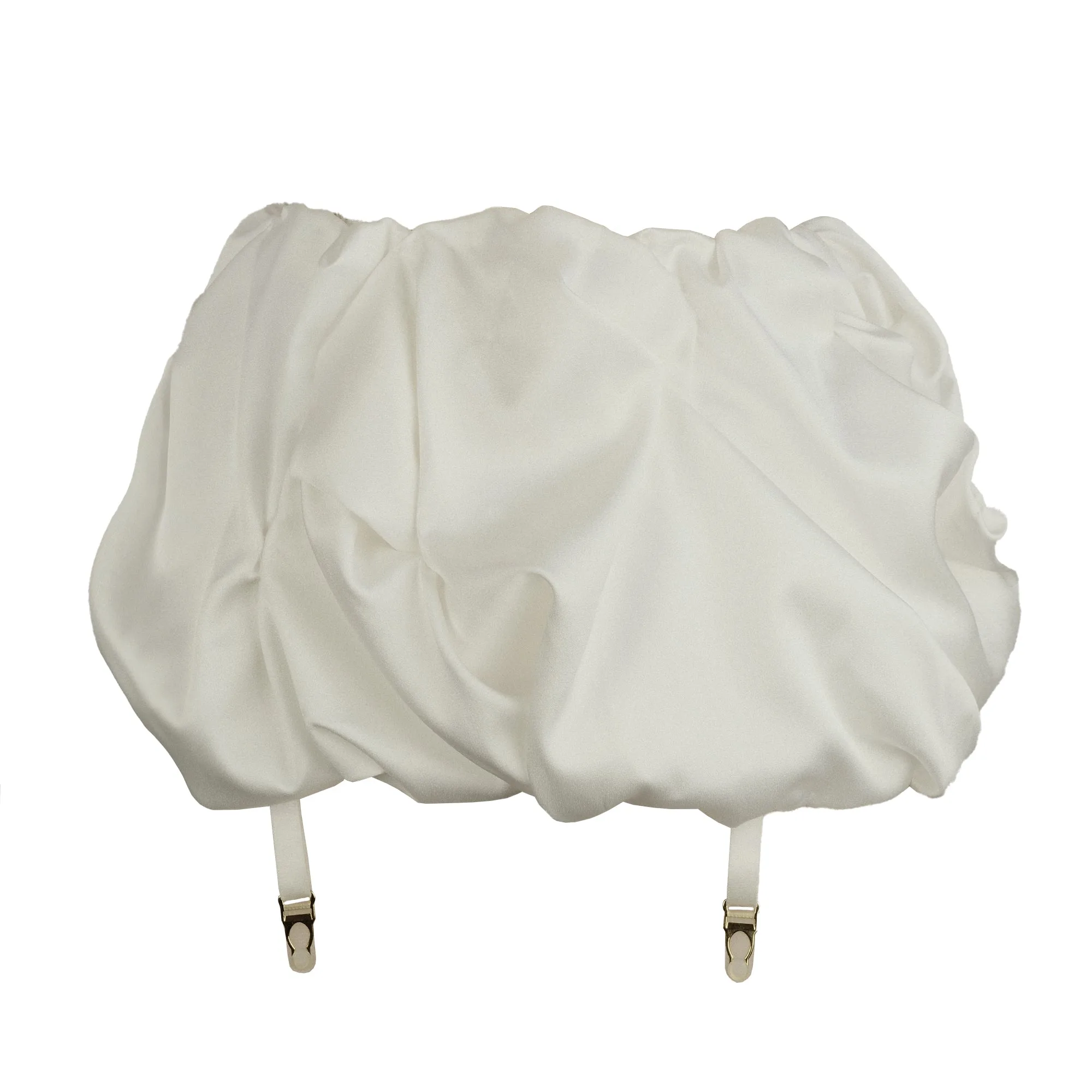
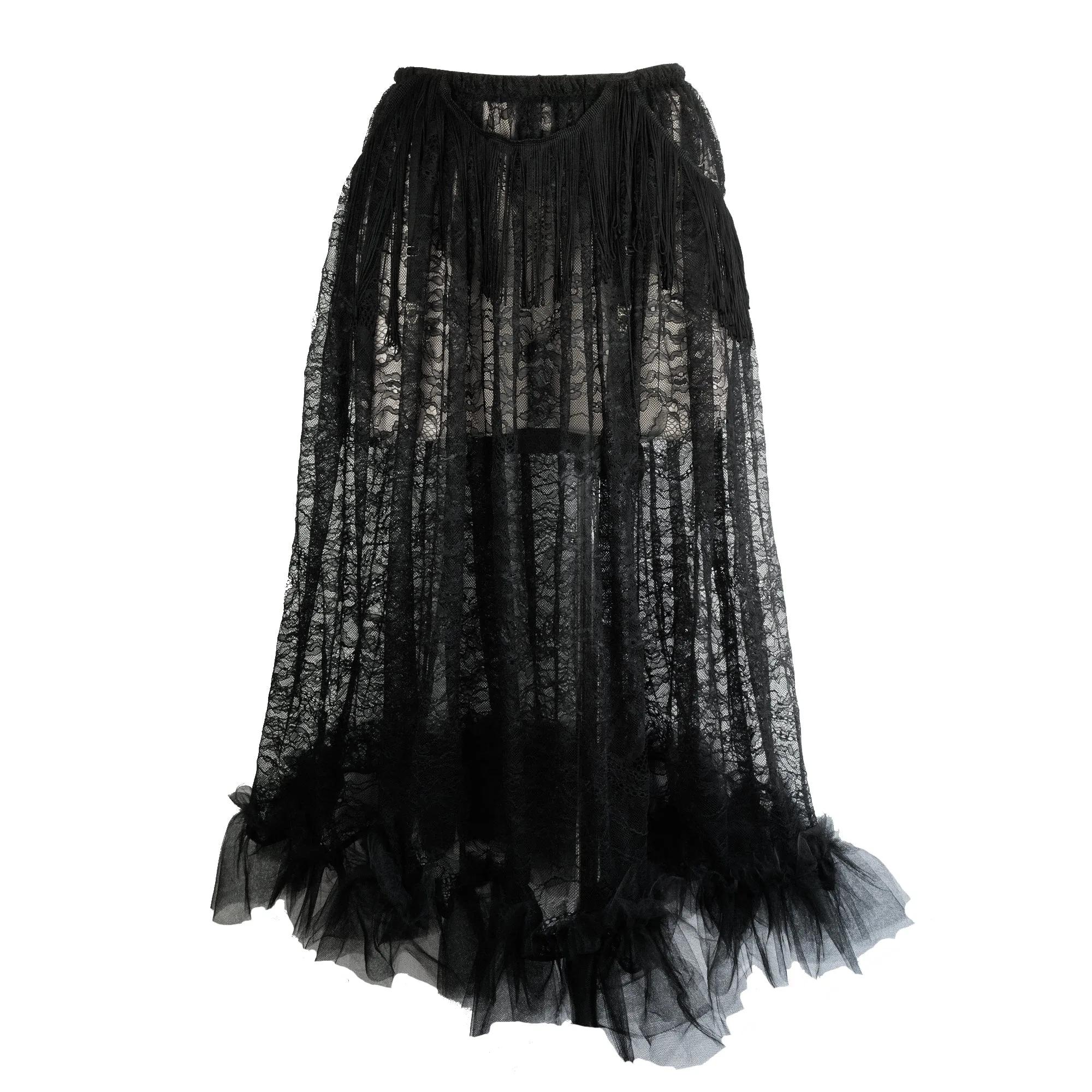
- Lace Skirt: One of a kind full circle petticoat style skirt with ruffles, suspender clips for a personalised drape and finished with a vintage Czech ceramic button at the waist. Size 10 Elasticated waistband with button fastening Asymmetric hi-low hem Cotto njersey mini skirt lining One of a kind All Nether items should be hand washed with gentle detergents and never tumble dried. Fabric Composition: Reworked lace The suspender clips and ceramic button are potential snag points; store this piece flat or hang separately so metal and ceramic do not rub against the lace. Hand washing and no tumble drying protect the delicate lace and lining.
- Lace Corset Knicker: Floral lace, satin ribbon, and gold eyelets - the kind of details that makes getting dressed feel like a ritual. Cut high on the waist with a corset-style lace-up front, these knickers sit somewhere between lingerie and outerwear, and are entirely comfortable with that ambiguity. Gold eyelet hardware Ribbon tie detail at hips Cotton bindings High-waisted silhouette Cut and stitched once you order. Allow 10–14 The gold eyelets and satin ribbon can catch on lace if stored loosely. Keep the ribbon tied or loosely coiled, and store the knicker flat to avoid the eyelets pressing into the lace.
- Lace Long Stays: Put these on and stand differently. The long stays are built with spiral steel boning that holds the torso with real intention, the kind of structure that changes your posture, your silhouette, and the way you take up space. Floral lace construction Spiral steel boning throughout Centre-back satin ribbon lace-up with gold eyelet hardware Satin ribbon bow shoulder ties with gold eyelet detail Cut and stitched once The steel boning and gold eyelets are sturdy but can snag lace during storage. Hang or lay flat without folding along the boning, and keep the ribbon lacing tidy to prevent tangles.