Which Suit Is Right for Your Race?
Both the Pro Long Sleeve Skinsuit and the Pro Speedsuit are built for speed, but they serve slightly different race-day needs. The skinsuit prioritizes sustained drag reduction over longer efforts, while the speedsuit aims for higher top speeds with a similar aerodynamic foundation. Your choice depends on whether you need extra storage for nutrition or a minimalist profile for time trials.
Both suits share the same core aero technology: a double-layer sleeve construction and a fabric derived from the Pro Aero Jersey, proven in wind tunnel testing. The key differences come down to pocket layout and specific design details.
Aerodynamic Foundation
-
Pro Long Sleeve Skinsuit: The upper section uses the same aerodynamic fabric as the Pro Aero Jersey, proven in wind tunnel testing to reduce drag in aggressive riding positions. This fabric is the basis for both suits' speed claims. You get the same aero performance on the upper body regardless of which suit you choose.
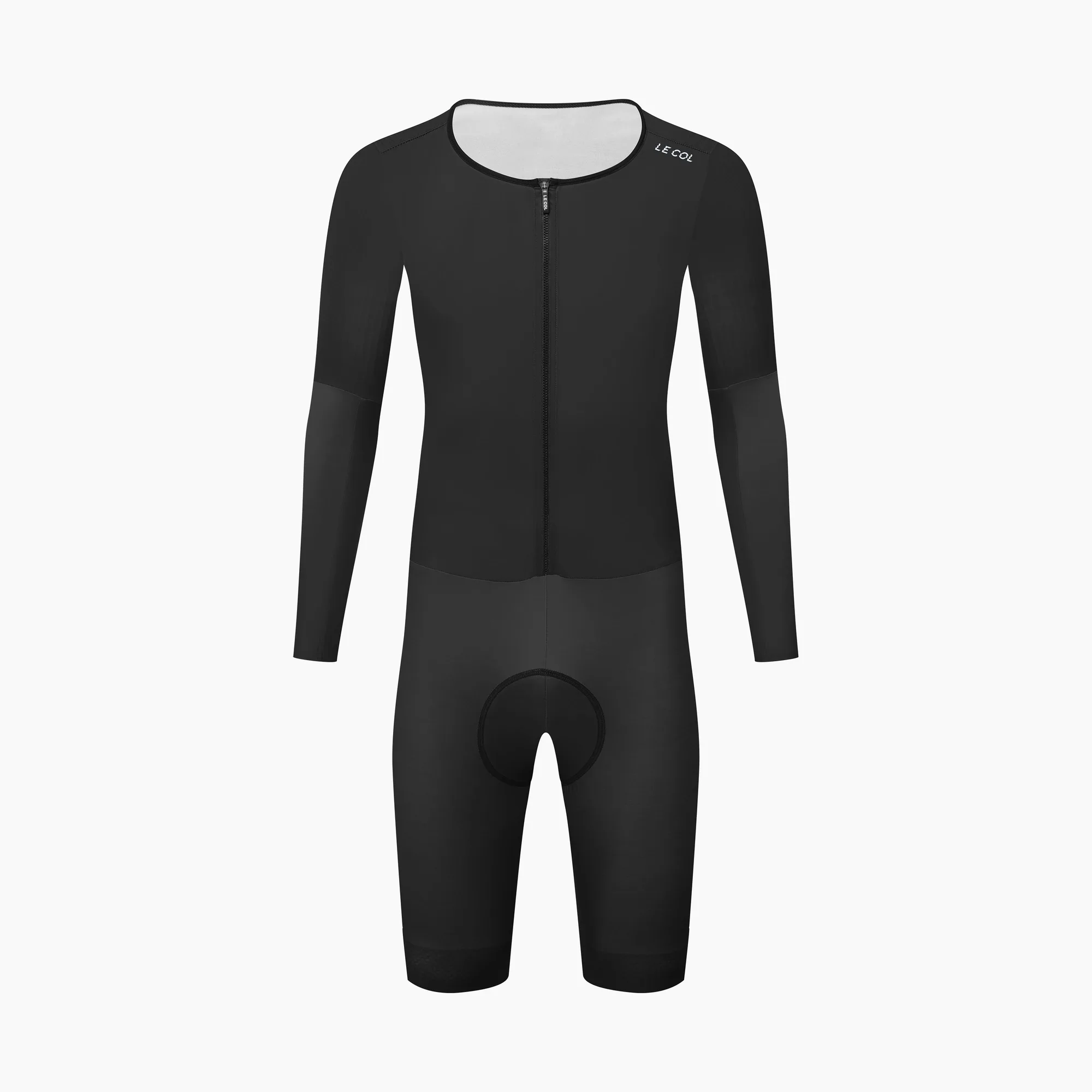
Pro Long Sleeve Skinsuit
-
Pro Speedsuit: The upper section is re-engineered using the same aerodynamic fabric found in the Pro Aero Jersey, proven in the wind tunnel to reduce drag in aggressive riding positions. The speedsuit uses the same proven fabric, so the aerodynamic advantage on the torso is identical to the skinsuit.
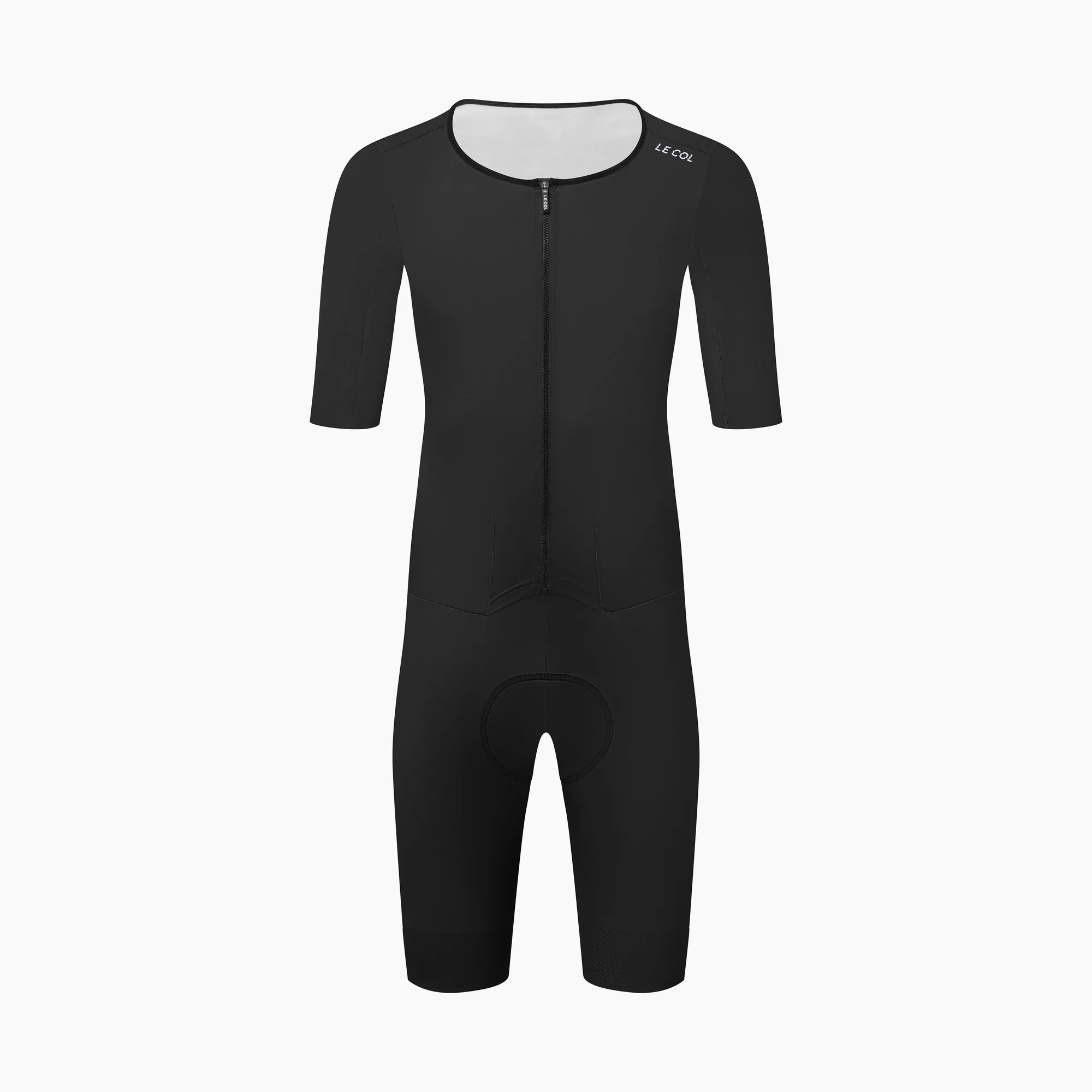
Pro Speedsuit
Key Differences at a Glance
- Pocket Configuration: The Pro Long Sleeve Skinsuit includes a low-profile internal race radio pocket and a rear race number pocket. The Pro Speedsuit has the same radio pocket plus three rear pockets for nutrition, making it better suited for longer races where you need to carry gels or bars.
- Construction Focus: The skinsuit is described as 'engineered to reduce drag and maintain speed over longer race efforts,' while the speedsuit is said to 'unlock greater efficiency and higher top speeds.' This suggests the skinsuit is tuned for sustained efforts, whereas the speedsuit may favor all-out speed bursts.
- Fit and Chamois: Both suits feature a highly compressive fit and a race-tuned chamois used by pro teams. The fit is designed to sit close to the skin, and both use a raw-cut leg hem with internal silicone for a seamless fit.
What the Catalog Confirms About Speed
Both suits are developed through wind tunnel testing alongside world-leading aerodynamicists. The double-layer sleeve construction on both enhances airflow control, creating a low-drag surface. The skinsuit uses strategically placed tripping fabrics and a minimized seam layout to control turbulence, while the speedsuit uses similar tripping fabrics and seam minimization to optimize airflow.
Because the core aero fabric and sleeve construction are shared, the practical speed difference between the two suits likely comes down to the rider's position and the specific race conditions. The catalog does not provide direct comparative speed data, so you should base your decision on pocket needs and whether you want a dedicated time-trial suit or one with more storage for road racing.
Which Suit Should You Choose?
- Choose the Pro Long Sleeve Skinsuit if...: You prioritize sustained race performance and minimalism. The internal radio pocket and race number pocket keep your profile clean, and the fabric is optimized for maintaining speed over longer efforts. This suit is ideal for time trials or criteriums where you don't need to carry much.
- Choose the Pro Speedsuit if...: You want the flexibility of three rear pockets for nutrition during longer road races or multi-hour training sessions. The speedsuit's design targets higher top speeds, which may benefit riders who need quick bursts of acceleration.
What the Catalog Does Not Tell You
The catalog does not specify exact weight, temperature range, or care instructions for either suit. Both are available in Black with slightly different size runs: the skinsuit offers XS through XL, while the speedsuit lacks size S in the supplied evidence. If you need a size S, the skinsuit is the only confirmed option. The catalog also does not provide data on durability or how the suits perform in wet conditions, so treat these as race-specific tools rather than all-weather gear.