Quick answer
Set your Pro Speed Rope by standing on the middle and checking that the handle tops reach your armpits, then adjust the handles so they sit lightly in your fingers. Keep elbows close and turn the rope with your wrists, not your arms.
Why rope length matters more than handle style
A rope that is too long forces you to swing your arms wider, which slows rotation and throws off your timing. A rope that is too short catches your feet or forces you to jump higher than necessary. The armpit check is a reliable starting point for most adults, but your ideal length also depends on your jumping style and the tricks you plan to do.
If you plan to learn double-unders or faster footwork, start at the armpit length and shorten by an inch at a time until the rope just clears your feet with a small margin. For basic conditioning, a slightly longer rope gives more forgiveness.
When to ignore the standard sizing rule
The armpit rule assumes you will hold the handles at hip height with elbows bent. If you prefer to keep your hands higher or lower, adjust the rope accordingly. Taller athletes with long arms may need a rope that reaches just below the armpits, while shorter athletes may find chest height works better.
Also consider the surface: jumping on a soft mat requires a slightly shorter rope than jumping on a hard floor because the mat gives under your feet.
Step-by-step Pro Speed Rope setup
- Size the rope: Stand on the middle of the rope and pull the handles up. The tops of the handles should reach your armpits. If they don't, adjust the rope length at the handle connection point according to the manufacturer's instructions. Check the length before every workout if you share the rope or change shoes.
- Set your grip: Hold the handles near the end with a light, relaxed grip. Your thumbs should rest on top or slightly around the handle. Avoid squeezing tightly. A relaxed grip lets the ball bearings do their job and reduces hand fatigue.
- Position your hands: Keep your hands at hip height, about 6 to 8 inches apart, with elbows close to your sides. Your upper arms should stay relatively still. If your hands drift outward, the rope will swing wide and catch your feet.
- Start with a slow spin: Begin turning the rope with your wrists only, keeping your arms still. Jump just high enough to clear the rope, about an inch off the ground. Listen for the rope hitting the floor; a consistent rhythm means your timing is correct.
- Check the rope path: The rope should pass close over your head and under your feet in a narrow arc. If it hits your head or feet, shorten the rope by an inch or adjust your hand position. A narrow arc means less air resistance and faster spins.
- Increase speed gradually: Once you can do 30 seconds of smooth jumps, try speeding up the wrist turn while keeping your jump height the same. Don't rush the transition to double-unders. Speed comes from wrist rotation, not from jumping higher.
Pro Speed Rope at a glance
-
Pro Speed Rope: Smooth ball bearing action and solid PVC rope for faster rotation. Ball bearings reduce friction so the rope spins freely, which makes wrist turns more effective and helps you maintain a steady rhythm.
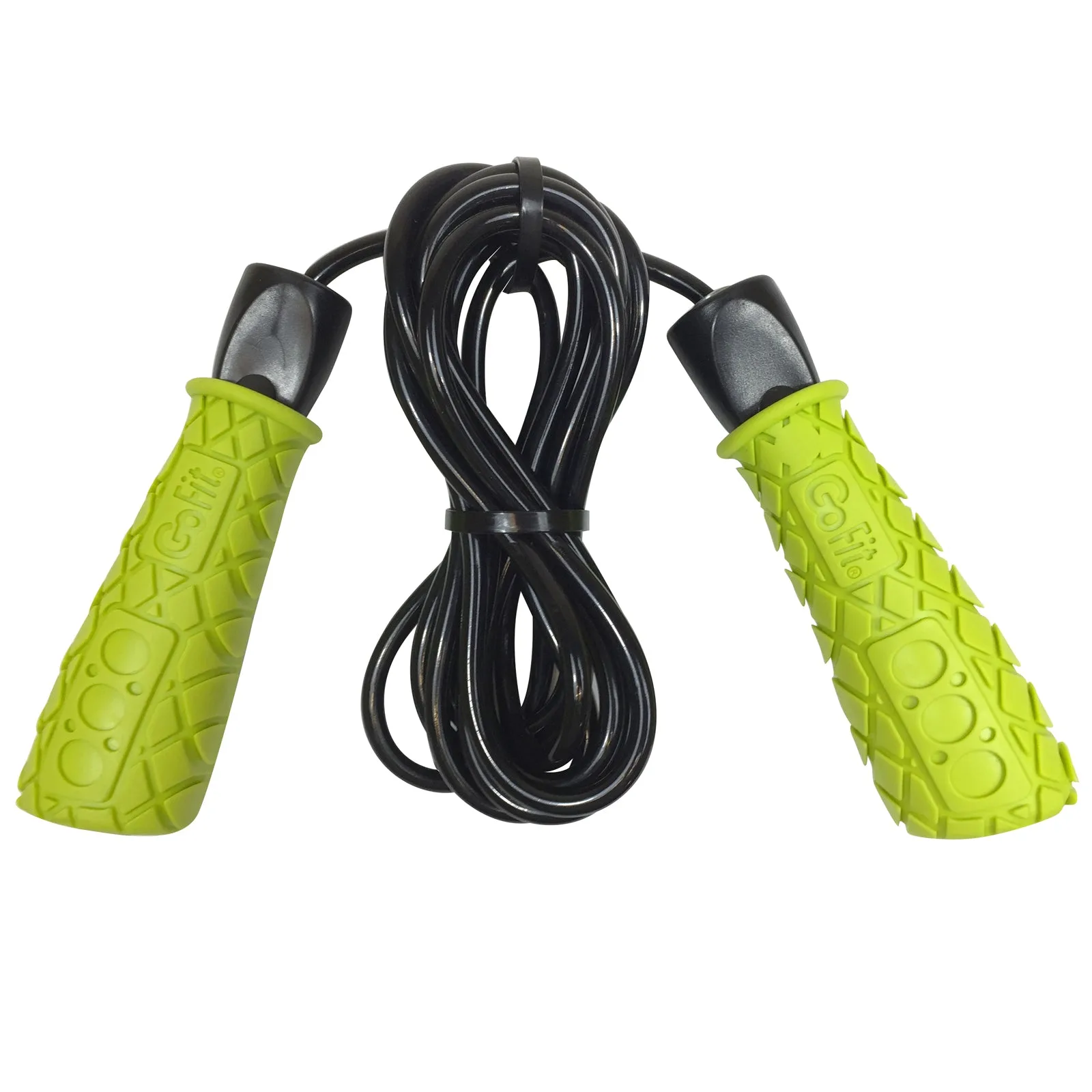
Pro Speed Rope
-
Pro Speed Rope: Deluxe grip handles provide no-slip comfort and control. A secure grip lets you relax your hands, reducing fatigue and helping you keep the handles positioned correctly during fast sets.