Quick Answer
Probiotics are live beneficial bacteria, prebiotics are the food they eat, and fiber is a type of carbohydrate that includes many prebiotics. For most people, a combination of all three supports digestion, regularity, and appetite control. If you want targeted debloating and regularity, consider a formula like https://humnutritione.shop/products/flatter-me-plus-259448Flatter Me Plus or Flatter Me Max; if your focus is cravings and GLP-1 support, Flatter Me Fiber GLP-1 Booster is the better fit.
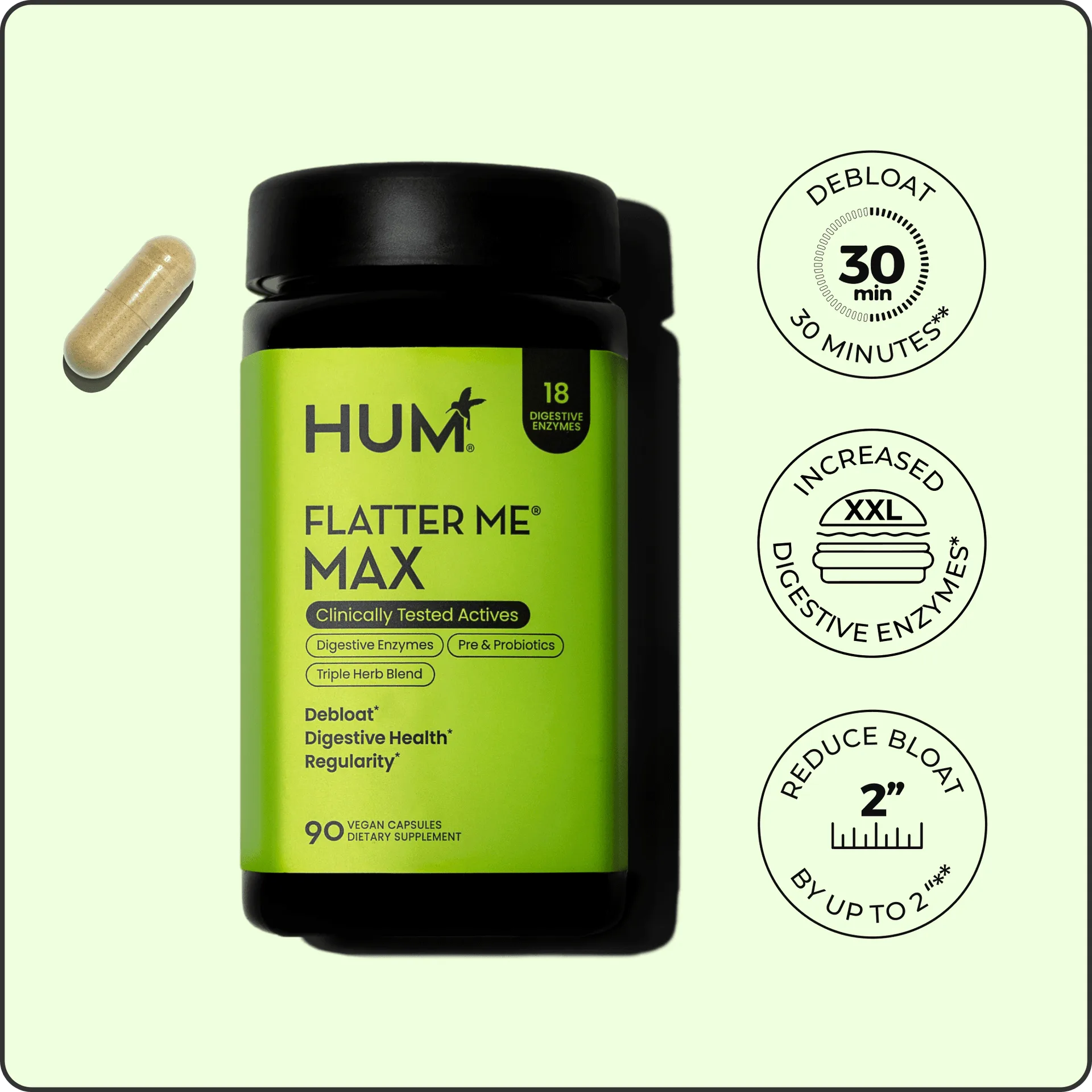
Flatter Me Max
If you've ever stood in the supplement aisle wondering whether you need probiotics, prebiotics, or fiber, you're not alone. These three terms are often used interchangeably, but they do very different jobs in your digestive system. Understanding the difference helps you choose the right product for your specific gut health goals—whether that's reducing bloating, supporting regularity, or managing cravings.
This guide breaks down each one, explains how they work together, and compares HUM Nutrition's Flatter Me lineup so you can decide which supplement matches your needs.
What Are Probiotics?
Probiotics are live microorganisms—usually bacteria or yeast—that provide health benefits when consumed in adequate amounts. They help maintain a healthy balance of gut flora, which supports digestion, immune function, and even mood. Probiotic benefits are most noticeable when your gut bacteria are out of balance due to stress, poor diet, or antibiotics.
Probiotics are found in fermented foods like yogurt, kefir, sauerkraut, and kimchi, as well as in supplements. They work best when they survive stomach acid and reach your intestines alive. Look for products that specify the strains and the number of colony-forming units (CFUs) to ensure you're getting a meaningful dose.
- Probiotics are live bacteria that support a balanced gut microbiome and aid digestion.
What Are Prebiotics?
Prebiotics are types of fiber that feed the beneficial bacteria in your gut. They act as fertilizer for probiotics, helping them thrive and multiply. Common prebiotics include inulin, fructo-oligosaccharides (FOS), and galacto-oligosaccharides (GOS).
Prebiotic foods include garlic, onions, bananas, oats, and apples. You can also get prebiotics in supplement form, often combined with probiotics in what's called a synbiotic. Prebiotics are especially important because they help your existing gut bacteria grow, making your microbiome more resilient over time.
- Prebiotics are non-digestible fibers that feed beneficial gut bacteria.
What Is Fiber?
Fiber is a type of carbohydrate that your body can't digest. It adds bulk to your stool, promotes regularity, and helps you feel full. There are two main types: soluble fiber, which dissolves in water and forms a gel, and insoluble fiber, which adds bulk and speeds up transit time.
Many prebiotics are also fiber, but not all fiber is prebiotic. For example, cellulose is a fiber but doesn't feed gut bacteria the way inulin does. Fiber also plays a role in blood sugar regulation and appetite control by slowing digestion and promoting satiety. That's why fiber is a key component of weight management and digestive health routines.
- Fiber adds bulk to stool, promotes regularity, and helps you feel full.
How They Work Together
Probiotics, prebiotics, and fiber form a synergistic team. Probiotics introduce beneficial bacteria, prebiotics feed them, and fiber supports overall digestive function. Together, they create an environment where good bacteria can flourish, which can improve digestion, reduce bloating, and support regular bowel movements.
When choosing a gut health supplement, consider whether you need all three. Some products combine probiotics and prebiotics, while others focus on fiber alone. For example, Flatter Me Plus includes prebiotics and probiotics, while Flatter Me Fiber GLP-1 Booster focuses on prebiotic fiber with added enzymes. Knowing your primary goal—debloating, regularity, or appetite control—helps you pick the right combination.
- A complete gut health routine often includes both probiotics and prebiotics, plus fiber for regularity.
How to Choose: Trade-offs to Consider
- Probiotics alone: Probiotics introduce beneficial bacteria but may not be enough if your diet lacks prebiotics to feed them. They can help balance gut flora but may take weeks to show noticeable effects. Choose a probiotic if you know your gut flora is imbalanced, but pair it with prebiotic foods for best results.
- Prebiotics alone: Prebiotics feed existing bacteria but don't introduce new strains. They can promote regularity and appetite control but may cause temporary gas if you start with a high dose. Good for maintenance and appetite support, but not ideal if you need to repopulate beneficial bacteria.
- Combined formulas: Products like Flatter Me Plus and Flatter Me Max combine probiotics and prebiotics, with enzymes added for debloating. They offer comprehensive support but may cost more and include ingredients you might not need. Best for those who want a one-and-done solution for bloating, digestion, and regularity.
- Fiber-focused products: Flatter Me Fiber GLP-1 Booster provides prebiotic fiber plus enzymes, with a focus on GLP-1 and cravings. It supports regularity but doesn't include live probiotics. Ideal if your primary goal is appetite control and you already get probiotics from food or another supplement.
HUM Nutrition Flatter Me Products at a Glance
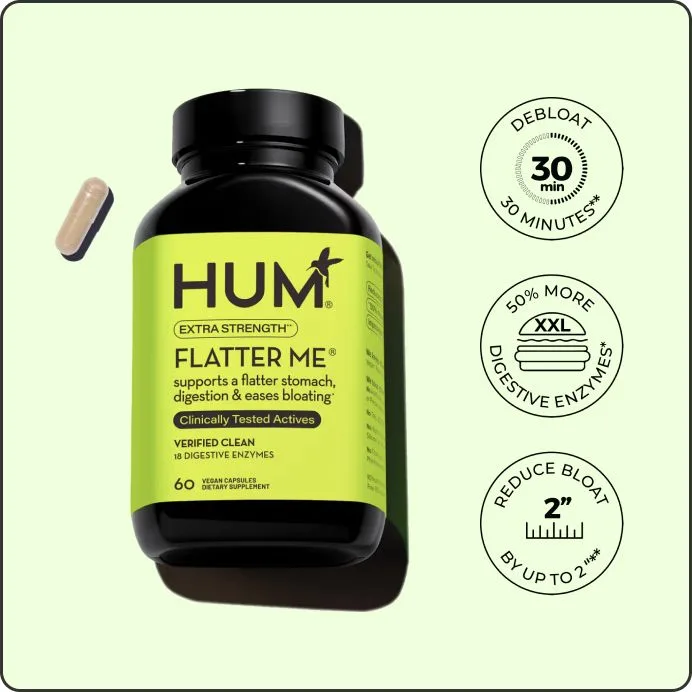
- Flatter Me Plus: A clinically studied digestive formula with 18 full-spectrum enzymes, prebiotics, and probiotics to help reduce bloating in just 30 minutes** and promote regularity. If your main concern is bloating after meals, this combines probiotics and prebiotics with digestive enzymes to target discomfort quickly.
- Flatter Me Fiber GLP-1 Booster - Strawberry Lemon: Clinically Backed Prebiotic Fiber formulated to double GLP-1 levels naturally, curb cravings, and promote regularity.** Supercharged with Flatter Me® enzymes blend to ease bloat and support digestion.* If you're focused on appetite control and cravings, this prebiotic fiber supports GLP-1 production while also aiding digestion and regularity.
- Flatter Me Max: 3-in-1 digestive support with extra strength enzymes, clinically backed probiotics, and an organic prebiotic to debloat in 30 minutes, aid digestion, and promote regularity.** Clinically Tested Ingredients ✓ 18 full-spectrum digestive enzymes to break down meals and debloat in 30 minutes.** ✓ Probiotics + prebiotic support for digestion and regularity.* This is the most comprehensive option if you want all three—enzymes, probiotics, and prebiotics—in one formula for maximum digestive support.
Which One Fits You?
Best For
- People who want to reduce bloating and promote regularity with a comprehensive formula like Flatter Me Max
- Those focused on appetite control and cravings who want prebiotic fiber with GLP-1 support, such as Flatter Me Fiber GLP-1 Booster
Not For
- People who only need a probiotic supplement and prefer to get fiber from food
- Those who are sensitive to added fiber and want a probiotic-only formula
Probiotics, prebiotics, and fiber each play a unique role in gut health, and the best choice depends on your goals. For targeted debloating and comprehensive digestive support, consider Flatter Me Plus or Flatter Me Max. If appetite control and cravings are your priority, Flatter Me Fiber GLP-1 Booster offers prebiotic fiber with added enzymes. Whichever you choose, combining supplements with a fiber-rich diet will help you get the most out of your gut health routine.