Quick answer
Choose a protective helmet with faceguard that offers full face and neck coverage, stays secure during movement, and provides adequate ventilation for long training sessions.
Coverage vs. Mobility
A helmet that protects the head, face, and neck is essential for bite training, but it must not restrict your vision or movement. Look for designs that cover vulnerable areas without making it hard to see the dog or turn your head quickly.
Ventilation and Comfort
Bite training can be physically demanding. A well-ventilated helmet helps keep you cool and reduces sweat buildup. Ear cutouts improve airflow and also allow you to hear commands and the dog's movements clearly.
Secure Fit
The helmet must stay in place during active training. An adjustable closure system, such as a hook and loop strap at the back, lets you customize the fit and prevents the helmet from shifting or falling off during a bite engagement.
Decision rules for choosing a protective helmet with faceguard
- Full coverage required: The helmet must protect the head, face, and neck. Exposed areas are vulnerable to bites. Check that the faceguard extends below the chin and covers the sides of the face.
- Secure closure system: An adjustable hook and loop or buckle closure at the back ensures the helmet stays tight. A loose helmet can shift and expose skin or obstruct vision. Test the fit by shaking your head vigorously before each session.
- Ventilation for endurance: Look for ear cutouts or mesh panels that allow airflow. Good ventilation reduces heat buildup and helps you stay focused during long training runs.
- Durable padding: High density foam padding absorbs impact from bites and protects your head. The outer shell should be tough enough to withstand repeated bites without tearing. Inspect padding regularly for compression or damage.
- Weight and balance: A heavy helmet can cause neck fatigue. Choose a lightweight design that still offers full coverage. Balance the helmet so it doesn't pull forward or backward.
Product spotlight
-
Protective Helmet with Faceguard: Made of a black padded vinyl shell with high density foam, adjustable hook and loop closure, three hole cutouts for each ear for ventilation. This combination of padding, adjustability, and airflow helps you stay protected and comfortable during intense training sessions.
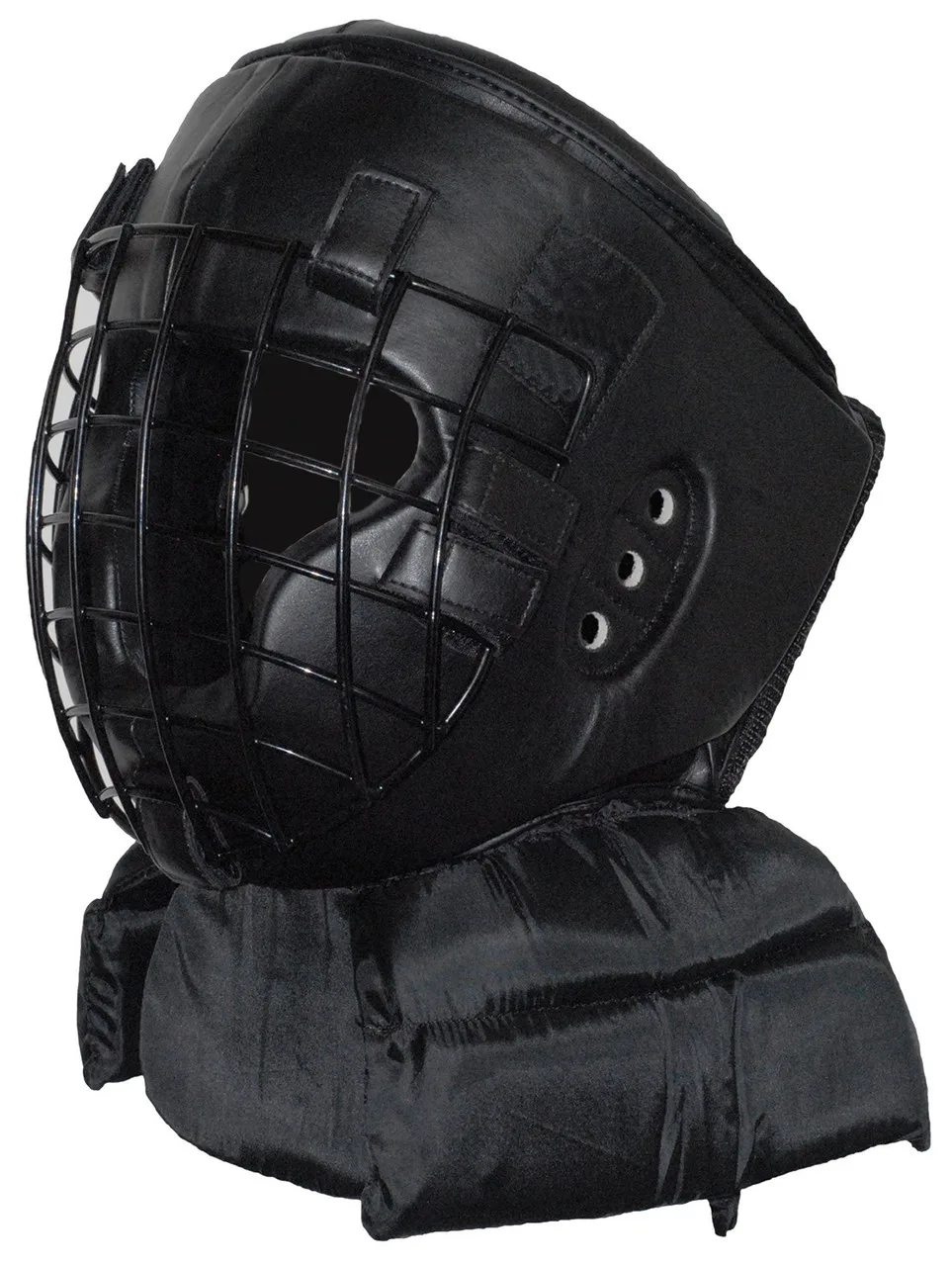
Protective Helmet with Faceguard
Who should buy this type of helmet
Best for
- Decoys and helpers who take bites to the head area during training
- Handlers who want an affordable, well-ventilated option for regular practice
Not ideal for
- Handlers who need a helmet with integrated communication systems or camera mounts
- Training scenarios requiring a full-face shield with anti-fog coating