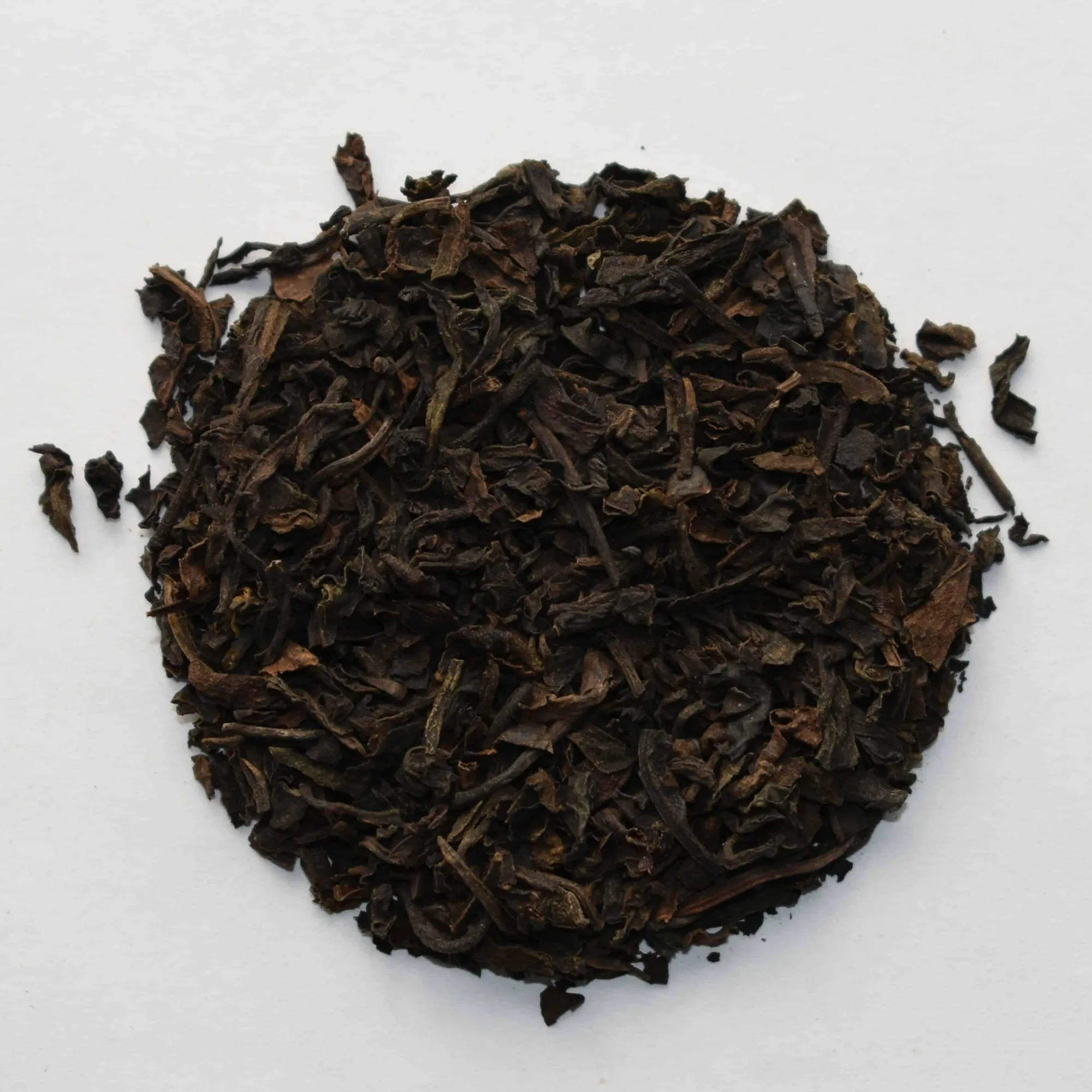
Quick answer
Brew a three-year vintage pu-erh with water just off a rolling boil, about 95°C (203°F), and start with a 10-second first steep. Taste it, then add 5 to 10 seconds to each following steep. Use 5 grams of leaf per 150 ml of water. This short first steep lets you check the leaf before committing to a longer one, which is the easiest way to avoid a bitter cup.
What a three-year vintage pu-erh actually tastes like
A three-year vintage pu-erh sits in a useful middle ground. It has had enough time to soften the sharp, earthy edge that very young pu-erh can carry, but it has not yet developed the deep, woody, almost camphor-like notes of a much older cake. Expect a smooth, dark cup with gentle earthiness, a hint of sweetness, and a clean finish that lingers without turning harsh. If you have only tried a strongly fermented ripe pu-erh before, this is a friendlier starting point.
The catalog describes pu-erh as an aged and fermented tea famed for its medicinal properties, often taken for indigestion and useful in lowering cholesterol, cutting grease, and breaking down fat in the body. Treat those as traditional uses rather than guaranteed outcomes. What you can count on is a robust cup that stands up well after a heavy meal, which is why it is often served alongside rich food.
Choose your water and teaware before you start
Use fresh, filtered water. Tap water with heavy chlorine or mineral content flattens the tea's sweetness and makes the earthiness read as muddy. A simple kettle and a small teapot, gaiwan, or even a mug with a strainer will do. You do not need a full ceremony setup to get a good cup.
Preheat your vessel with hot water and pour it out before adding leaf. A cold pot pulls heat out of the first steep, which is the steep that sets the tone for everything after it.
How much leaf to use and how to warm it up
Weigh 5 grams of dry leaf for every 150 ml of water. If you do not have a scale, one heaped teaspoon is a rough starting point, but weight is more reliable because pu-erh leaf varies in density. A quick rinse is optional with a three-year vintage but helpful: pour hot water over the leaf, swirl for two seconds, and discard that water. This wakes the leaf and washes away any storage dust.
If you skip the rinse, add about 5 seconds to your first steep to compensate. Do not rinse for longer than a few seconds, or you will pour away much of the flavor you paid for.
Temperature and steeping times that work
Pu-erh is forgiving of heat but not of neglect. Aim for 95°C (203°F). Full rolling boil is fine if you let the kettle sit for 30 seconds first. Lower temperatures make the cup thin and sour; higher temperatures with long steeps make it bitter and drying.
Start with a 10-second first steep. Taste it. If it is too weak, go 15 seconds on the next steep. If it is already strong, keep the next one at 8 seconds. From there, add 5 to 10 seconds each round. A three-year vintage typically gives four to six good steeps, and the later ones often taste sweeter and smoother than the first.
Tasting notes to look for as you go
On the first steep, focus on texture rather than flavor. Is the cup smooth or drying? A little dryness is normal; a lot means your water was too hot or your steep ran long. On the second and third steeps, look for sweetness and a clean, earthy depth. By the fourth steep, the tea should feel lighter and more aromatic. If every steep tastes flat and woody from the start, try more leaf next time rather than a longer steep.
Write down one word per steep. Three or four tastings later, you will have a personal record of how this tea behaves, which is far more useful than any tasting chart.
Your step-by-step pu-erh brewing routine
- Step 1: Preheat the vessel: Fill your teapot, gaiwan, or mug with hot water, swirl, and pour it out. This warms the walls so your first steep does not lose heat. Checkpoint: the vessel should feel hot to the touch before the leaf goes in.
- Step 2: Measure 5 grams of leaf per 150 ml: Weigh the leaf if you can. A heaped teaspoon is a rough fallback. Pu-erh leaf density varies, so a scale gives you repeatable results. Common mistake: using a scoop meant for fine black tea, which under-doses the larger pu-erh leaf.
- Step 3: Rinse the leaf for two seconds: Pour hot water over the leaf, swirl briefly, and discard the water. This wakes the leaf and removes storage dust. If you skip this, add 5 seconds to the first steep. Checkpoint: the rinse water should be dark but not inky. If it is inky, your water is too hot.
- Step 4: Brew the first steep for 10 seconds at 95°C: Pour water at 95°C (203°F) and start timing immediately. Pour off completely so the leaf does not keep steeping in the pot. Common mistake: letting the first steep run while you set up the cups. Ten seconds is short on purpose.
- Step 5: Taste, then adjust the next steep: If the first cup is weak, go 15 seconds next. If it is strong, go 8 seconds. Add 5 to 10 seconds to each following steep. Checkpoint: a good three-year vintage gives four to six steeps, with the later ones often sweeter.
- Step 6: Keep the leaf hot between steeps: Do not let the leaf go cold between pours. Leave it in the warm vessel or cover it. Cold leaf needs a longer next steep and can taste dull. Common mistake: walking away for ten minutes and then brewing a bitter cup to compensate.
Product facts
- Pu-erh, Three-Year Vintage, Organic: Pu-erh is an aged and fermented tea that is famed for its medicinal properties. It is often taken for indigestion, useful in lowering cholesterol, cutting grease and breaking down fat in the body. This is the traditional context for why pu-erh is served after rich meals. It explains the tea's reputation, not a medical promise, so treat it as a cultural and culinary reason to reach for this cup.