Quick answer
Buy a compressed pu'erh cake if you plan to age tea for years, want steady flavor as it matures, or need compact storage. Buy loose pu'erh if you drink a few cups a week, want to sample before committing, or prefer scooping without a pick. For most beginners, start with 100–200 g of loose or a small cake, taste it for two weeks, then size up.
What actually changes between a cake and loose leaf
Compressed pu'erh is steamed and pressed into a disc, brick, or tuocha. Loose pu'erh, sometimes called maocha, is the same leaf left unpressed. The leaf itself can be identical; format changes how much air reaches the tea, how evenly it ages, and how you break off a serving. A cake's outer layer is exposed to air while the center stays tighter, so a well-stored cake develops in layers. Loose leaf has more surface contact, so it can shed moisture and aromatics faster if you leave it in a bag.
Sheng vs shou: pick your style before your format
Sheng (raw) pu'erh starts bright, bitter, and astringent when young and turns darker, sweeter, and more medicinal as it ages. Shou (ripe) pu'erh is pile-fermented to taste earthy, smooth, and ready to drink now. That difference matters more than cake versus loose. If you want to age tea, sheng is the usual choice because it has more room to change. If you want a daily dark cup without waiting, shou is the faster route. A young sheng cake can be harsh for weeks; a shou cake is drinkable the day it arrives.
How to buy pu'erh tea without wasting money
Buy the smallest honest unit first. Many sellers offer 25–50 g samples, a 100 g mini cake, or a 200 g bag. Spend one month drinking that before buying a 357 g cake. Ask the seller for the harvest year, region, and whether the tea is sheng or shou; if those are missing, treat it as an unknown and buy less. Price should track age, leaf grade, and storage, not just the word 'aged.' A 2026 shou at a low price is normal; a 2005 sheng at the same price usually means poor storage or a blend.
Puerh storage: what to do on day one
Keep pu'erh away from light, strong smells, and kitchen heat. A cardboard box or clay jar in a closet works for most homes. Cakes can stay in their wrapper; loose leaf needs an airtight container once opened. Avoid the fridge: it adds moisture and food odors. If you live in a dry climate, a small humidity pack in a closed container helps; if you live somewhere damp, focus on air circulation and check monthly for mold. Mold smells sharp and looks web-like, not like the white frost some aged teas show.
How much tea to expect from each format
A 357 g cake yields roughly 45–70 sessions at 5–8 g per brew, depending on your vessel. A 200 g bag of loose leaf gives about 25–40 sessions at the same ratio. That math matters when comparing a USD 60 cake to a USD 25 bag: the cake is often cheaper per cup, but only if you actually finish it. If you drink pu'erh twice a month, a large cake may outlive your interest. Buy loose or a small cake until your habit is steady.
Compressed pu'erh tea: how to break a cake
Use a pu'erh pick or a clean flathead screwdriver. Slide it into the side, not the top, and lever up a chunk. Work around the edge rather than digging into the center. Aim for 5–8 g pieces; you can always add more. If the cake is very tight, let it sit in a dry room for a day or steam the pick briefly. Never microwave or bake a cake to loosen it. Store broken chunks in a small tin and use them within a few months.
Flavored blends can be a gentler entry point
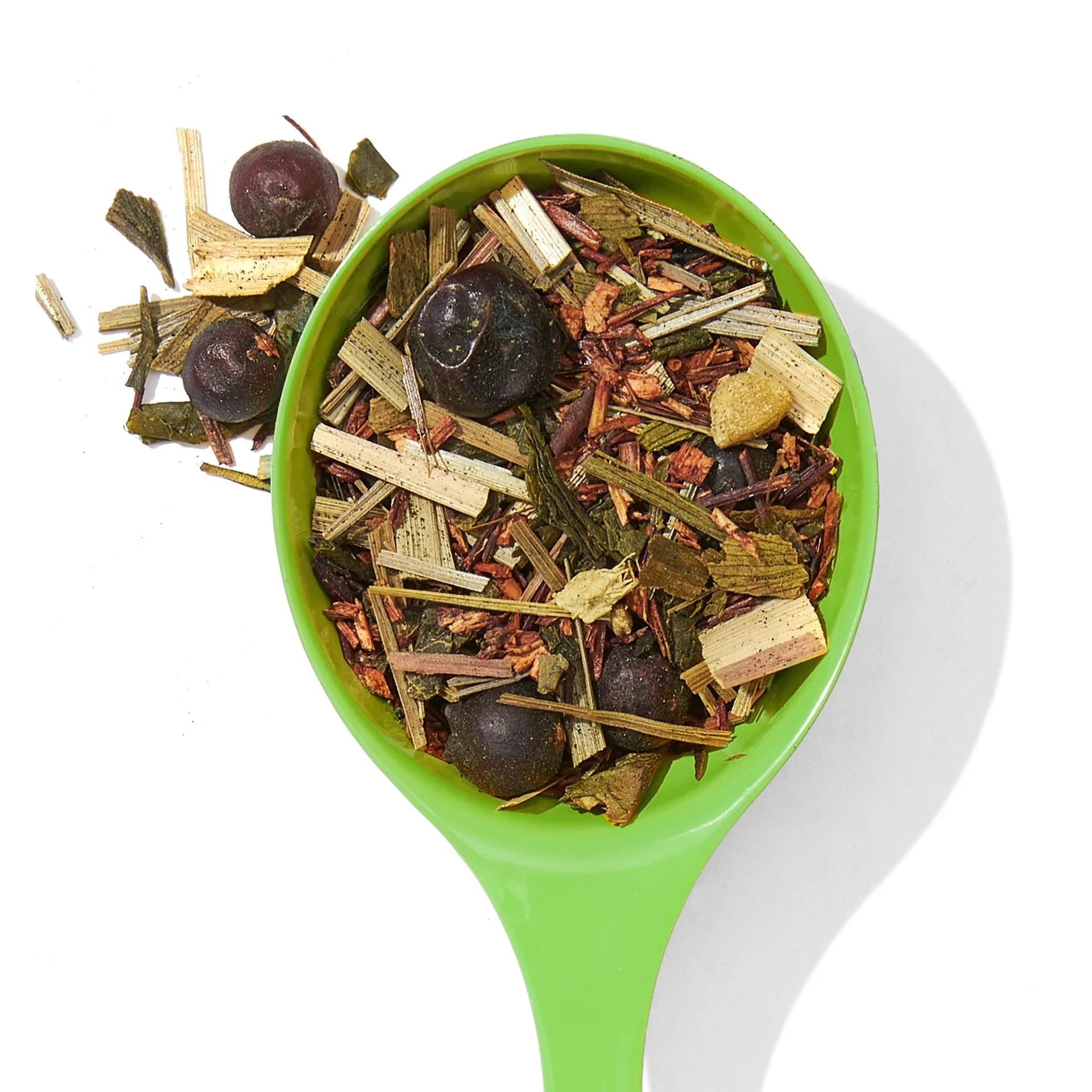
If plain pu'erh tastes too earthy or bitter at first, a flavored blend can bridge the gap. DAVIDsTEA's Chai on the Rocks Tea is a caffeine-free red rooibos blend with cinnamon, ginger, whisky notes, and orange bitters, so it delivers a warm, spiced cup without the intensity of straight pu'erh. https://davidsteaym.com/products/maple-chai-rooibos-us-854c7d09bff05d1d78a08fb1-544585Maple Chai Rooibos Tea 1 KG Bag goes further: it's a caffeine-free chai with real maple sugar and cozy spices, and the 1 kg size makes roughly 400 cups, which suits a household that drinks chai daily. Neither is pu'erh, but both show how a flavored base can make the leap into aged or fermented tea less abrupt.
Decision rules for your first pu'erh purchase
- If you drink tea daily and want to age it: Buy a 357 g sheng cake from a seller who lists harvest year, region, and storage. Keep it in a box or jar away from light and smells. Checkpoint: you should be able to name the year and region before you pay.
- If you drink tea a few times a week and want convenience: Buy 100–200 g of loose shou pu'erh. Scoop 5–8 g, brew, and reseal the bag. No pick needed. Checkpoint: loose leaf loses aroma faster, so finish it within 6–12 months.
- If you are unsure whether you like pu'erh: Buy a 25–50 g sample of one sheng and one shou. Taste them side by side over two weeks before buying a full cake. Checkpoint: if you cannot finish the sample, do not buy the cake.
- If you want a flavored bridge into fermented tea: Try a caffeine-free spiced blend like Chai on the Rocks Tea or Maple Chai Rooibos Tea 1 KG Bag while you learn plain pu'erh. Checkpoint: flavored blends are not a substitute for pu'erh, but they keep your tea shelf varied.
Flavored options worth knowing
- Chai on the Rocks Tea: Chai on the Rocks Tea is a caffeine-free red rooibos blend with warming cinnamon, ginger heat, whisky notes, and aromatic orange bitters. A good first step if you want a spiced, warming cup without caffeine or the strong earthy taste of young pu'erh.
- Maple Chai Rooibos Tea 1 KG Bag: Maple Chai Rooibos Tea 1 KG Bag is caffeine-free, made with real maple sugar and cozy spices, and makes approximately 400 cups. The 1 kg format lowers the cost per cup for daily drinkers, but it is a large commitment if you are still exploring flavors.
Who should choose which format
Best for
- Buyers who want to age tea for years and prefer compact storage
- Drinkers who want steady, layered flavor from a single cake
- People who already own a pu'erh pick and a humidity-controlled spot
Not for
- Beginners who drink pu'erh less than once a week
- Anyone without a clean, odor-free storage space
- Shoppers who want to sample many regions before committing