Two USB-C ports, one socket, no extra setup
The PULSE 60 2-Port USB-C Car Charger is built around a simple idea: give two USB-C devices a place to charge from the same cigarette lighter socket. It has dual USB-C ports, so you can plug in two devices at once, and the compact body is designed to fit easily into most car cigarette lighter sockets.
Setup is plug-and-play. The supplied information describes simple plug-and-play operation with no additional setup required, so there is no app pairing, no configuration screen and no separate power brick to add. You plug the charger into the socket and connect your devices.
What the PULSE 60 record confirms
-
PULSE 60 2-Port USB-C Car Charger: Dual USB-C ports allow you to charge two devices at once. This is the core reason to choose this charger when two people in the car both need power.
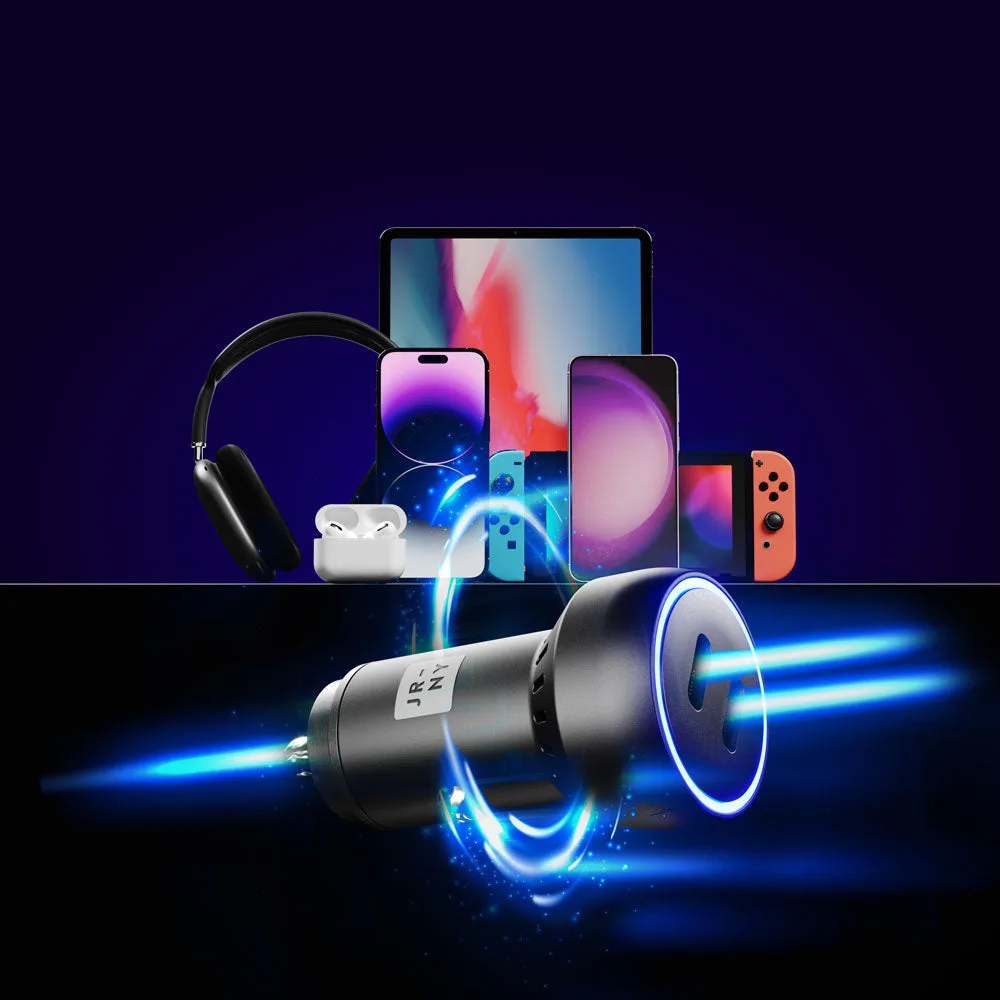
PULSE 60 2-Port USB-C Car Charger
-
PULSE 60 2-Port USB-C Car Charger: Compact and portable design fits easily into most car cigarette lighter sockets. A low-profile fit matters in tight consoles where a bulky charger can block nearby controls or storage.
-
PULSE 60 2-Port USB-C Car Charger: Simple plug-and-play operation—no additional setup required. You can hand the car to another driver or move the charger between vehicles without reconfiguring anything.
How to set up the PULSE 60 for two devices
Follow this sequence the first time you use the charger. It keeps the setup simple and avoids the usual scramble when two passengers both want to charge.
- 1. Start the car before plugging in: Plug the charger into the cigarette lighter socket when the vehicle is running or in accessory mode. The supplied information does not describe a specific ignition sequence, so treat this as a practical habit rather than a manufacturer instruction.
- 2. Insert the charger fully into the socket: Push the PULSE 60 into the cigarette lighter socket until it sits securely. The compact design is intended to fit easily into most such sockets, but check that it does not wobble or sit loose in your particular vehicle.
- 3. Connect the first device: Use a USB-C cable to connect your phone or other USB-C device to one of the two ports. The charger is designed to charge two USB-C devices simultaneously.
- 4. Connect the second device: Plug the second USB-C cable into the remaining port. Both ports are USB-C, so either port can serve either device.
- 5. Check that both devices show charging: Look at each device's screen to confirm it is receiving power. If one does not respond, reseat the cable at both ends before assuming a problem with the charger.
Port-sharing tips for two phones in the car
Two ports solve the socket problem, but a little planning makes the shared charger work better on commutes and longer drives.
- Decide who gets the cable, not the port: Both ports are USB-C, so the practical question is which passenger has a compatible cable. Keep one USB-C cable in the car for the driver's phone and a second for the passenger.
- Charge the phone that needs navigation most: If one phone is running maps and music, connect that one first. The other phone can join on the second port without either device losing its connection.
- Use shorter cables in the front cabin: Short USB-C cables reduce clutter around the console and make it easier to see which cable belongs to which port. The PULSE 60's compact body leaves more room around the socket for cable routing.
- Unplug devices when the car is off for long periods: The supplied information does not describe standby behavior or whether the socket stays powered when the ignition is off. If you park for days, unplugging is a sensible habit rather than a confirmed requirement.
What the PULSE 60 information does not confirm
The supplied record describes two USB-C ports, simultaneous charging for two devices, a compact fit and plug-and-play operation. It does not list wattage, per-port power output, supported fast-charging standards, cable requirements or a maximum device count beyond two. It also does not confirm behavior when the vehicle's socket is unpowered.
That matters when you are choosing between chargers or planning to charge something beyond a phone. If your decision depends on a specific wattage or fast-charging protocol, check the product listing or packaging for that detail before you buy. For everyday charging of two USB-C devices from the car socket, the supplied facts are enough to set it up and use it as intended.
PULSE 60 at a glance
- PULSE 60 2-Port USB-C Car Charger: PULSE 60 2-Port USB-C Car Charger from Journey Official, catalog price USD 21.89 (comparison price USD 29.99). The catalog price gives you a reference point when comparing dual-port car chargers.
- PULSE 60 2-Port USB-C Car Charger: Sturdy construction ensures long-lasting performance. A charger that lives in the car socket takes constant plugging and unplugging, so build quality is part of the buying decision.
- PULSE 60 2-Port USB-C Car Charger: Available in a Standard variant. There is a single standard option, so you do not need to choose between color or capacity variants.