Start with the goal, not the label
Men often come to pumpkin seed extract because they want to support normal bladder and urinary function, not because they are chasing a general immune boost. That matters when you compare products: the useful question is whether a specific extract is positioned for urinary health and whether the rest of the label gives you enough to judge the fit.
The catalog for Water-Soluble Pumpkin Seed Extract, 60 vegetarian capsules, describes pumpkin seed extract as having been shown to be effective in helping maintain healthy bladder function. That is a maintenance-support claim, not a treatment claim. If you are dealing with pain, blood, fever, or sudden changes in urination, a supplement is not the first stop; talk to a clinician.
What to compare before you buy
Use the same few checkpoints for every pumpkin seed product so you are comparing like with like.
- Extract form and delivery: The product name specifies water-soluble pumpkin seed extract. Water solubility affects how the ingredient is prepared and how it fits into a capsule format, but the supplied record does not include a full ingredient panel, so check the actual label for the extract form and any carriers.
- Serving count and capsule format: This option is a 60-count vegetarian capsule bottle. Compare that count against the label's suggested use to estimate how long one bottle lasts; the supplied record does not state a daily serving size, so do not assume one capsule per day.
- Bladder-support positioning: Look for explicit urinary-health or bladder-function language rather than vague 'men's health' wording. The catalog positions this product around maintaining healthy bladder function and urinary health.
- Price per serving, not per bottle: The catalog price is USD 12.21 with a comparison price of USD 16.50. A lower bottle price can still cost more per day if the serving size is larger, so do the division once you have the label in hand.
- What the record leaves open: The supplied information does not include dosage instructions, warnings, or a full supplement facts panel. Treat those as things to read on the physical label before you start, not details to infer from the product name.
What the catalog confirms about this option
-
Water-Soluble Pumpkin Seed Extract, 60 vegetarian capsules: Water-Soluble Pumpkin Seed Extract, 60 vegetarian capsules, is listed at USD 12.21 with a catalog comparison price of USD 16.50. Gives you a concrete cost baseline for comparing other pumpkin seed extracts, provided you check serving size before calling one cheaper.
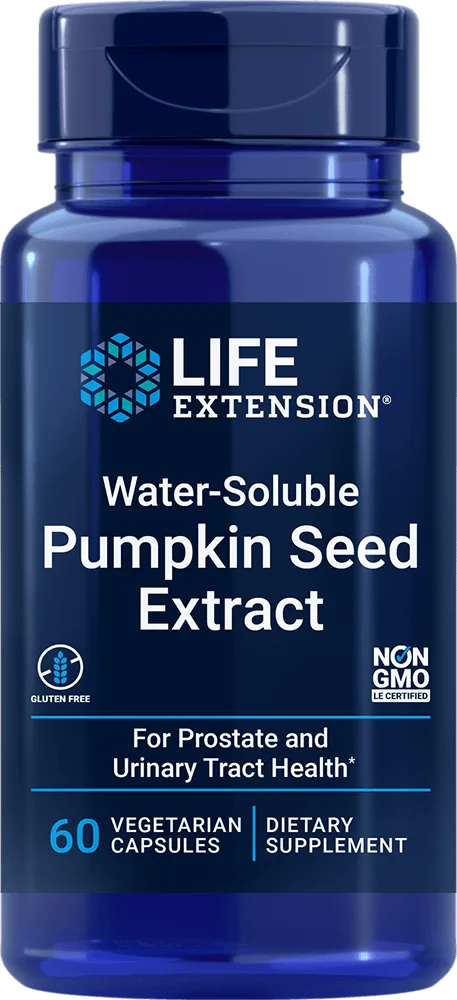
Water-Soluble Pumpkin Seed Extract, 60 vegetarian capsules
-
Water-Soluble Pumpkin Seed Extract, 60 vegetarian capsules: The catalog states that pumpkin seed extract has been shown to be effective in helping maintain healthy bladder function. This is the specific use case the product is positioned around, so it is the claim to match against other labels.
-
Water-Soluble Pumpkin Seed Extract, 60 vegetarian capsules: The product is described as supporting urinary health. Confirms the intended category is urinary and bladder maintenance, not general immune support, even though the store files it under Immune Support.
Why 'water-soluble' is worth noticing
Pumpkin seed ingredients appear in oils, powders, and extracts, and those forms are not interchangeable. A water-soluble extract is prepared to disperse in water-based systems, which is one reason it can be put into a vegetarian capsule rather than an oil-based softgel. If you prefer a capsule over pumpkin seeds or oil, this format is the practical difference.
The supplied record does not give extraction ratios, standardization markers, or a full ingredient list, so you cannot use it to compare potency across brands. What you can do is check that a competing product names its extract form as clearly as this one does, then compare the supplement facts panel side by side.
A sensible way to try it
The supplied record does not include dosage or timing instructions, so the steps below are about reading and tracking, not a generated protocol.
- 1. Read the physical label first: Check the suggested use, warnings, and allergen statements on the bottle you receive. The catalog record does not supply those details, so the label is the authority.
- 2. Check for interactions with your current routine: If you take prescription medication or have a diagnosed urinary condition, ask a clinician or pharmacist before adding any supplement. The supplied record does not list interactions or contraindications.
- 3. Set a realistic review window: Decide in advance how long you will try it before judging whether it fits your routine. The catalog makes a maintenance-support claim, not a fast-acting one, so give it a fair trial rather than changing products every few days.
- 4. Track what you actually notice: Keep a short note of urinary comfort and frequency so your decision is based on your own experience rather than on marketing language.
When this product fits, and when to keep looking
There is no single best pumpkin seed supplement; the right choice depends on format, label transparency, and what you are trying to support.
- Choose Water-Soluble Pumpkin Seed Extract if: You want a vegetarian capsule, you are specifically interested in bladder and urinary maintenance support, and you are comfortable reading the label for serving size because the catalog does not state one.
- Keep looking if: You need a product with published dosage instructions in the listing, you want an oil-based softgel, or you need a formula that combines pumpkin seed with other urinary ingredients. The supplied record covers a single-ingredient-style extract and does not confirm a combination formula.
- Ask a professional first if: You have an active urinary infection, take prescription medication, or have a diagnosed prostate or bladder condition. A supplement is not a substitute for diagnosis or treatment.