Quick answer
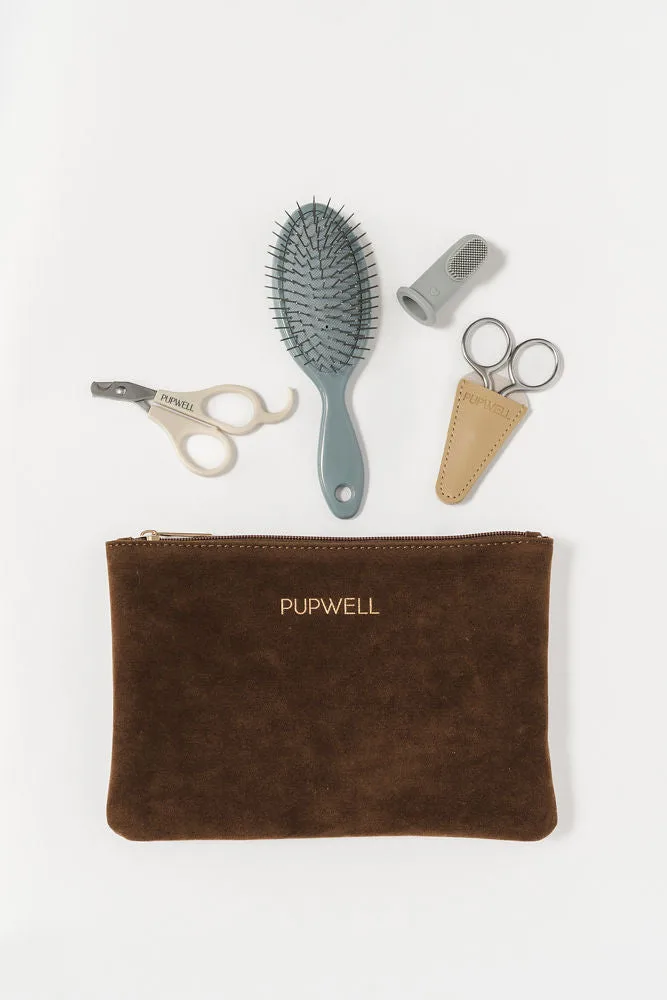
Buy a small starter set first: a gentle brush or comb, a finger toothbrush, nail clippers, and puppy-safe shampoo. Add coat-specific tools only after you know your puppy's coat type and tolerance. If you want education and full-size tools in one purchase, the Ultimate Dog Grooming Kit covers professional tools plus how-to guidance; if you are starting from zero with a young puppy, the Puppy Grooming Kit pairs a starter tool set with step-by-step grooming school.
Puppy Grooming Kit
Start with the four tools every puppy needs
A first puppy grooming kit only needs four things to begin: a brush or comb matched to coat type, a toothbrush, nail clippers, and shampoo made for dogs. Everything else is optional until you see how your puppy reacts. Puppies have sensitive skin and short attention spans, so starting with fewer tools keeps sessions short and positive.
The Puppy Breath Toothbrush is a finger-style toothbrush made from food-grade silicone and free from BPAs, BPSs, PVCs, and phthalates. It is designed to fit snugly on your finger, which makes it easier to control inside a small mouth. The catalog recommends using it daily, with or without toothpaste, for about one minute to remove plaque. That daily habit matters more than any single tool in your kit.
Match coat tools to your puppy's coat, not the label
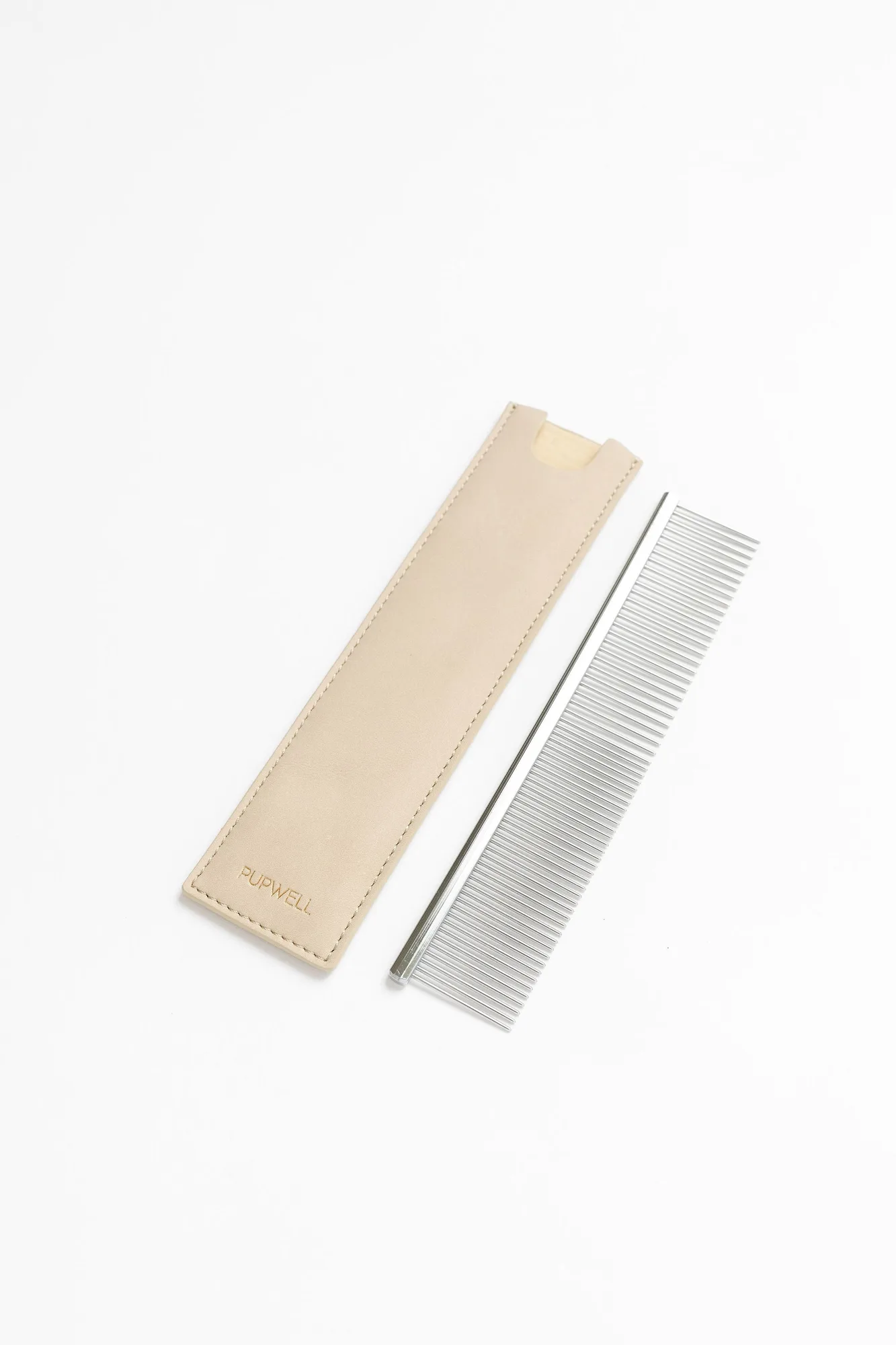
Coat type decides which brush you actually need. Short, smooth coats usually need a rubber curry or bristle brush. Double coats need an undercoat rake plus a slicker. Curly or drop coats need a metal comb to check for mats, plus a slicker for surface work. If you buy a kit before you know the coat, you may end up with tools that never leave the drawer.
This is where a checklist helps. Write down your puppy's coat type, then tick only the tools that match it. If you are unsure, start with a comb and a slicker, then add a rake or curry later. The Ultimate Dog Grooming Kit is built around professional tools and includes education on how to use them, which shortens the learning curve if you would rather learn one system than piece tools together.
Decide whether you want tools only or tools plus training
The biggest trade-off in a first puppy grooming kit is whether you are buying objects or a routine. Tools alone are cheaper up front, but many new owners stop using them because they are not sure how much pressure to use, how often to brush, or how to keep a puppy still. A kit that includes education removes that guesswork.
The Puppy Grooming Kit is designed for the new puppy parent and includes step-by-step guidance covering grooming needs, which tools a pup needs, how to use them, and how to socialize and prevent fear or stress. That last point is the one most checklists miss: a puppy that learns grooming is safe at eight weeks is easier to groom at eight months. If you already own tools and only need a refresher, buy the individual pieces instead.
What to leave out of your first kit
Skip high-velocity dryers, full clipper sets, and show-style scissors until you have a specific need. These tools require technique, and using them on a wriggling puppy can create a bad association that takes months to undo. The same goes for multiple shampoos: one gentle puppy shampoo is enough until you know your dog's skin and coat response.
Also delay anything sized for an adult dog. A clipper blade or brush designed for a large breed can be uncomfortable on a small puppy. If a product page does not list sizes or option types, treat that as a limitation and ask before buying rather than guessing.
Build the routine before you build the kit
Grooming success comes from frequency, not from the number of tools. Brush for two to three minutes, handle paws and ears, and brush teeth daily. Keep sessions short, end while your puppy is still relaxed, and reward calmly. A puppy who associates grooming with treats and a calm voice will tolerate more handling as an adult.
Store your kit in one place so you can grab it without searching. A small caddy or bin keeps the toothbrush, comb, clippers, and shampoo together, which makes daily brushing easier to maintain. Replace worn tools when bristles splay or clipper blades dull; dull tools pull hair and make puppies dislike grooming.
Decision rules for your first puppy grooming kit
- If your puppy is under 16 weeks old: Prioritize handling and socialization over tool count. Buy a finger toothbrush, a soft brush or comb, and nail clippers. Add the Puppy Grooming Kit if you want guided lessons on socialization and fear prevention. Short, positive sessions now prevent grooming struggles later.
- If you already own basic tools: Do not rebuy a full kit. Replace only what is worn or missing, and add a comb if you do not have one. A metal comb is the fastest way to find mats before they tighten. Fill gaps, not shelves.
- If your puppy has a double or curly coat: Add an undercoat rake or a metal comb to your kit. These coats mat close to the skin, so surface brushing alone hides problems until they are painful. Match the tool to the coat, not to the kit photo.
- If you want one system and instruction: Choose the Ultimate Dog Grooming Kit when you want professional-grade tools and education together. It costs more than a starter set, so buy it only if you will use the included guidance. Education is the feature that keeps tools in use.
Products that fit this checklist
- Ultimate Dog Grooming Kit: The Ultimate Dog Grooming Kit includes professional tools and education on how to use them, and the catalog notes it is the only kit with professional tools and the only one with education. If you want one purchase that covers both equipment and technique, this reduces the risk of buying tools you do not know how to use.
- Puppy Breath Toothbrush: The Puppy Breath Toothbrush is a finger toothbrush made from food-grade silicone, free from BPAs, BPSs, PVCs, and other phthalates, and is designed to fit snugly on your finger. It makes daily one-minute brushing practical for a small puppy mouth and is safe for repeated use.
- Puppy Grooming Kit (wholesale): The Puppy Grooming Kit is designed for the new puppy parent and includes step-by-step guidance on grooming needs, which tools a pup needs, how to use them, and how to socialize and prevent fear or stress. It is the most direct match for a first puppy grooming kit checklist because it teaches the routine, not just the tools.
Who this checklist fits
Best for
- New puppy owners building a first grooming kit from scratch
- Owners who want a short, practical supplies list before shopping
- Households that prefer guided grooming routines over trial and error
Not for
- Owners who already have a complete grooming setup and only need one replacement part
- Professional groomers looking for high-volume or show-specific equipment
- Anyone shopping for an adult dog with an established coat and routine