Build the plan around your real week, not an ideal one
A puppy socialization plan works best when it fits the time you actually have. Instead of blocking out long training sessions, look for short, repeatable moments: a new sound during breakfast, a different surface on the way to the yard, one calm greeting at the school gate. The goal is positive exposure, not a packed calendar.
Busy owners often worry they are falling behind. A more useful measure is consistency. Two or three brief, calm experiences most days will do more for a puppy than an occasional overwhelming outing. Keep sessions short enough that your puppy can still notice and recover from what is new.
A weekly routine that fits around work and family
Use this as a flexible framework. Adjust the number of repetitions to your puppy’s comfort and your schedule, and repeat a step if your puppy seems unsure.
- 1. Pick two or three calm new experiences for the week: Choose small additions such as a new household sound, a different floor texture, or a quiet visitor. Keep each one brief and pair it with something your puppy already enjoys.
- 2. Attach socialization to an existing routine: Practice during mealtime, before a walk, or while you are already in the yard. Linking a new experience to a familiar routine makes it easier to repeat on busy days.
- 3. Watch for recovery, not just reaction: A startle is normal. What matters is whether your puppy can settle again with a little time and support. If recovery is slow, make the next session easier.
- 4. Keep a simple log: Note what you tried, how your puppy responded, and what you would repeat or change. A short note is enough to spot patterns without turning socialization into paperwork.
- 5. Build in rest days: Puppies need sleep and downtime. A quiet day after a new experience is part of the plan, not a break from it.
Safe socializing before vaccines: what to prioritize
Before your puppy is fully vaccinated, focus on controlled, low-risk experiences. Carrying your puppy in your arms, sitting on a bench and watching the world go by, or inviting one calm, healthy adult dog to meet your puppy in a clean space are examples of controlled exposure. Avoid busy dog parks, unknown dogs, and areas where many unfamiliar dogs eliminate.
The supplied information for Socializing Your Puppy emphasizes safe, positive interactions with people, other dogs, and new environments. It does not provide a vaccination schedule or specific medical clearance, so use your veterinarian’s advice to decide what is safe for your puppy’s age and health status.
When a fear period changes the plan
Puppies can go through periods where they seem more cautious or reactive to things they previously ignored. During these times, lower the intensity rather than pushing through. Shorten sessions, increase distance from the trigger, and let your puppy approach at their own pace. Forcing an interaction during a fear period can make the experience more difficult to recover from.
If your puppy’s fear seems intense or does not ease with gentle, low-pressure exposure, talk with your veterinarian or a qualified behavior professional. The supplied ebook is a general guide, not a diagnosis or treatment plan for fear-based behavior.
Helping a shy puppy without flooding them
Shy puppies need the same plan with a slower pace. These adjustments help you keep sessions positive.
- Let your puppy choose the distance: Start far enough away that your puppy can notice a person or dog without trying to hide or flee. Reward calm observation.
- Use one new thing at a time: Avoid combining a new person, a new place, and a new sound in the same session. Keep the variables low so your puppy can succeed.
- Reward the behavior you want to see: Mark and reward moments of curiosity, relaxed body posture, or a voluntary step forward. Keep training consistent and predictable.
- End on a calm note: Stop while your puppy is still comfortable. A short, successful session is more useful than a longer one that ends with your puppy overwhelmed.
A guide for the early weeks
-
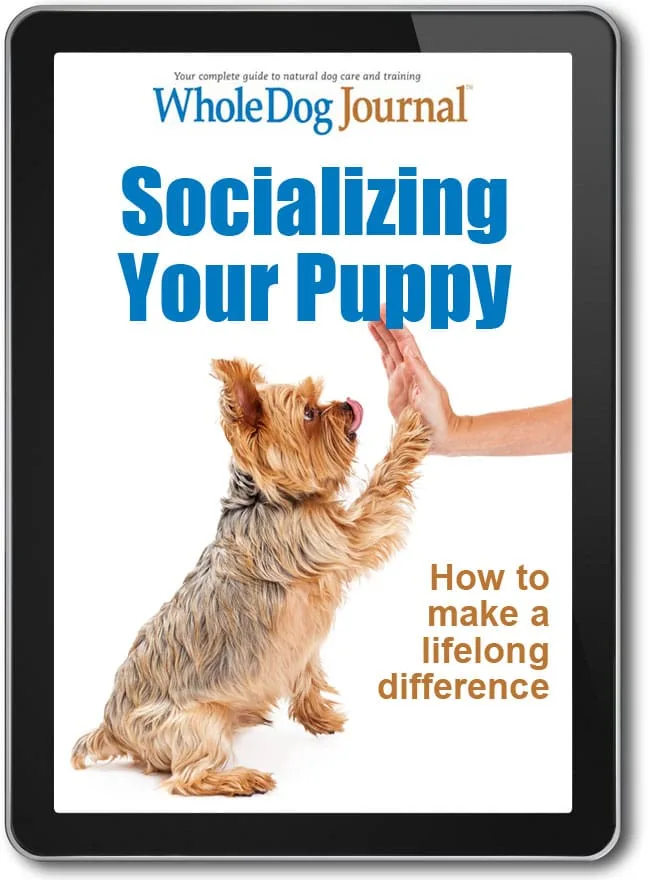
Socializing Your Puppy: Socializing Your Puppy is a downloadable ebook from Whole Dog Journal, newly updated, that offers step-by-step advice for safe, positive interactions with people, other dogs, and new environments. It gives busy owners a structured starting point for the early weeks, when positive exposure matters most.
Socializing Your Puppy
-
Socializing Your Puppy: The supplied description says the ebook focuses on building confidence and reducing fear-based behaviors in young puppies, with tips for consistent training routines. That focus aligns with the slower, repeatable approach shy puppies need, rather than a one-time crash course.
What the ebook covers and where it stops
The supplied record describes Socializing Your Puppy as practical guidance for first-time owners, covering safe interactions, confidence building, and consistent routines. It does not specify a vaccination protocol, a treatment plan for severe fear, or a fixed timeline for each developmental stage. Those decisions belong with your veterinarian or a qualified behavior professional who can assess your individual puppy.
If you want a ready-made structure to follow between professional appointments, the ebook can help you organize the early weeks. If your puppy shows intense fear, aggression, or persistent difficulty recovering from new experiences, seek professional support rather than relying on a general guide alone.