Quick Answer
Push toys are your best bet for early walkers who need balance support, while pull toys shine once your toddler is steady on their feet and ready for coordination challenges.
Why Push Toys Come First
When babies start pulling up and taking those first wobbly steps, a push toy gives them something sturdy to hold onto. The Giraffe Push Toy from Bannor Toys, for example, is handcrafted from wood and features fully functional wheels. That combination lets a new walker lean forward and push while the toy rolls smoothly ahead, helping them practice balance without the risk of tipping.
Push toys also encourage an upright posture and forward movement, which builds the leg and core strength that walking requires. For a child who is just finding their footing, a push toy is like a movable support bar that goes where they go.
When Pull Toys Take Over
Once your toddler can walk confidently without support, pull toys add a new layer of challenge. Pulling a toy behind them requires looking back, steering, and coordinating their steps with the toy's movement. This develops spatial awareness, hand-eye coordination, and even problem-solving as they figure out how to navigate around obstacles.
Pull toys also encourage imaginative play. A child might pretend the toy is a pet or a friend following them, which supports social and emotional development. The Bajo Rocking Horse Toy, while not a pull toy itself, shows how wooden toys can inspire adventurous play. Its compact size (14 x 6 x 5 inches) and lightweight build (3.6 lb) make it easy for little hands to grip and rock, offering a different kind of motor skill practice.
Material and Safety Trade-offs
Both push and pull toys come in wood and plastic, but wood offers durability and a classic feel. The Giraffe Push Toy is made from wood and handcrafted in Iowa, ensuring heirloom quality. Wooden toys are also less likely to contain harmful plastics, which can be a concern for parents who prioritize natural materials.
However, wooden toys can be heavier and may have small parts that need supervision. Always check for sturdy construction and smooth edges. The Bajo Rocking Horse Toy is made of European hardwood and weighs 3.6 lb, so it's substantial enough to stay put during rocking but light enough for a parent to move around.
Choosing Between Push and Pull: Trade-offs
- Push toys for new walkers: If your child is just starting to walk, choose a push toy like the Giraffe Push Toy. It provides support and encourages forward movement, but it may not offer enough challenge once walking becomes easy. Expect to transition to pull toys within a few months.
- Pull toys for confident walkers: For toddlers who walk steadily, a pull toy (or a push toy they can also pull) adds coordination and spatial challenges. However, if your child is not yet walking, a pull toy may frustrate them because they can't use it effectively. Wait until your child walks without support before introducing pull toys.
- Consider hybrid options: Some toys, like the Bajo Rocking Horse, offer stationary motor skill practice. While not a push or pull toy, it builds grip and rocking motion that complement walking skills. The trade-off is that it doesn't provide the same mobility training. Rotate between push, pull, and stationary toys to develop a full range of motor skills.
Product Facts
-
Giraffe Push Toy: Handcrafted from wood with fully functional wheels, measuring approximately 5"x6.5". The sturdy wooden build and working wheels make it a reliable push toy that supports early walkers as they practice balance.
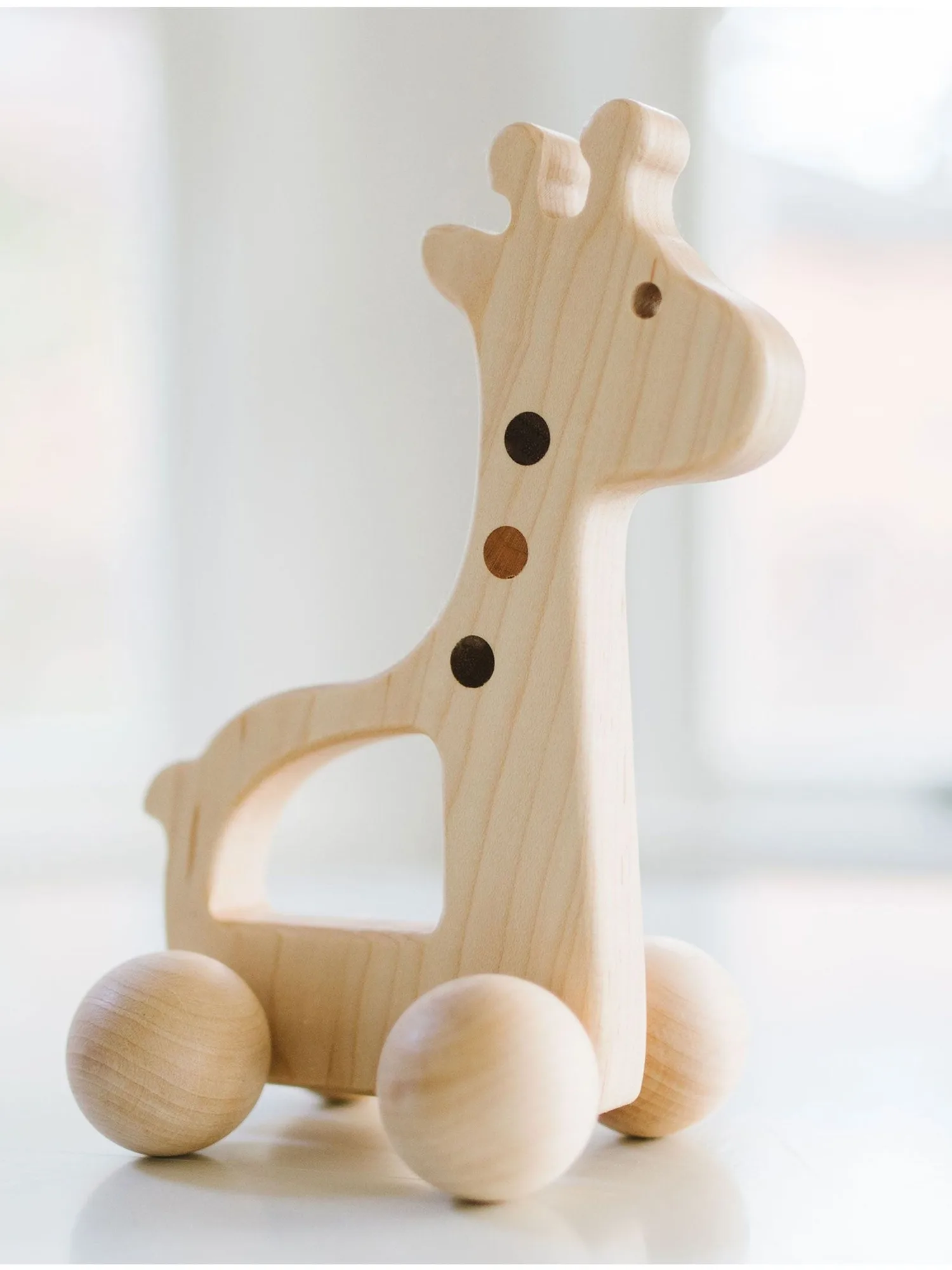
Giraffe Push Toy
-
Bajo Rocking Horse Toy: Made of European hardwood, weighs 3.6 lb, and dimensions are 14 x 6 x 5 inches. Its compact size and light weight allow little hands to grip and rock easily, offering a different motor skill challenge that complements push-and-pull play.
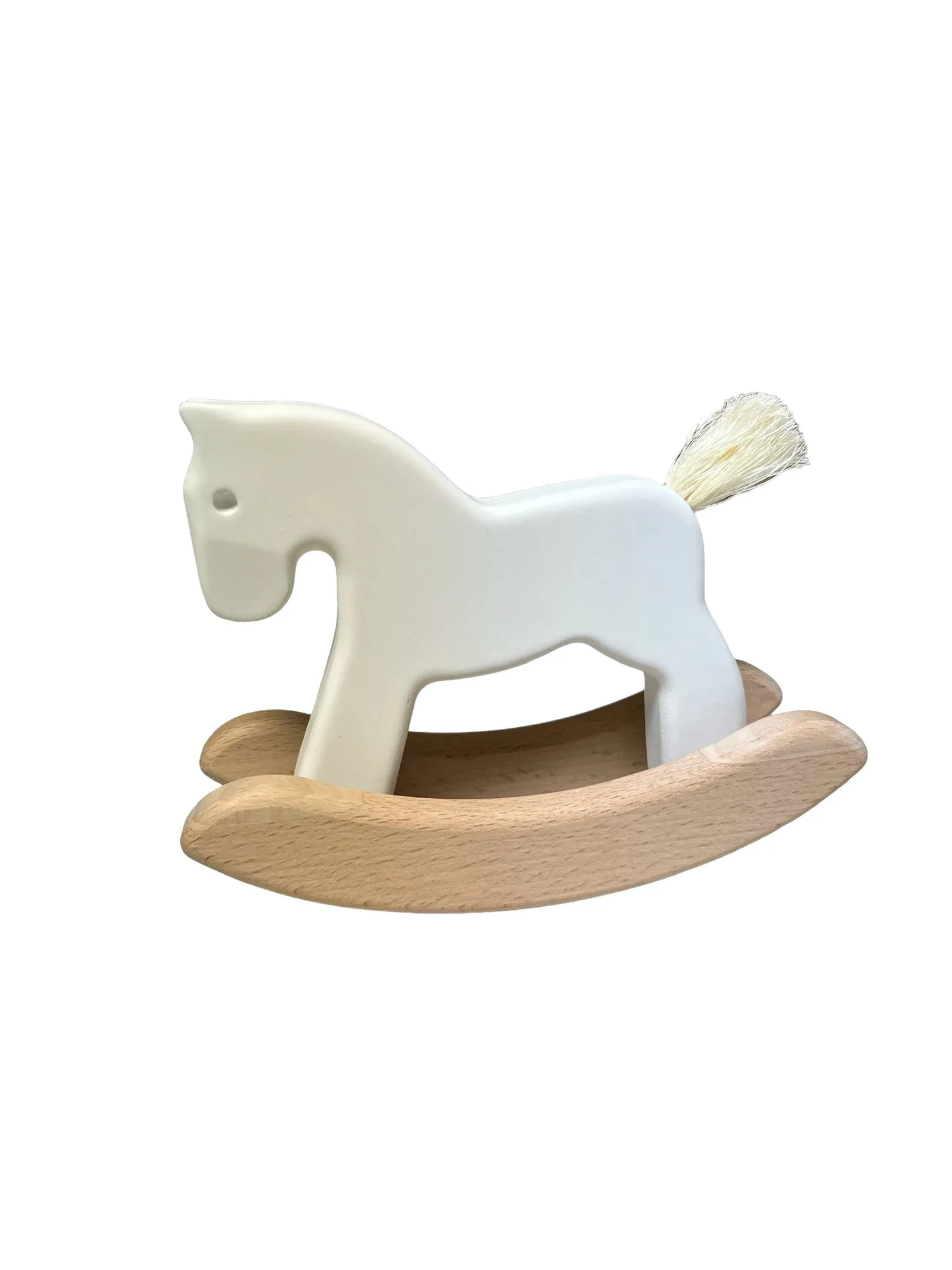
Bajo Rocking Horse Toy
Which Toy Fits Your Child?
Best For
- New walkers who need balance support and forward momentum
- Toddlers who enjoy interactive, imaginative play that pull toys inspire
Not For
- Children who are not yet walking and may not have the coordination to use pull toys
- Parents seeking a single toy that covers all motor skill stages