Quick answer
You need four things: a mat or board that matches your largest puzzle, a few shallow sorting trays, a felt cloth, and a zippered storage bag. Everything else is optional. Buy the mat last, after you know your table space and the biggest piece count you actually build.
Most puzzle accessories solve problems you do not have yet. The ones that earn their place are boring: something to build on, something to sort into, something to cover the work, and something to store pieces in when you are done.
This guide sticks to that short list. It also gives you decision rules for the two accessories people most often get wrong — the mat and the sorter — so you buy once instead of upgrading twice.
Start with the build surface, not the gadgets
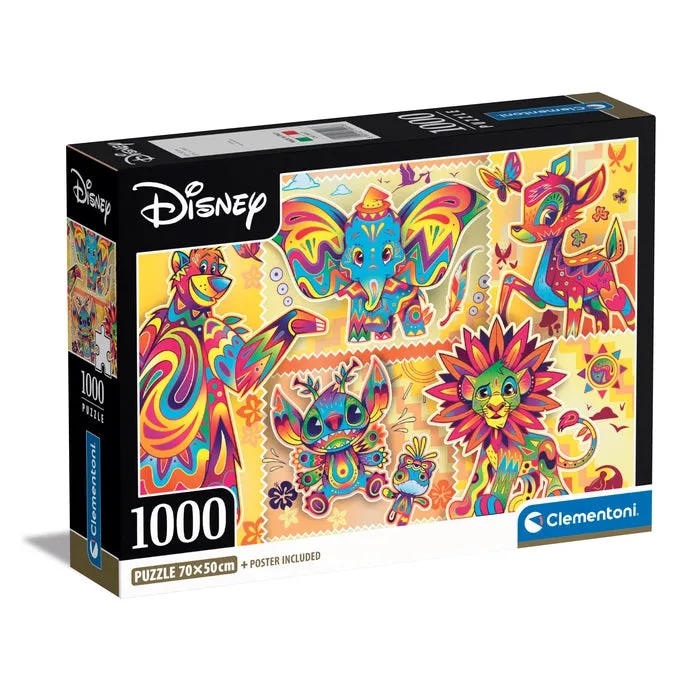
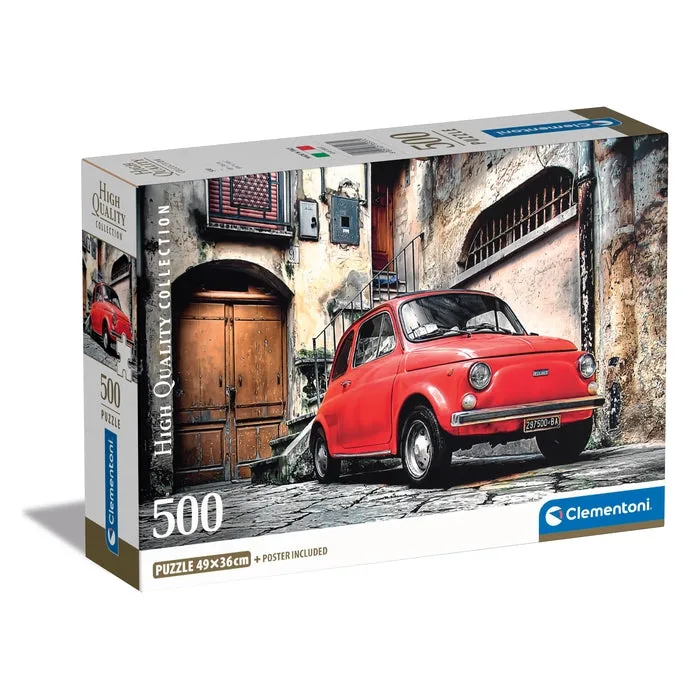
Your mat or board is the only accessory that touches every piece, so it sets the ceiling for everything else. Measure your table first, then check the finished puzzle dimensions of the largest puzzle you own. A 1000-piece Clementoni puzzle finishes at 70 x 50 cm, and a 500-piece finishes at 49 x 36 cm, so a mat that fits the smaller size will not hold the larger one.
If you build on a table you also eat at, choose a roll-up mat with a firm tube. If you have a dedicated table, a flat board with raised edges is easier to slide under a sofa. Do not buy a mat sized for 1500 pieces unless you genuinely build that size — the extra surface becomes dead space on a small table.
- Measure the table before the mat, not after.
- Match the mat to your largest finished puzzle, not your average one.
Sorting trays: how many is enough
Sorting trays do one job — keep edge pieces, color groups, and unknowns separate without covering your build area. Six shallow trays handle a 1000-piece puzzle comfortably. Deep trays waste space and make it harder to see pieces at a glance.
Stackable trays are worth the small premium if you puzzle in a shared room and need to clear the table between sessions. If you always finish in one sitting, plain trays are fine and cheaper.
- Six shallow trays for 1000 pieces; four is enough for 500.
- Stackable only if you pack up between sessions.
The two accessories most people skip — and should not
A felt cloth or puzzle cover keeps dust off an in-progress build and stops a cat or a sleeve from scattering loose pieces. It costs little and stores flat. A zippered storage bag matters more than it sounds: once a puzzle is broken down, a bag keeps pieces together and stops the box from splitting at the corners.
Neither item improves the puzzle itself. They protect the time you already invested, which is the actual reason to buy them.
- Cover the build if it stays out overnight.
- Bag the pieces if you store puzzles vertically.
What to skip
Piece sorters that rely on printed color labels only help puzzles with obvious color blocks. Puzzle glue is a one-time decision, not a recurring accessory, and it is worth buying only for a puzzle you plan to frame. Specialty stands and rotating boards add storage bulk without changing how the puzzle goes together.
If an accessory does not address table space, piece loss, or dust, it is probably solving a problem you do not have.
- Buy glue only for a puzzle you will frame.
- Skip accessories that only add storage volume.
Decision rules for buying puzzle accessories
- Rule 1: Size the mat to your largest puzzle: Check the finished dimensions on the box. A 1000-piece Clementoni puzzle finishes at 70 x 50 cm, so a mat advertised for 500 pieces will not work. If you own both sizes, buy for the 1000-piece and accept the extra surface on smaller builds.
- Rule 2: Buy trays in shallow, stackable sets: Six shallow trays cover a 1000-piece sort. Stackable trays only pay off if you clear the table between sessions. Skip deep trays — they hide pieces and take up build space.
- Rule 3: Add protection only if the puzzle stays out: A felt cover and a zippered bag protect an in-progress or stored puzzle. If you finish in one sitting and store boxes flat, you can skip both. Buy protection for the time you already spent, not for the puzzle itself.
- Rule 4: Treat glue as a one-time purchase: Puzzle glue is only worth buying for a puzzle you plan to frame. It is not a recurring accessory. Decide on framing before you buy glue.
Product facts that affect your accessory choices
- https://clementonijgz.com/products/disney-classics-1000-pezzi-1-e01617063234dbab794f757f-1565906Disney Classics - 1000 pezzi: 1000-piece adult puzzle with a finished size of 70 x 50 cm, made in Italy with recycled materials. Your mat or board must hold at least 70 x 50 cm, so a 500-piece-sized mat will not fit this build.
- 500 - 500 pezzi: 500-piece adult puzzle with a finished size of 49 x 36 cm. A compact mat works here, which is useful if your table is small or you puzzle in short sessions.
- KPOP DEMON HUNTERS - 180 pezzi: 180-piece children's puzzle aimed at ages 7 to 9. Smaller piece counts need fewer sorting trays, so you can start a child with two or three trays rather than six.
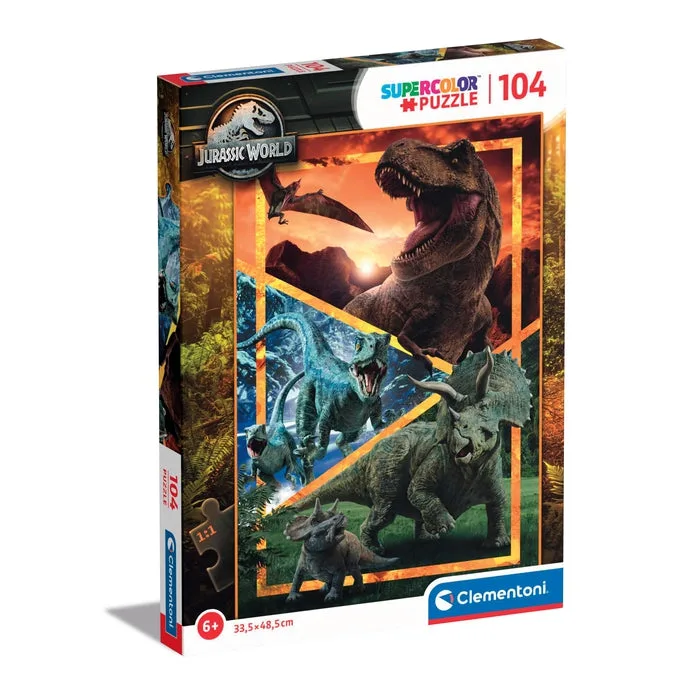
- Jurassic World - 104 pezzi: 104-piece children's puzzle with a finished size of 48.5 x 33.5 cm. The finished size is close to a 500-piece adult puzzle, so a child's build surface may need to be larger than expected.
Who this minimalist setup fits
Best for
- Puzzlers who build 500 to 1000-piece puzzles on a shared table
- Families who need to pack up between sessions
- Anyone tired of buying accessories that do not get used
Not for
- Puzzlers who build 1500 pieces or larger and need a dedicated large-format board
- Collectors who frame every finished puzzle and want archival mounting supplies
- Anyone looking for a rotating or motorized build stand
Buy the mat, the trays, the cover, and the bag. Skip the rest until a specific problem shows up at your table. If you are unsure where to start, match the mat to the largest puzzle you own and add trays as your piece count grows.