Quick answer
Piece count is only one part of puzzle difficulty. Image busyness, piece size, cut style, and the finished dimensions matter just as much. As a rule: 12–24 pieces for ages 3–5, 100–200 pieces for ages 6–9, 500 pieces for casual adult sessions, and 1000 pieces for a real weekend project. Match the image to the solver, not just the number on the box.
Most shoppers pick a puzzle by counting pieces, then feel surprised when a 500-piece puzzle takes longer than a 1000-piece one. Difficulty comes from how the image, the cut, and the piece size work together — not from the piece count alone. A busy 500-piece scene can demand more patience than a clean 1000-piece landscape.
This guide breaks puzzle difficulty into the factors you can actually evaluate before buying: piece count, image complexity, piece size, cut, and finished size. You'll also get decision rules for matching a puzzle to a child, a casual adult, or a serious solver, so the box you bring home fits the person who opens it.
Piece count: a starting point, not the whole story
Piece count sets the lower bound of effort, but it says nothing about how long each piece takes to place. A 500-piece puzzle with large areas of sky or water can stall a beginner, while a 1000-piece puzzle with clear color blocks and distinct objects can move quickly. Treat the count as a time estimate, not a difficulty score.
Use the count to match attention span. Young children lose interest fast, so small counts with larger pieces work better. Adults often want a session that lasts an evening or a weekend; 500 pieces fits one sitting, while 1000 pieces usually spans several. If you're unsure, size down rather than up — finishing a puzzle is more satisfying than abandoning one.
- 12–24 pieces: ages 3–5, short attention spans
- 100–200 pieces: ages 6–9 or a quick adult warm-up
- 500 pieces: one relaxed adult session
- 1000 pieces: a multi-session project
Image complexity: where most of the difficulty hides
The picture is the biggest hidden variable. Large areas of similar color — sky, grass, sand, water — force you to rely on piece shape alone, which slows progress. Images with distinct objects, clear edges, and varied colors give you more visual anchors, so each piece has a place to start.
For beginners, choose scenes with recognizable subjects and contrasting backgrounds. For experienced solvers, low-contrast or repetitive images add the challenge they want. If you're buying for someone else, think about what they enjoy looking at for hours: a favorite character or a familiar landscape keeps motivation higher than an abstract pattern.
- More distinct objects = easier to sort and place
- Large single-color areas = harder, slower progress
- Familiar subjects keep motivation up for longer sessions
Piece size, cut, and finished dimensions
Piece size changes the physical difficulty. Larger pieces are easier for small hands to grip and place, which is why puzzles for young children use bigger pieces. Smaller pieces demand finer motor control and more table space to spread out. The finished size also matters: a 70 x 50 cm puzzle needs a table that can hold it, while a 49 x 36 cm puzzle fits a smaller surface.
Cut style affects how easily pieces lock together and how forgiving the puzzle is when you place a piece slightly wrong. A clean, well-defined cut helps you test a fit without forcing it. When a product page doesn't list piece size or cut details, treat that as a decision limitation — you can still judge by the recommended age and the image.
- Check finished dimensions against your table before buying
- Larger pieces suit small hands and shorter sessions
- If piece size isn't listed, rely on the age recommendation
Matching difficulty to the solver
For a child, the goal is completion, not struggle. Pick a count slightly below what you think they can handle, and choose an image they already love. For a casual adult, 500 pieces with a clear image is a reliable evening activity. For a dedicated solver, 1000 pieces with a detailed scene provides the length and challenge they're looking for.
If you're buying a gift and don't know the recipient's experience, choose a mid-range count with a visually distinct image. It's easier to add challenge by choosing a harder image later than to rescue a puzzle that's too frustrating to finish.
- Kids: prioritize completion and familiar characters
- Casual adults: 500 pieces, clear image, one session
- Experienced solvers: 1000 pieces, detailed scene
Decision rules for choosing puzzle difficulty
- Rule 1: Match count to attention span, not age alone: If the solver loses interest after 20 minutes, choose 100–200 pieces. If they happily sit for an hour or more, 500 pieces is reasonable. Reserve 1000 pieces for someone who enjoys multi-session projects. Checkpoint: can they finish it in one or two sittings? If not, size down.
- Rule 2: Judge the image before the number: Scan for large single-color areas. If more than a third of the image is sky, water, or plain background, treat the puzzle as one difficulty level harder than its piece count suggests. Checkpoint: count the distinct objects and color blocks — more means easier.
- Rule 3: Verify the table space: A 1000-piece puzzle at 70 x 50 cm needs a table larger than that, plus room for loose pieces. A 500-piece puzzle at 49 x 36 cm fits a standard coffee table or puzzle mat. Checkpoint: measure your surface before buying, not after.
- Rule 4: When uncertain, choose the lower count: A finished puzzle builds confidence and makes the next one easier to justify. An unfinished puzzle usually ends up back in the box. If the recipient is new to puzzles, start one level below your estimate. Checkpoint: completion beats challenge for first-time solvers.
Clementoni examples that show difficulty in practice
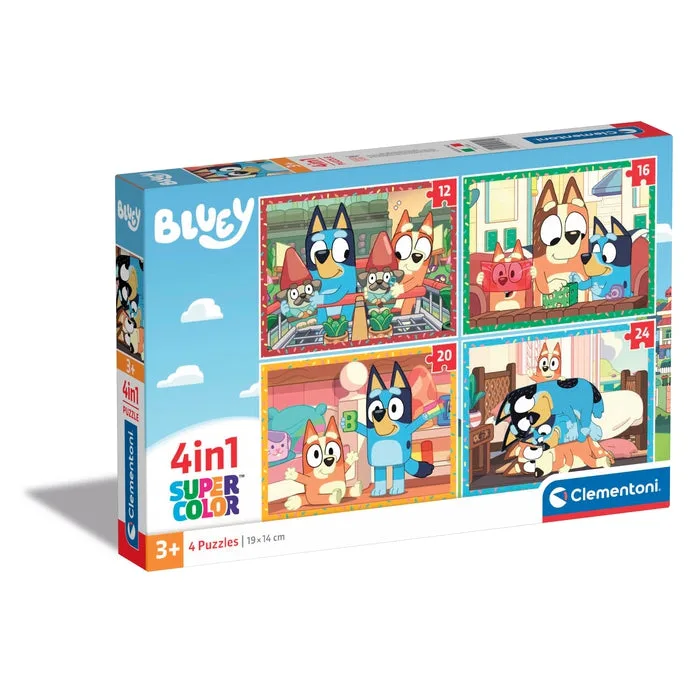
- Bluey - 1x12 + 1x16 + 1x20 + 1x24 pezzi: Puzzle bambini 4 in 1 con 4 immagini differenti e diverse pezzature; contiene 1 puzzle da 12 pezzi, 1 da 16, 1 da 20 e 1 da 24; favorisce lo sviluppo della motricità fine e il coordinamento oculo-visivo; Made in Italy. A four-puzzle set lets a child progress through increasing difficulty in one purchase, which is ideal when you're unsure which count fits.
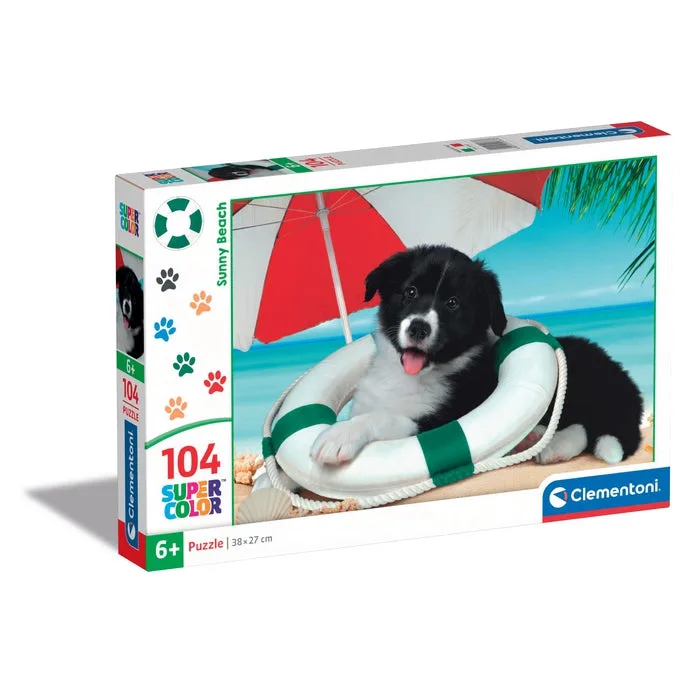
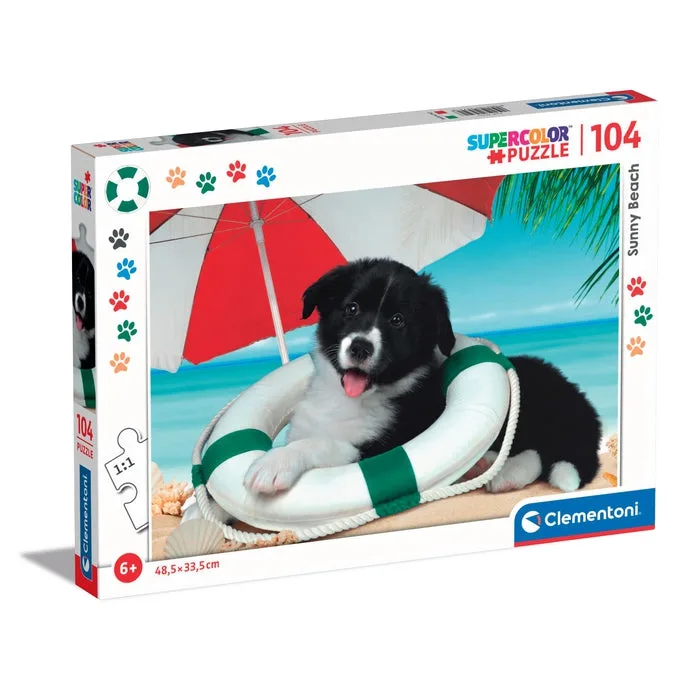
- https://clementonijgz.com/products/sunny-beach-104-pezzi-1-296deee3cef25c856e4338f1-1566314Sunny Beach - 104 pezzi: Puzzle bambini 104 pezzi; dimensione puzzle completo 48,5 x 33,5 cm; pensato per sviluppare capacità di osservazione, logica e manualità. At 104 pieces with a bright scene, this sits in the bridge zone between young-child puzzles and adult entry-level puzzles, so it suits a child ready for a longer sit.
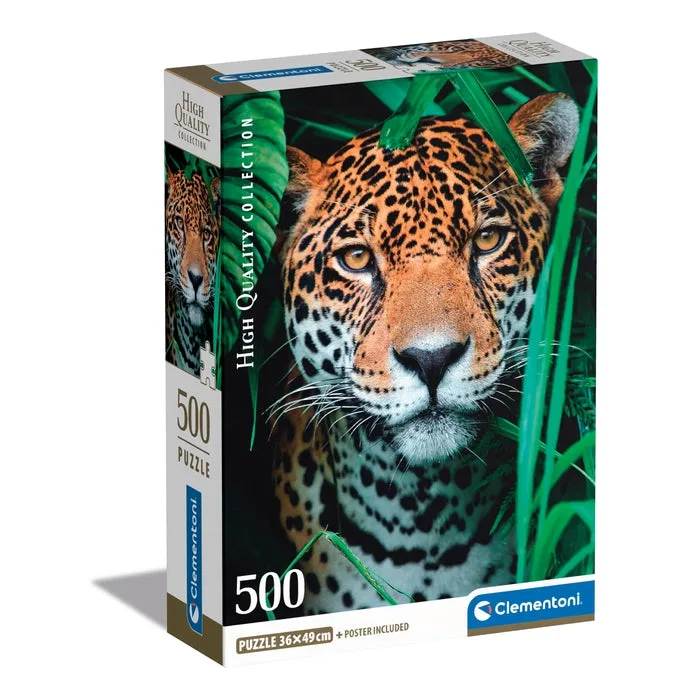
- Jaguar in the Jungle - 500 pezzi: Puzzle adulti 500 pezzi; dimensione puzzle completo 49 x 36 cm; Made in Italy; uso di materiali riciclati. A 500-piece puzzle with a compact finished size fits smaller tables and a single evening session, making it a low-risk first adult puzzle.
- A Taste Of Provence - 1000 pezzi: Puzzle adulti 1000 pezzi; dimensione puzzle completo 70 x 50 cm; Made in Italy; uso di materiali riciclati. The 70 x 50 cm finished size needs a generous table, and 1000 pieces signals a multi-session project for experienced solvers.
Who each difficulty level fits
Best for
- Children ages 3–5 who need larger pieces and quick wins (12–24 pieces)
- Kids ages 6–9 ready for a longer sit (100–200 pieces)
- Casual adults who want one relaxed evening session (500 pieces)
- Experienced solvers who enjoy a weekend project (1000 pieces)
Not for
- Beginners who haven't finished a puzzle before — start lower
- Small tables or shared spaces where a 70 x 50 cm puzzle won't fit
- Anyone who dislikes low-contrast images — check the scene first
- Very young children if the piece size isn't clearly stated
Puzzle difficulty is a mix of piece count, image, piece size, and table space. Use the decision rules above to match the puzzle to the solver, and when in doubt, choose the lower count — a finished puzzle is always the better outcome.