Quick answer
Puzzle piece shapes fall into three main families: grid cut (pieces align in rows and columns), random cut (pieces vary freely in shape and placement), and ribbon cut (pieces form long snaking strips). The cut affects difficulty, sorting strategy, and how satisfying the final assembly feels. Check the box or product page for a cut description before buying.
Puzzle piece shapes are not just cosmetic. The way a manufacturer cuts the cardboard determines how pieces interlock, how easy it is to sort them, and how challenging the assembly will be. Grid, random, and ribbon cuts are the three main types you will encounter, and each creates a different puzzling experience.
This guide walks you through identifying each cut, choosing the right one for your skill level, and adapting your sorting and assembly strategy accordingly. We will use real Clementoni puzzles as examples, since their catalog spans both children's and adult lines with different piece counts and cut styles.
What the three main puzzle cuts actually mean
A grid cut puzzle arranges pieces in a regular matrix: every piece sits in a row and column, and the knobs and holes line up predictably. This makes edge sorting fast and assembly orderly, but some puzzlers find it less surprising. Random cut puzzles break that grid entirely; pieces can be rotated, offset, and shaped differently even within the same puzzle. Ribbon cut puzzles create long, winding strips of interlocked pieces that snake across the finished image, often with a distinctive wavy pattern.
Most mass-market puzzles use a grid or near-grid cut because it is efficient to manufacture. Random and ribbon cuts are more common in specialty or premium lines. The cut is not always printed on the box, so you may need to check the product description or look at user photos. When a cut is not specified, treat it as a decision limitation and choose based on piece count and image instead.
- Grid cut: predictable, good for beginners and large piece counts.
- Random cut: varied shapes, harder to sort, more engaging for experienced puzzlers.
- Ribbon cut: long strips, distinctive look, often found in wooden or premium puzzles.
How to identify the cut before you buy
Start with the product page or box. Some brands mention the cut directly, while others show a close-up of the pieces. If you are shopping in person, open the box if possible and look at the back of a few pieces: grid cut pieces will have a regular pattern of knobs and holes, while random cut pieces will look irregular. Ribbon cut pieces often have a repeating wave or strip pattern when you line them up.
For online purchases, read the description carefully. Clementoni puzzle listings often describe piece count and finished dimensions but may not name the cut. In that case, look at customer images or reviews that mention piece shape. If the cut is critical to your enjoyment, contact the seller before buying. Remember that piece count alone does not tell you the cut; a 1000-piece puzzle can be grid or random.
- Check the box or product page for cut terminology.
- Look at close-up photos of assembled or loose pieces.
- If the cut is not listed, assume a standard grid cut unless proven otherwise.
Matching the cut to your skill level and goals
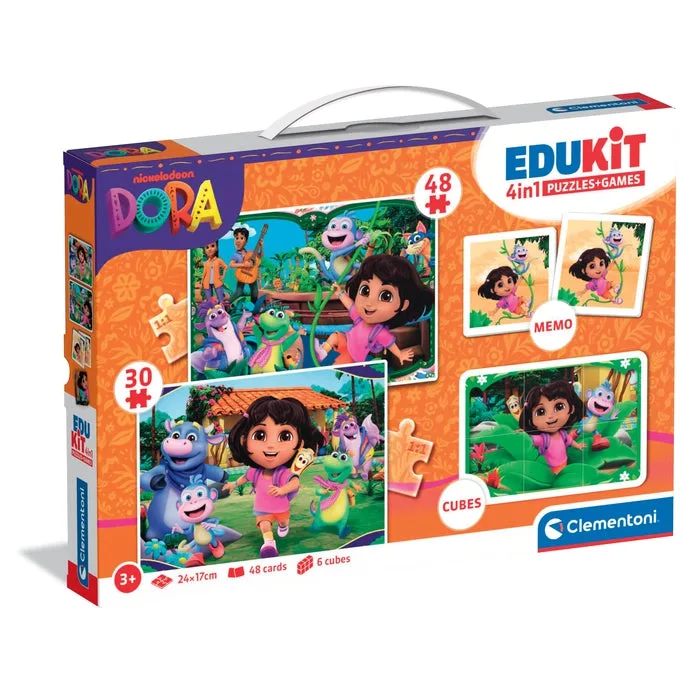
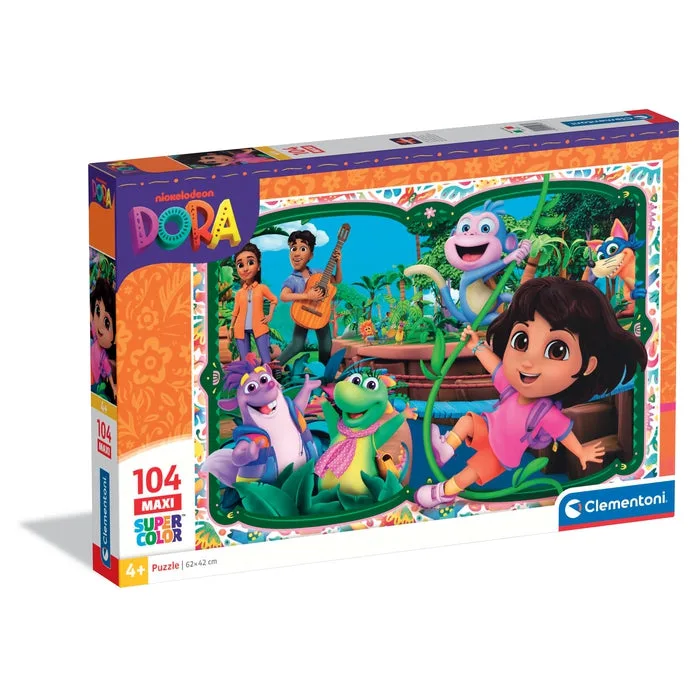
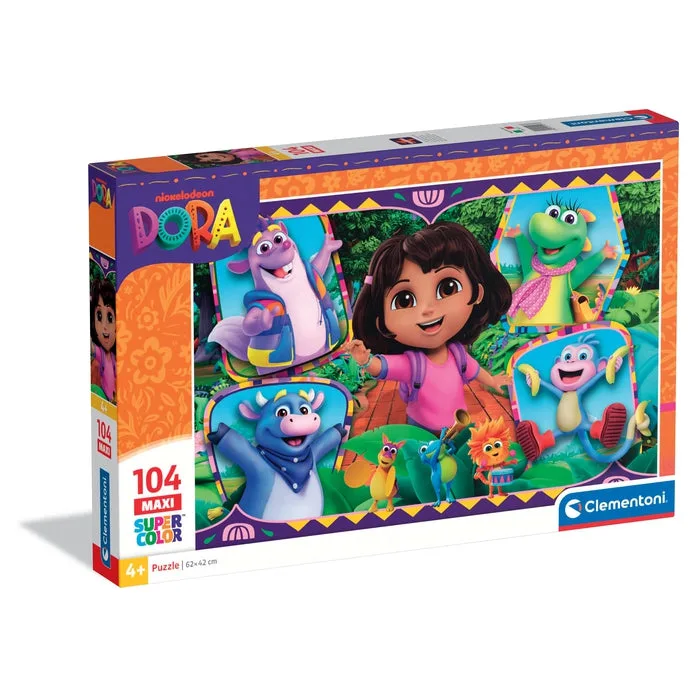
Beginners and families with young children usually do best with a grid cut. The regular pattern makes it easier to spot where a piece belongs, which reduces frustration. Clementoni's children's puzzles, such as https://clementonijgz.com/products/dora-the-explorer-104-pezzi-2e0bc1b4c6f71c066db396be-1566434https://clementonijgz.com/products/dora-the-explorer-104-pezzi-1-c0bed84220008a887c634276-1566497https://clementonijgz.com/products/dora-the-explorer-1-a85e494863fc23a1662ce512-1565476Dora The Explorer - 104 pezzi and Stitch - 180 pezzi, are designed for young puzzlers and typically use a straightforward cut that supports developing observation and logic skills. The finished sizes (62 x 42 cm and 48.5 x 33.5 cm) also give a sense of scale without overwhelming a small workspace.
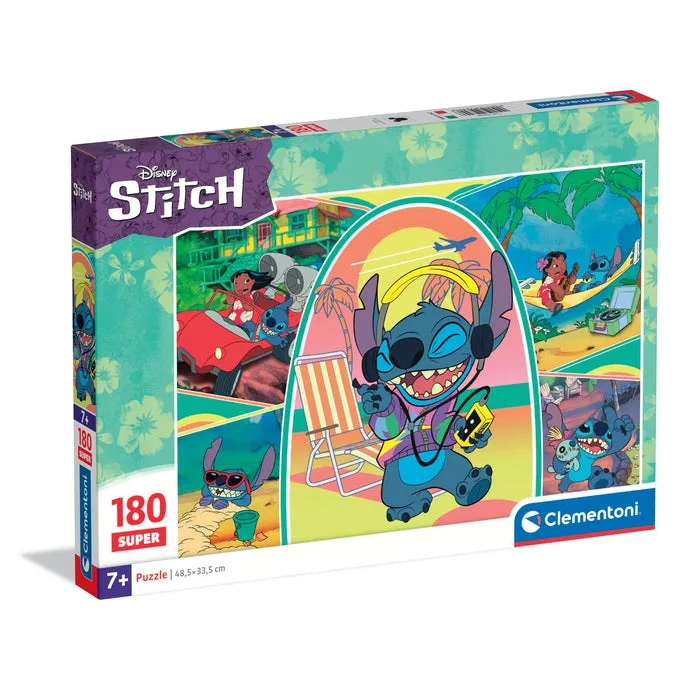
Stitch - 180 pezzi
Experienced puzzlers who want a longer, more surprising build often prefer random cut. The irregular shapes force you to rely on image details rather than piece shape alone. Ribbon cut puzzles offer a middle ground: the strips create a different assembly rhythm, and the final look can be striking. If you are unsure, start with a grid cut at a lower piece count, then move to random or ribbon once you know your preferred challenge level.
- Children and beginners: grid cut, 100–200 pieces.
- Casual adults: grid or ribbon cut, 500–1000 pieces.
- Experienced puzzlers: random cut, 1000+ pieces.
How to sort and assemble each cut type
For grid cut puzzles, sort by edge pieces first, then by color or image region. Because the grid is regular, you can often build in sections and connect them later. For random cut puzzles, edge sorting still works, but you will need to pay more attention to the image and piece shape together. Ribbon cut puzzles are different: instead of building outward from the border, look for the long strips and assemble those first, then connect the strips.
A common mistake with random cut puzzles is trying to force pieces that almost fit. Because shapes vary, a piece can seem to fit when it is slightly off. If a piece does not slide in smoothly, set it aside. With ribbon cut, do not assume the border is a single continuous line; the strips may cross the border, so build the strips first and let the border emerge.
- Grid cut: build the border, then fill in by color.
- Random cut: sort by shape and image, test fit gently.
- Ribbon cut: find and build strips before the border.
Why cut matters when choosing a puzzle gift
If you are buying for someone else, the cut can make or break the gift. A grid cut puzzle is a safe choice for a casual puzzler or a child, while a random cut puzzle signals that you know the recipient enjoys a challenge. Ribbon cut puzzles are often appreciated by people who already have a large collection and want something visually different.
Consider the finished size and piece count alongside the cut. For example, Running Horses - 1000 pezzi is a 1000-piece adult puzzle with a 70 x 50 cm finished size, which suits a dedicated table. Feline Love - 500 pezzi is a 500-piece adult puzzle at 49 x 36 cm, a good middle ground for a gift. Both are made in Italy with recycled materials, which is a nice bonus for eco-conscious recipients.
- For children: look for lower piece counts and simpler cuts.
- For adults: match piece count to available space and time.
- When in doubt, choose a grid cut for a first puzzle gift.
Step-by-step: how to work with any puzzle cut
- Check the cut before you start: Look at the box or product page for cut information. If it is not stated, examine a few pieces: regular knobs and holes suggest grid, irregular shapes suggest random, and long wavy strips suggest ribbon. Knowing the cut tells you which sorting strategy to use.
- Sort edge pieces first for grid and random cuts: For grid and random cuts, separate edge pieces and build the border. This gives you a frame and reduces the remaining pieces to a manageable set. Checkpoint: if the border does not close cleanly, you may have missed a piece or mixed in a non-edge piece.
- For ribbon cut, find the strips before the border: Ribbon cut puzzles are built from long interlocking strips. Look for pieces that form a wavy line and assemble those strips first, then connect them. The border may not be a single continuous line. Common mistake: forcing the border first on a ribbon cut puzzle, which leads to frustration.
- Sort by image and shape together: Once the border or strips are done, sort remaining pieces by color or image region, then by shape. For random cut, shape is less reliable, so lean on the image. For grid cut, shape is more predictable. Checkpoint: if you are stuck, try sorting by a different attribute (color, then shape, then image detail).
- Test fit gently and never force: A correct fit slides in with light pressure. If a piece does not go in smoothly, it is probably wrong. This is especially important with random cut puzzles, where near-misses are common. Forcing a piece can damage the cardboard and ruin the fit for the correct piece.
- Build in sections and connect later: For large puzzles, assemble small sections based on image regions, then join them. This works for all cuts, but is especially useful for grid cut puzzles where sections align predictably. Checkpoint: keep completed sections on a flat surface or puzzle mat so they do not break apart.
Clementoni puzzles that illustrate different cuts and piece counts
- Dora The Explorer - 104 pezzi: Puzzle bambini 104 maxi pezzi, dimensione puzzle completo: 62 x 42 cm. A 104-piece maxi puzzle is a good example of a grid cut designed for young children, with large pieces that are easy to handle.
- Stitch - 180 pezzi: Puzzle bambini 180 pezzi, dimensione puzzle completo: 48,5 x 33,5 cm. The 180-piece count and smaller finished size show how a grid cut can scale up slightly for older children without becoming overwhelming.
- Running Horses - 1000 pezzi: Puzzle adulti 1000 pezzi, dimensione puzzle completo: 70 x 50 cm, Made in Italy, materiali riciclati. A 1000-piece adult puzzle often uses a grid cut, and the large finished size means you need a spacious table; the recycled materials are a plus for eco-conscious buyers.
- Feline Love - 500 pezzi: Puzzle adulti 500 pezzi, dimensione puzzle completo: 49 x 36 cm, Made in Italy, materiali riciclati. At 500 pieces, this is a manageable adult puzzle that may use a grid or ribbon cut; the smaller footprint suits smaller workspaces.
Puzzle piece shapes are a practical detail that changes how you sort, assemble, and enjoy a puzzle. Grid cut is forgiving and family-friendly, random cut adds challenge and surprise, and ribbon cut offers a distinctive assembly rhythm. Use the steps above to identify the cut before you buy and adapt your strategy once you start. With the right cut for your skill level, puzzling stays satisfying from the first edge piece to the last.