Quick answer
To use Question Sparks at your next gathering, treat it as a flexible conversation tool rather than a rigid game: shuffle the deck, pick a card that fits the mood, and let answers spark natural discussion. Use the included rules to turn it into a game if your group wants structure.
Why Question Sparks works for mixed groups
Question Sparks includes 200 question cards covering quirky, everyday topics like worst bathrooms and childhood toy resentments. These questions are designed to be entertaining without feeling like therapy, which makes them easy to use with friends, family, or coworkers. The deck also includes rules to turn the questions into a game, giving you flexibility for different group sizes and energy levels.
When to skip the game rules
If your group is small or prefers low-pressure conversation, you can simply draw cards and discuss. The game rules are optional and work best when everyone is comfortable with a bit of competition. For a relaxed dinner party, stick to open-ended discussion; for a livelier party, use the rules to add structure.
How to use Question Sparks step by step
- Set the tone before drawing: Briefly explain that the questions are meant to be fun and lighthearted. Ask if anyone prefers to skip a question, and establish that passing is always okay. Checkpoint: Make sure everyone agrees to the relaxed vibe before you start.
- Shuffle and choose a drawing method: Shuffle the deck and decide whether players will draw randomly or take turns picking a card. Random draws keep things surprising; letting players choose can help match the mood. Checkpoint: Avoid letting one person dominate card selection—rotate or randomize.
- Read the question aloud and give thinking time: Read the card clearly and pause for a few seconds so everyone can think. Resist the urge to fill the silence with your own answer. Checkpoint: A short pause often leads to more thoughtful and funny responses.
- Let answers spark follow-up conversation: After each answer, allow one or two follow-up questions from the group. This is where the real conversation happens—don’t rush to the next card. Checkpoint: If a topic is flowing, stay on it; you can always draw more cards later.
- Switch to game mode if the group wants competition: Use the included rules to turn the questions into a game. Typically, this involves scoring points for answers or guessing responses. Read the rules aloud so everyone understands the scoring. Checkpoint: Only introduce scoring if the group is energetic and comfortable with playful competition.
- Wrap up before energy fades: End the session while people are still engaged. You can ask one final question or simply thank everyone for playing. Checkpoint: Leaving them wanting more is better than dragging it out.
Product facts
-
Question Sparks: Includes 200 unique question cards and rules for game play. Plenty of variety means you can use the deck across multiple gatherings without repeating questions.
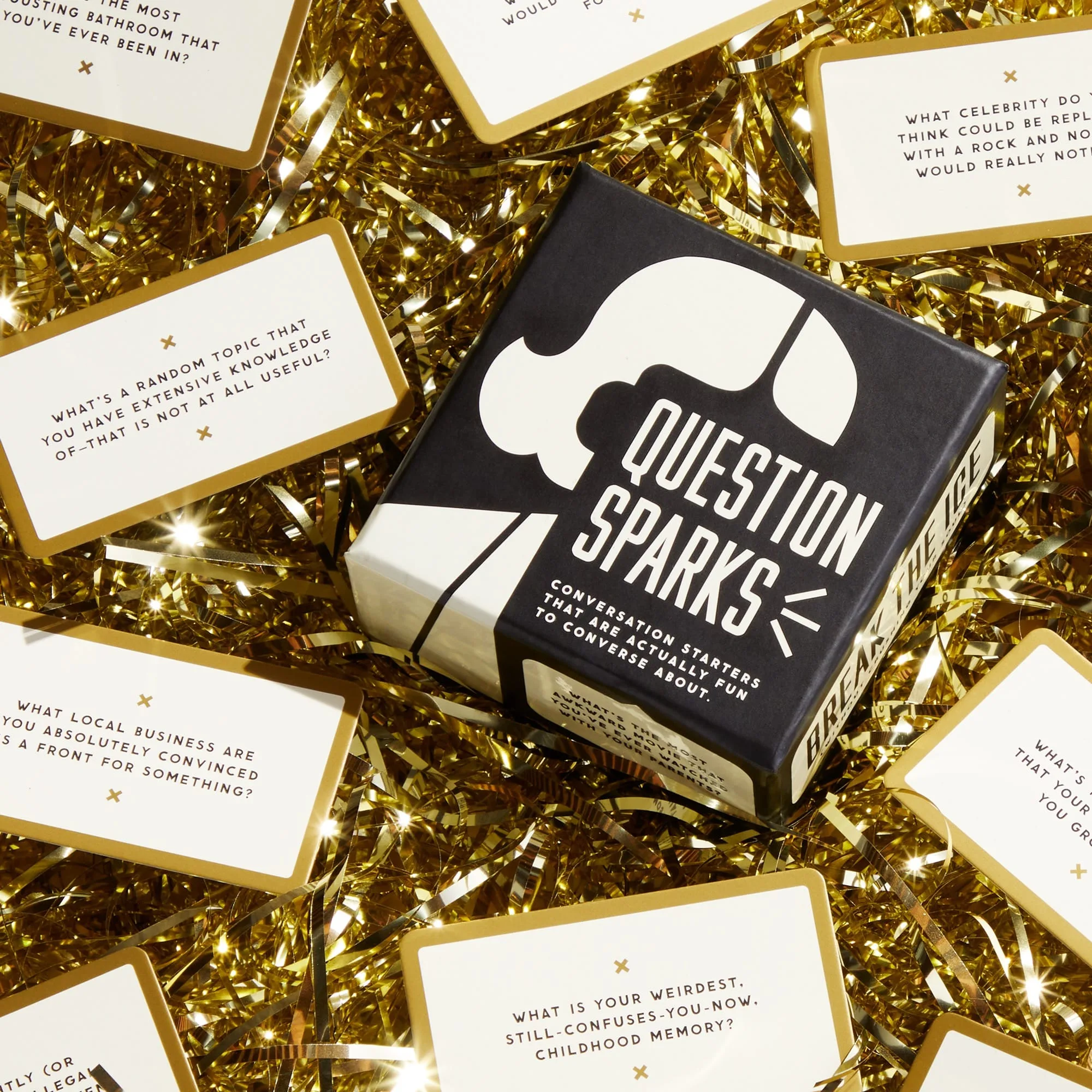
Question Sparks