Two 7pc Resin Sets, Two Very Different Tables
The Rainbow and Blood Ancient sets share the same core format: seven resin dice in a standard RPG lineup. That makes them easy to compare as practical purchases. The real split comes down to color story, finish, and the kind of character or campaign you want them to sit beside.
Rainbow is bright and layered. Blood Ancient is matte, dark, and textured. Neither is objectively better—they solve different table problems. Below, we break down what each set actually delivers so you can choose with your eyes open.
What the Catalog Confirms About Each Set
-
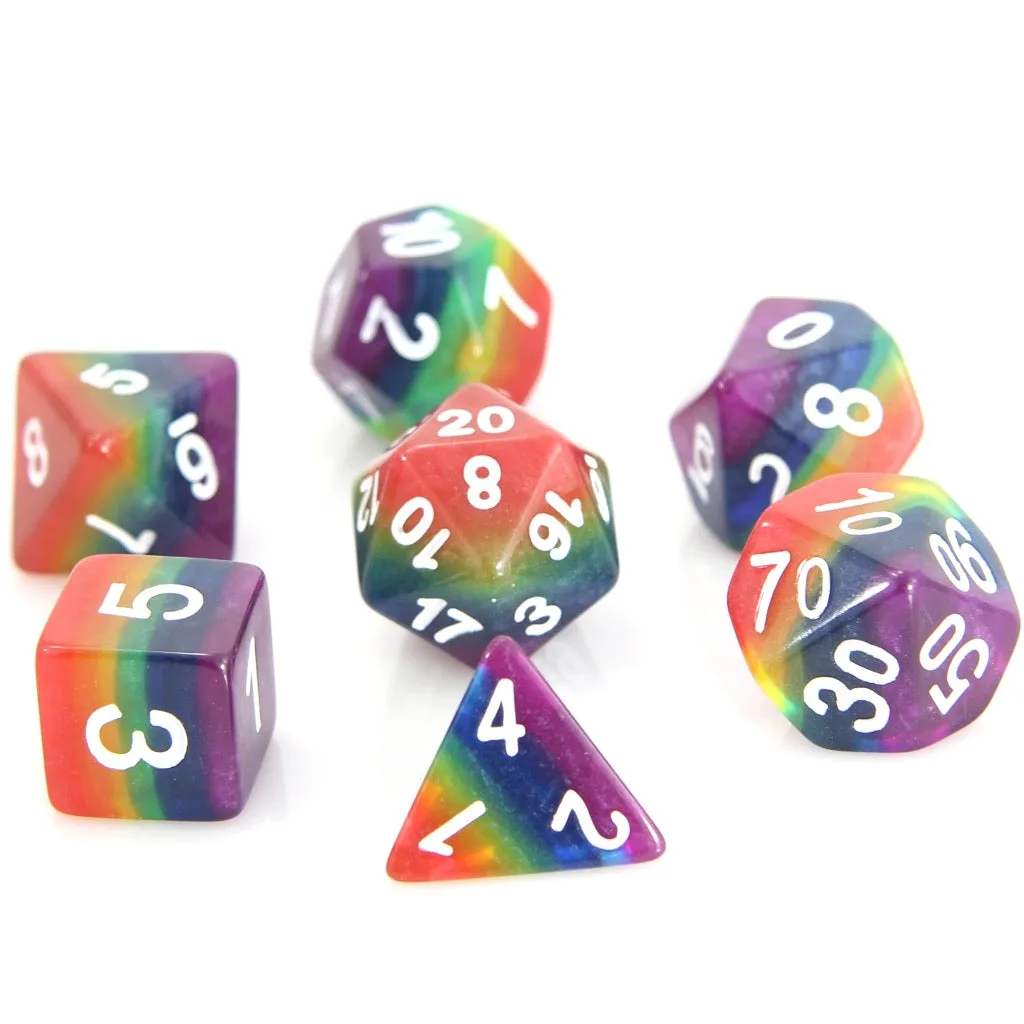
7pc RPG Set - Rainbow: Glittery red, yellow, green, blue, and purple resin poured in layers; standard 16mm size; numbers painted in white; 7-piece set. These details tell you the Rainbow set is multicolor with a glitter finish, readable white numerals, and a familiar 16mm scale that fits most tables.
7pc RPG Set - Rainbow
-
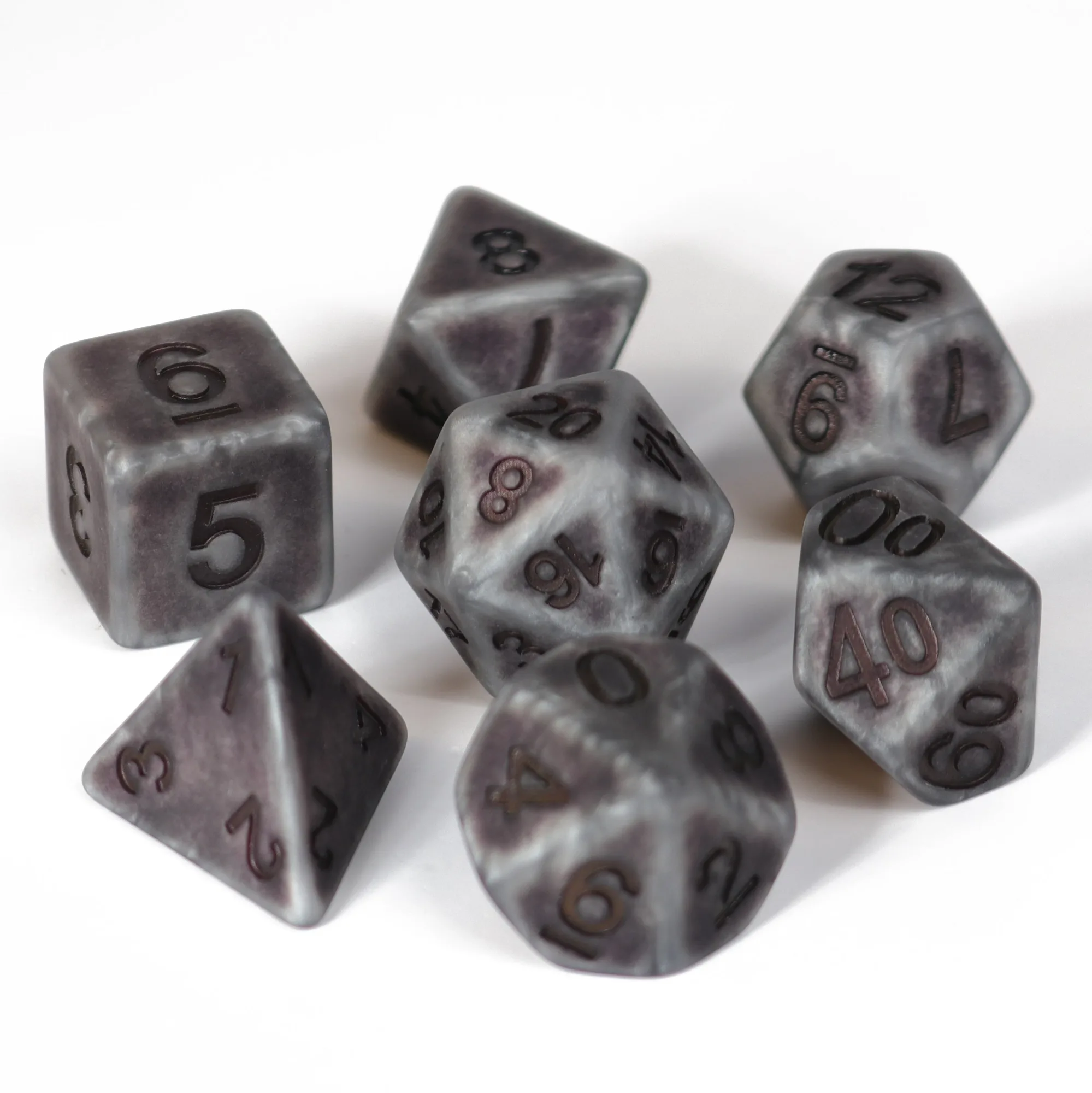
7pc RPG Set - Blood Ancient: Matte red with black inking and black shading; traditional 7-piece RPG set; made with non-toxic resin; classic 'Ancient' design. Blood Ancient is a single-tone matte set with dark numerals and a rugged look—useful if you want dice that read as weathered stone rather than bright candy.
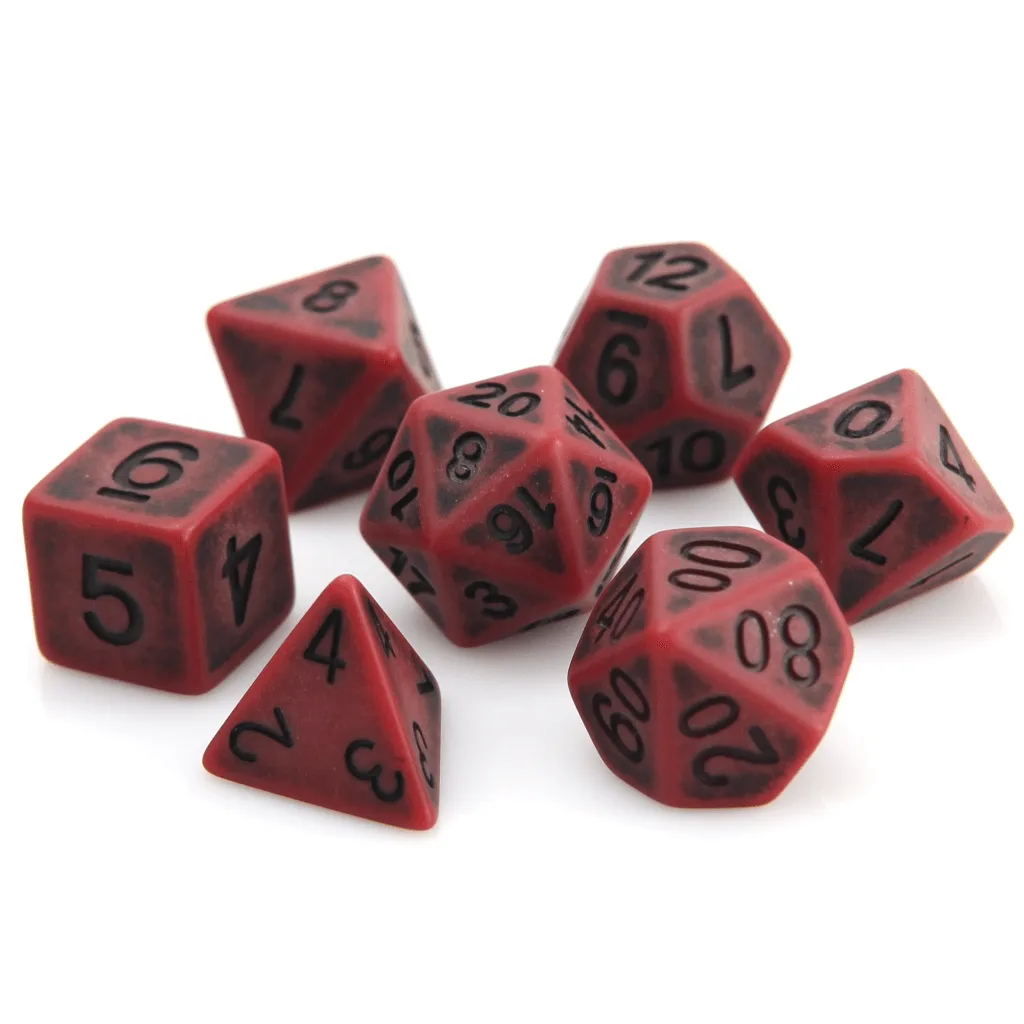
7pc RPG Set - Blood Ancient
Color and Finish: Glitter Layers vs Matte Stone
The biggest visual difference is how each set handles color. Rainbow uses multiple colors in poured layers with glitter, so it catches light and changes as you rotate the die. Blood Ancient stays within a red-and-black palette, with black shading that gives it a matte, stone-like depth.
- Rainbow: Five colors—red, yellow, green, blue, and purple—in layered resin with glitter. White numbers stand out against the busy surface. Expect a lively, festive look.
- Blood Ancient: Matte red base with black inking and shading. The effect is subdued and rugged, closer to carved stone than polished gemstone. Black numbers keep the look cohesive.
Readability at the Table
Both sets use painted numbers, but the contrast works differently. Rainbow’s white numerals sit on a multicolored, glittery background—easy to spot at a glance, though very busy dice can slow down quick number calls in fast combat. Blood Ancient’s black numerals on matte red are lower contrast, which suits moody lighting but may require a closer look in dim rooms.
If your table plays under bright overhead lights, either set works. If you often play in low light or prefer high-visibility dice, the Rainbow set’s white numbers have the edge. If you want dice that disappear into a grim scene until you pick them up, Blood Ancient is the better fit.
Matching the Set to Your Character
- Bright, chaotic, or fey characters: Rainbow’s layered glitter and five-color palette suit bards, wild magic sorcerers, or any character who treats dice as part of the costume.
- Weathered, stoic, or martial characters: Blood Ancient’s matte red and black shading fit fighters, rangers, or anyone with a rugged backstory. The catalog describes it as perfect for a character with a weathered and unyielding soul.
- Shared table dice: Rainbow’s white numbers and bright colors make it easy for multiple players to spot their rolls. Blood Ancient’s darker look is less likely to be grabbed by accident.
Material and Care Notes from the Catalog
Both sets are resin, but the catalog gives more material detail for Blood Ancient: it is made with non-toxic resin. Rainbow’s listing does not specify non-toxic resin, so treat that as unconfirmed rather than a difference in quality.
The catalog does not include care instructions for either set. As a general practice, resin dice can be kept clean with a soft cloth, and storage in a dice bag or tray helps prevent scratches. Avoid leaving them in direct sunlight or extreme heat, which can affect many resins over time. These are common-sense habits, not manufacturer instructions.
Price and Value
Rainbow is listed at USD 9.57, with a comparison price of USD 15.95. Blood Ancient is listed at USD 7.89, with a comparison price of USD 11.95. Both are budget-friendly 7pc resin sets, so the decision should lean on look and table fit rather than a small price gap. If you are buying your first set, either works; if you are adding to a collection, pick the one that fills a gap in your dice palette.
What the Catalog Does Not Settle
Neither listing confirms edge sharpness, weight, or balance. The catalog also does not state whether either set includes a dice bag or case. If those details matter to you, check the product pages or ask before buying. The comparison above sticks to what the catalog actually says, so you can weigh the confirmed differences without guessing.