Quick answer
Raised wheels are wheels built with the mounting pad positioned closer to the outer face, which pushes the tire outward and away from suspension and brake components. Buy them when a lift kit or oversized tire has created a clearance problem you can measure, not just because the truck looks taller. On UTVs, the same construction changes track width and steering feel, so match the offset to your machine and riding terrain.
What actually changes when a wheel is raised
On a conventional wheel, the mounting pad sits roughly in the middle of the barrel. A raised wheel moves that pad outward, toward the street side of the wheel. The bolt pattern, hub bore, and diameter can stay identical, but the tire now sits farther outboard. That single dimensional change is what solves most lift-kit rub issues, because the tire's inner sidewall gains distance from control arms, sway bars, and coilovers.
The trade-off is leverage. Moving the tire outward increases the scrub radius, the distance between the tire's contact patch center and the steering axis. More scrub radius means the steering fights you slightly more over bumps and the wheel bearings see a longer lever arm. It is a real effect, but it is manageable when the offset is chosen for the vehicle rather than for appearance alone.
Raised wheels vs standard wheels: when each wins
A standard-offset wheel is the better default for a stock-height truck, a daily driver, or any build where the factory steering geometry is still doing its job well. It keeps bearings, ball joints, and steering rack loads close to what the manufacturer designed for, and it usually keeps tires inside the fenders without extra flares.
A raised wheel earns its place when you have already added lift and larger tires and you can point to the contact. If the inner sidewall is shiny from rubbing, if the tire catches the upper control arm at full lock, or if the brake caliper and wheel barrel are uncomfortably close, moving the pad outward is a cleaner fix than stacking spacers. Spacers add a separate part that can loosen and change torque specs; a raised wheel bakes the offset into the wheel itself.
How to measure before you order
Park on level ground and turn the steering to full lock in both directions. Look for the tightest gap between the tire sidewall and the nearest suspension or frame component, then measure it. A gap under roughly half an inch at full lock is your warning sign. Also check clearance between the wheel barrel and the brake caliper, and confirm the tire still sits under the fender line you want to keep legal in your state.
Write down three numbers before shopping: your current wheel width and offset, your tire's section width, and the clearance gap you measured. Any raised wheel you consider should be compared against those numbers, not against a photo of someone else's truck. If a listing does not publish offset or backspacing, treat that as a decision limitation and ask before buying rather than guessing.
UTV raised wheels: track width and terrain
On a UTV, a raised wheel does the same job but the consequences show up faster because the machines are lighter and narrower. Pushing the wheels outward widens the track, which improves stability in sand and on sidehills but also increases steering effort and can push you past width limits for trailer decks, gates, and some trail restrictions.
For dune and sand riding, the wider stance and added clearance are usually welcome. For tight woods or rock crawling, a narrower track often threads lines better, so a modest offset change is safer than an aggressive one. Whatever you choose, keep the front and rear paired so the machine tracks straight and the differential and axles are not fighting an uneven load.
Decision rules for choosing raised wheels
- If the tire rubs at full lock after your lift: Measure the gap. Under about half an inch means you need more outboard clearance, and a raised wheel is the cleaner fix than stacked spacers. Fix a measured rub, not a suspected one.
- If the truck is stock height and drives well: Stay with standard offset. You gain nothing from added scrub radius and lose steering precision and bearing life. No lift, no rub, no raised wheel.
- If you ride dunes or open sand in a UTV: A wider track and added clearance help flotation and stability, so a wider package with a modest offset is a reasonable direction. Sand rewards width; woods reward a narrow track.
- If you thread tight trails or crawl rocks: Keep the track close to stock. Extra width catches trees, changes steering effort, and can exceed trailer or gate limits. Measure your narrowest gate before you widen.
Grounded package examples
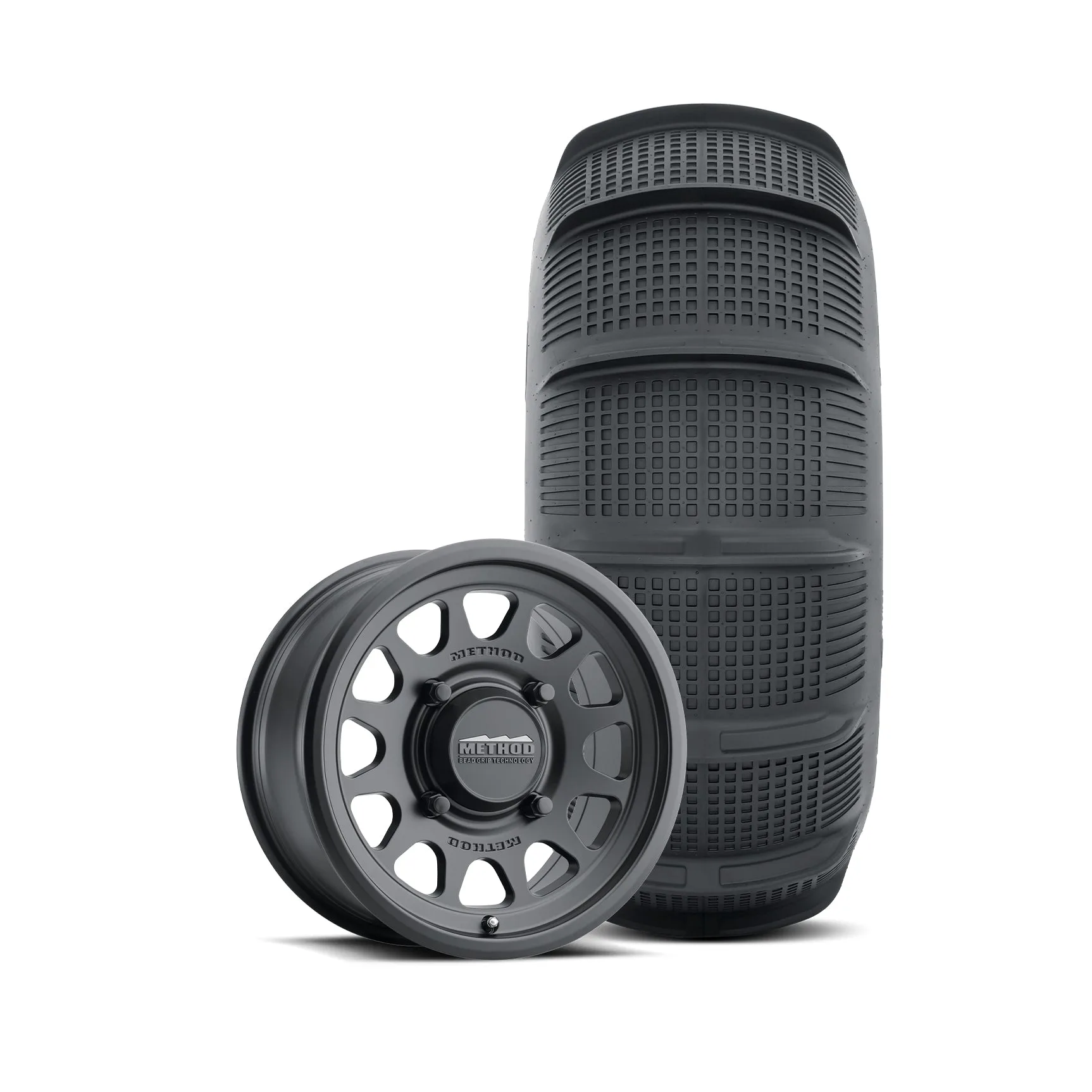
- 409 Bead Grip® | Matte Black + Sand Stripper Rear 10 XL 30: Method 409 UTV Bead Grip® wheel paired with a GMZ Sand Stripper tire, professionally mounted before shipping, available in 15x10 sizes with 4x156 or 4x136 bolt patterns, 0mm offset with a 5+5 configuration. The 15x10 width and 0mm offset give a wide, sand-oriented stance, and the two bolt patterns cover common UTV hubs. Because it ships mounted, you skip the tire-mounting step and only need to confirm your bolt pattern and clearance.
- 414 Bead Grip® | Matte Black + Tensor SS 33 Rear: Method 414 Bead Grip® UTV wheel paired with a Tensor Tire Sand Series® 33 inch tire, professionally mounted and shipped to your door. A 33 inch sand tire on a Bead Grip® wheel suits dune and soft-terrain use where flotation and bead retention matter more than a narrow track. Confirm the 33 inch diameter clears your fenders and suspension at full compression before ordering.
Who raised wheels suit
Best for
- Lifted trucks and SUVs with a confirmed inner-sidewall rub or tight caliper clearance
- UTV owners riding dunes, sand, or open terrain who want a wider, more stable track
- Builders who want offset built into the wheel instead of relying on bolt-on spacers
Not for
- Stock-height vehicles with no measured clearance problem
- Tight-trail or rock-crawling UTVs where a narrow track threads lines better
- Buyers who cannot confirm bolt pattern, offset, or fender coverage before ordering