Fit starts with the size label, not the age
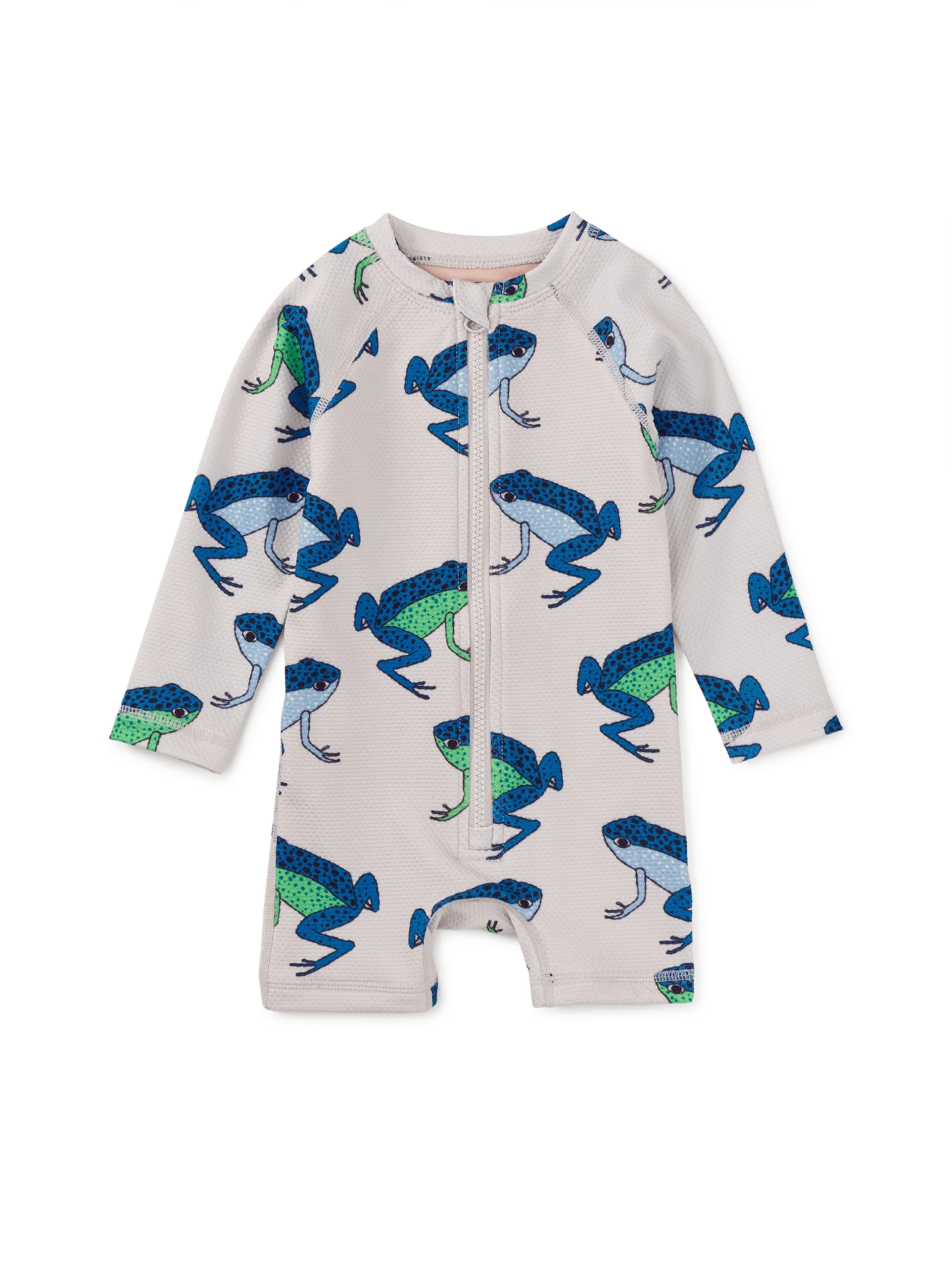
The Rash Guard Baby Swimsuit comes in one continuous run of sizes: 3-6M, 6-9M, 9-12M, 12-18M, 18-24M, 2T, 3T and 4T, all in the Blue Dart Frogs print. That range crosses two very different sizing systems, so treat the month sizes and the T sizes as separate decisions rather than one long ladder.
For the month sizes, start with the size your baby currently wears in everyday clothing and check the record's fit note: this is a fitted one-piece. A fitted swimsuit should sit close to the body without the fabric pulling at the shoulders or the snaps. If your baby is at the top of a month band and growing quickly, the next band up is the more useful starting point because the piece is designed to be snug.
For 2T through 4T, the label follows toddler sizing rather than months. Use your child's current toddler size as the anchor, then check the two features below before you commit, since those are what you will actually feel if the fit is off.
What the swimsuit record confirms
-
Rash Guard Baby Swimsuit: One-piece rash guard with UPF 50+ protection, a zipper with interior guard, and a snap closure at the inseam. These three features set the fit checkpoints: sun coverage, how the suit goes on, and how it comes off for changes.
Rash Guard Baby Swimsuit
-
Rash Guard Baby Swimsuit: Fitted, crew neckline, long raglan sleeves, above knee length in soft fabric. The fitted cut and long sleeves mean shoulder and sleeve length matter more than they would on a loose tee.
-
Rash Guard Baby Swimsuit: Lined front panel for comfortable coverage. The lined front is the part that should lie flat against the torso, so it is the best place to judge whether the body length is right.
A four-check fitting routine
Try the suit on over a dry diaper first, then repeat the check over whatever your baby will wear in the water. Each check maps to a feature the record confirms.
- 1. Zip it fully and look at the neckline: The crew neckline should sit where it does on a fitted tee, not gaping away from the chest and not digging in. The zipper has an interior guard, so check that the guard lies flat rather than folding under the zip.
- 2. Check the raglan sleeves at the shoulder: Long raglan sleeves run diagonally from the collar to the underarm. If the seam pulls down toward the elbow or bunches at the armpit, the size is fighting the shoulder rather than fitting it.
- 3. Judge the body length at the lined front panel: The front panel should sit smooth and flat. The suit is above knee length, so confirm the hem clears the knee comfortably when your baby stands or crawls rather than riding up.
- 4. Test the inseam snaps with a diaper on: The snap closure at the inseam exists for quick changes. Fasten and unfasten it once with the diaper your baby will actually wear, and check the snaps are not strained by the fit.
Layering under and over a fitted rash guard
Because the suit is fitted and long-sleeved, layering is mostly about what goes underneath. A swim diaper is the obvious base layer, and the inseam snaps are the reason to think about it before you buy: a bulky diaper changes how the snaps close and how the body length sits. If you plan to use a thicker swim diaper, that is worth testing in step four above.
Over the top, keep it simple. The suit already covers the torso, shoulders and arms with UPF 50+ protection and reaches above the knee, so the exposed areas are the ones a hat and shade have to handle. The supplied record does not include a hat, cover-up or specific sunscreen guidance, so those are choices to make from your own pediatric advice rather than from this product page.
One thing the record does not confirm is whether the fabric is chlorine-resistant or how it performs after repeated pool sessions. If pool swimming is your main use, treat that as an open question rather than an assumption.
Beach bag checklist built around this suit
The suit covers more skin than a standard baby swimsuit, which changes what else earns a place in the bag.
- A swim diaper that fits under the snaps: Test it with the suit before the trip so the inseam closure is not a surprise on the sand.
- A change of clothes: The inseam snaps and front zipper are designed to make changes quicker, so pack the outfit you would actually swap into.
- Shade and a hat: UPF 50+ covers the fabric, not the face, hands or lower legs. The record supplies no hat or cover-up, so bring your own.
- A dry layer for after swimming: The record gives no care or drying instructions, so plan a separate dry outfit rather than relying on the suit drying quickly.
When to size up, and what to check first
Size up when the shoulder seams pull, when the lined front panel wrinkles rather than lying flat, or when the snaps strain over a diaper. Size down only if the neckline gaps and the sleeves hang past the wrist, since a fitted suit that is too loose will not stay in place in the water.
Before ordering, confirm two things the supplied information does not settle: the fabric content and the care instructions. Neither appears in the product record, so check the label or product page if either matters to you. What the record does confirm is the size run from 3-6M to 4T, the Blue Dart Frogs colorway, and the construction details above, which are enough to run the four checks and choose with confidence.