Start with the waist range, not the buckle
Most ratchet belt troubles begin with sizing rather than the buckle itself. If the belt is too long, the tail keeps feeding past the buckle and the fit feels loose or awkward. If it is too short, the ratchet never engages enough teeth to hold securely. Before adjusting anything, confirm your belt is in the right waist range.
The BOSTANTEN men's leather ratchet belt comes in five waist-adjustable sizes: 28"-34", 32"-38", 36"-42", 42"-48", and 46"-52". Pick the range that contains your waist measurement. A belt sized for a smaller range will not have enough length to lock reliably, while an oversized belt may need trimming before it works properly.
Why the buckle may not lock
An adjustable buckle belt that is not locking usually has one of three causes: the belt tail is not inserted far enough to reach the ratchet teeth, the tail is inserted at an angle so the teeth do not catch, or the belt has been trimmed too short to engage the locking mechanism. Check that the tail goes in straight and that you feel the ratchet click as it advances. If there is no click, the belt may not be seated correctly in the buckle channel.
The BOSTANTEN belt uses an auto-lock buckle designed for instant adjustment. That means the buckle locks as you push the tail in and releases when you lift the buckle lever. If the belt slides freely without locking, confirm the tail is fully seated and that the buckle is not being held open.
BOSTANTEN belt details that affect locking and fit
-
Bostanten Mens Belt Leather Ratchet Belt For Men Dress And Casual With Adjustable Buckle, Trim To Fit: Auto-lock buckle for instant adjustment The buckle locks as you feed the tail, so a belt that will not lock often points to insertion or sizing rather than a broken buckle.
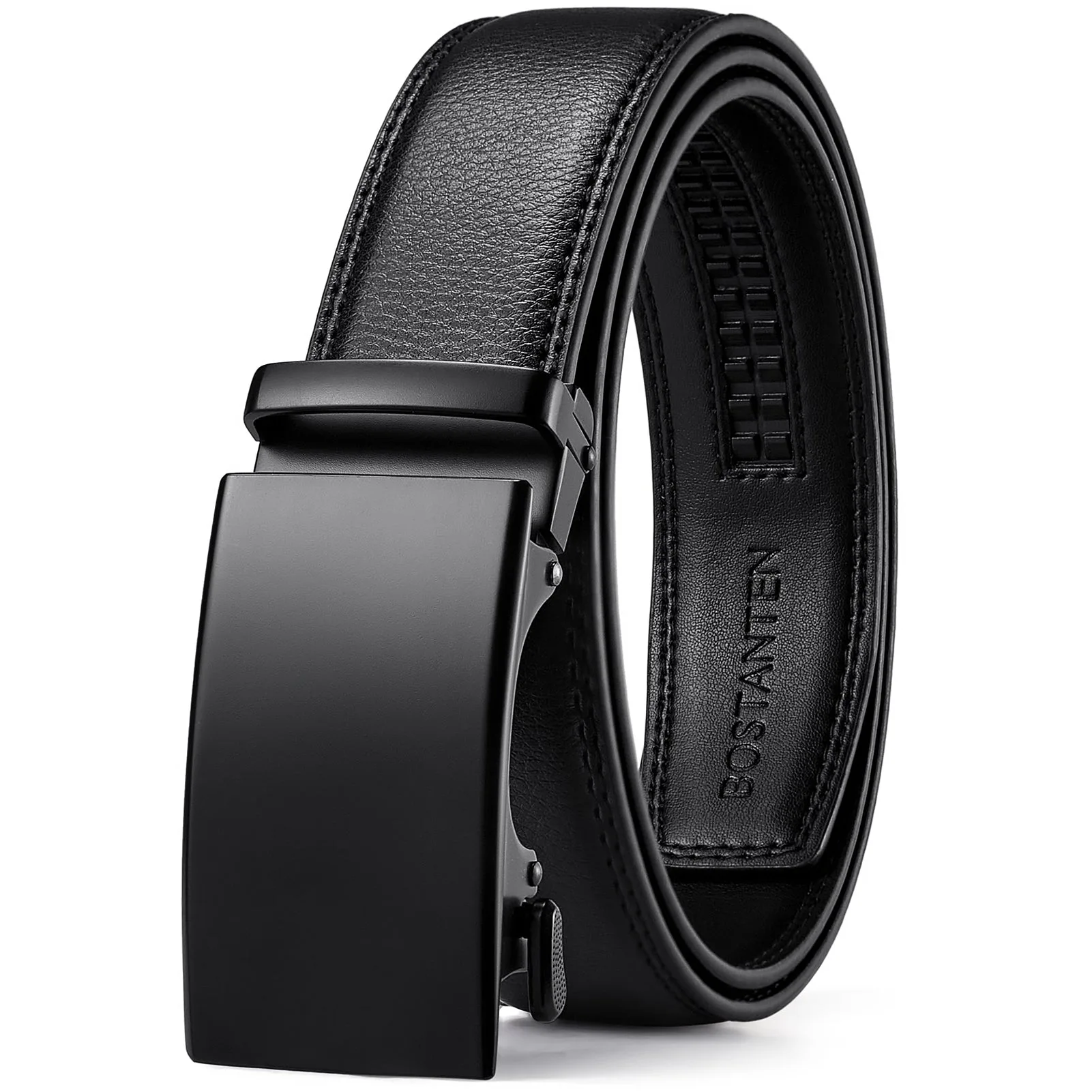
Bostanten Mens Belt Leather Ratchet Belt For Men Dress And Casual With Adjustable Buckle, Trim To Fit
-
Bostanten Mens Belt Leather Ratchet Belt For Men Dress And Casual With Adjustable Buckle, Trim To Fit: Cuttable design for a custom fit Trimming is the intended way to shorten the belt, but cutting too much removes the tail length the ratchet needs to engage.
-
Bostanten Mens Belt Leather Ratchet Belt For Men Dress And Casual With Adjustable Buckle, Trim To Fit: Waist-adjustable sizes from 28"-34" through 46"-52" Choosing the correct range first reduces the need to trim and helps prevent slipping or over-tightening.
A safe sequence for trimming a ratchet belt
If your belt is in the right waist range but still too long, trim it in small increments. The goal is to remove just enough length for the buckle to sit comfortably, not to shorten the belt to your exact waist size in one cut.
- Put the belt on and note the fit: Wear the belt as you normally would and mark where the buckle sits. If the tail extends well past the buckle, you have room to trim.
- Remove the buckle if the design allows: Many ratchet belts let you detach the buckle or open the clamp to access the cut end. Follow the belt's own instructions for releasing the buckle; the BOSTANTEN record does not list a specific removal procedure.
- Cut a small amount from the buckle end: Trim from the end that attaches to the buckle, not the tail with the ratchet teeth. Remove a modest amount, then reattach and test the fit before cutting again.
- Test the lock after each trim: Feed the tail into the buckle and confirm it clicks and holds. If it does not lock, you may have removed too much or reattached the buckle incorrectly.
When the belt slips after locking
A ratchet belt slipping fix usually starts with checking the tail alignment. If the tail is worn, bent, or inserted at an angle, the ratchet teeth may skip. Straighten the tail and insert it squarely. If the belt still slips, inspect the ratchet track for debris or damage. The BOSTANTEN belt's buckle is described as scratch-resistant, but that does not make it immune to wear or obstruction.
If slipping continues after checking alignment and cleanliness, the belt may be sized too large for your waist, leaving too few teeth engaged. Moving to a smaller waist range can solve the problem without any repair.
What the catalog does not cover
The supplied product information does not include a repair procedure for a broken ratchet mechanism, replacement buckles, or warranty terms. If the buckle is physically damaged, contact the retailer or manufacturer for guidance rather than attempting a repair that could void coverage. The BOSTANTEN belt record also does not list care instructions, so avoid harsh cleaners on the leather and buckle until you have specific guidance.