Start with the dinosaurs, not the edge
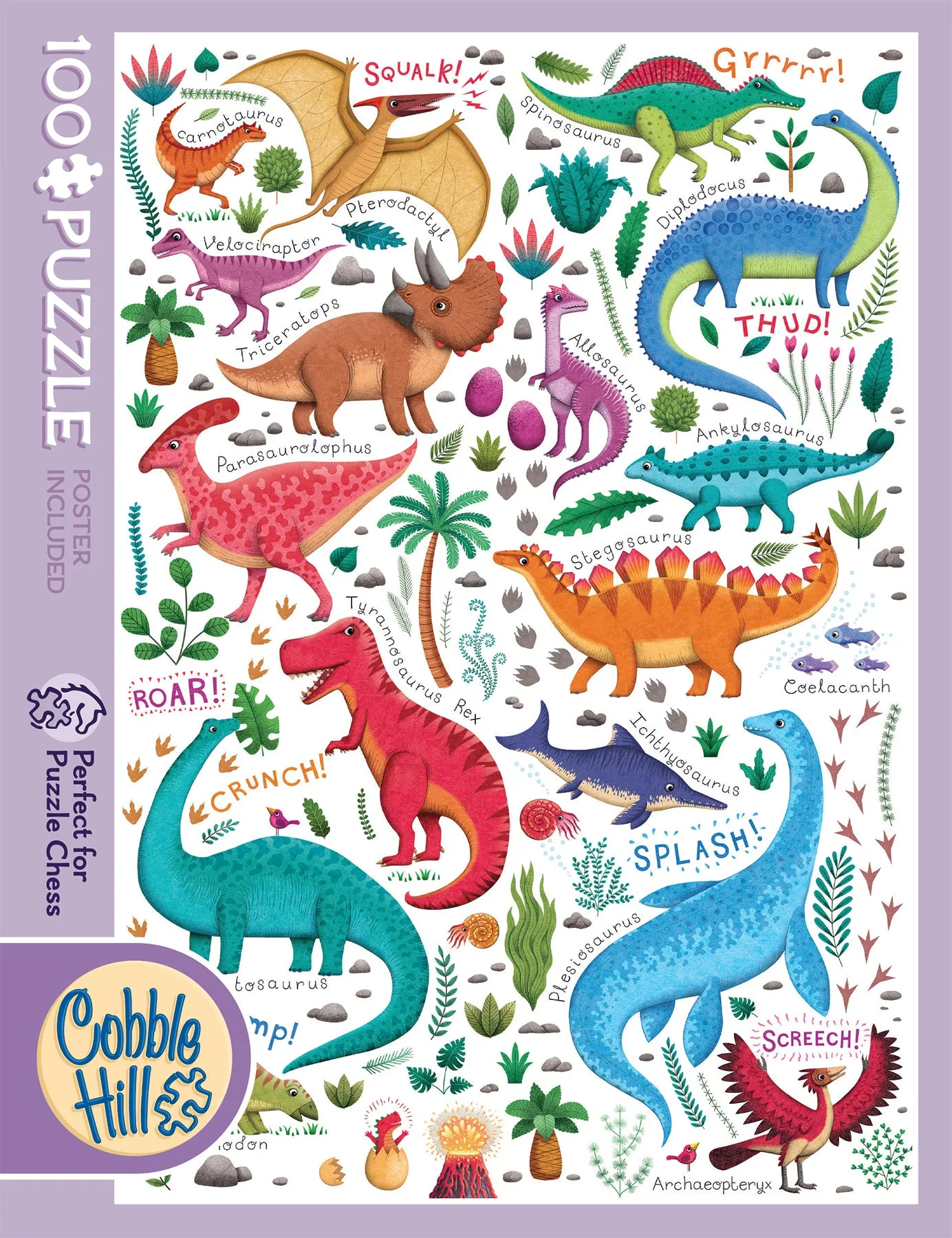
The Rawr! 100 Piece Puzzle is built around a noisy group of dinosaurs, each rendered with texture and fun color by UK artist James Newman Gray. The supplied description says each colorful creature is labeled so everyone can play and learn. That labeling is the most useful feature for a young builder: it gives you a natural first sorting task that does not depend on finding flat edge pieces.
Instead of the usual edge-first routine, spread the pieces face up and pull out any piece showing a dinosaur or a name label. Young children can name the creatures as they sort, which keeps the session playful while the puzzle takes shape. The rest of the scene includes bits of prehistoric flora, eggs, fish, and a small volcano at the bottom, according to the supplied description.
A dinosaur-first build sequence for young children
This sequence uses the labeled creatures as checkpoints. It works best when an adult or older child keeps the pace slow and lets the young builder lead the matching.
- 1. Sort by creature and label: Pick out pieces that show a dinosaur or a printed name. Group them loosely by creature so the child can compare colors and textures. The labels make this step self-checking: a piece with a name belongs near that creature.
- 2. Build one dinosaur at a time: Choose a single creature and assemble it before moving on. The supplied description emphasizes lovely texture and fun color, so invite the child to look at those details rather than only the outline.
- 3. Add the scene around the dinosaurs: Once a few creatures are together, bring in pieces showing prehistoric flora, eggs, and fish. These pieces connect the dinosaurs and give the child smaller, manageable sub-areas.
- 4. Place the small volcano: The supplied description notes a small volcano at the bottom of the scene. Save that area for later, when the child has a feel for the picture, and treat it as a final landmark rather than a starting point.
- 5. Fill the gaps and finish the frame: With the creatures and scene details placed, the remaining pieces are mostly background and edge. This is a good moment for an adult to help with the last few matches so the child ends on a completed picture.
What the Rawr! puzzle gives you to work with
-
Rawr! | 100 Piece: Rawr! is a 100 piece puzzle illustrated by UK artist James Newman Gray, with each colorful creature labeled so everyone can play and learn. The labels support the sorting and matching steps above, and the 100 piece count sits in the range many young children can finish with some help.
Rawr! | 100 Piece
-
Rawr! | 100 Piece: The scene includes dinosaurs, prehistoric flora, eggs, fish, and a small volcano at the bottom. These distinct scene elements give you natural zones to build in, which is easier for young children than scanning the whole puzzle at once.
-
Rawr! | 100 Piece: The supplied description notes that if you enjoy this image but want more of it, a 500 piece version is available. That gives you a clear next step if the child finishes the 100 piece puzzle and wants a longer build with the same artwork.
Checkpoints that tell you the build is going well
The supplied information does not include a recommended age, a build time, or care instructions, so treat those as open questions rather than fixed rules. What the evidence does support is a set of picture-based checkpoints. If the child can find and group labeled creatures, the sorting step is working. If they can connect two pieces of the same dinosaur, the matching step is working. If they stay engaged when you introduce flora, eggs, or fish, the scene-building step is working.
If a checkpoint stalls, reduce the choices rather than the challenge. Put out only the pieces for one creature, or build the volcano corner together. The goal is a completed puzzle the child helped finish, not a race through all 100 pieces.
When the 100 piece Rawr! fits and when to choose differently
The right piece count depends on the child, not on a label. Use these contrasts to decide whether this is the right dinosaur puzzle for your table.
- Choose Rawr! 100 Piece: A young child who has done a smaller puzzle and is ready for a longer session with an adult nearby. The labeled dinosaurs give clear, picture-based goals along the way.
- Choose a smaller piece count: A first jigsaw for a very young child, or a child who loses interest when a puzzle takes more than one sitting. The supplied information does not specify a minimum age, so judge by the child's previous puzzle experience.
- Choose the 500 piece version: An older child or adult who likes the Rawr! artwork and wants a longer build. The supplied description explicitly points to a 500 piece version of the same image.