Quick answer
Start with a strength that lets you read at your normal distance without leaning in, then confirm the frame's lens width, bridge, and temple length match a pair you already wear comfortably. Get the strength right first, because no frame adjustment fixes blurry text.
Why strength and fit are two separate decisions
Most disappointing reader purchases fail on one of two counts: the magnification is wrong, or the frame moves, pinches, or sits too low. These problems have different fixes. A wrong strength means exchanging the lenses; a poor frame fit means changing the frame dimensions. Treat them as two checkpoints rather than one, and you will avoid returning a pair that was optically fine but physically uncomfortable.
Strength also interacts with reading distance. A lens that works at arm's length on a laptop may feel too weak for a book held close. Decide what you read most before you compare numbers.
Where online frame measurements actually help
Published lens width, lens height, frame width, bridge, and temple length let you compare a new frame against glasses you already own. That comparison is far more reliable than guessing from a photo. Measure your current pair with a ruler and keep those numbers on hand while you shop.
What the measurements cannot tell you is how a frame feels on your nose or whether the temples press behind your ears. Those judgments still depend on your own tolerance, so treat the numbers as a filter, not a guarantee.
When to skip the over-the-counter route
Simple readers assume both eyes need the same correction and no astigmatism. If one eye reads clearly and the other does not, or if you already wear a prescription, a single-strength reader may leave you with headaches or squinting. In that case, get an eye exam and use the reader only as a backup.
Also be cautious if you need different strengths for different tasks, such as close needlework and mid-distance screen work. Two pairs often serve better than one compromise pair.
Steps to fit your next pair of readers
- Test strength at your real reading distance: Hold a book or phone where you actually use it, then try progressively stronger readers until the text is sharp without leaning forward. Common mistake: testing at a store counter, which is closer than your usual reading position. If two strengths both seem workable, choose the weaker one for longer reading sessions.
- Compare lens width and bridge to a pair you own: Measure the lens width and bridge of glasses that fit well and match those numbers first; the bridge matters most for how the frame sits on your nose. Common mistake: matching only the frame width and ignoring the bridge.
- Check temple length against your head width: Compare the temple length and frame width with your current pair; shorter temples on a wider head pull and slip. Common mistake: assuming all metal frames bend to fit equally well.
- Confirm lens height suits your tasks: A taller lens gives more vertical reading area, while a shorter one keeps the frame out of your brow line; check the lens height against what you read. Common mistake: choosing a deep lens for screen work where it crowds your view.
- Decide single vision or progressive before checkout: Choose single vision for one clear reading distance and progressive only if you need a gradual range; verify your PD is within the stated maximum. Common mistake: ordering progressive lenses without confirming your PD. If your PD is not listed on your prescription, ask before ordering.
- Do a one-week trial at home: Wear the new pair for your usual reading before deciding; note slipping, pressure points, or blur at the edges. Common mistake: judging fit in the first five minutes. Keep the original packaging until the trial week ends.
Product facts to check
-
Itzal Rectangle Reading Glasses: Rectangle frame with a 58 mm lens width, 36 mm lens height, 18 mm bridge, 138 mm frame width, and 126 mm temple length, in metal at 25 grams. These numbers let you compare the frame directly against a pair you already wear before ordering.
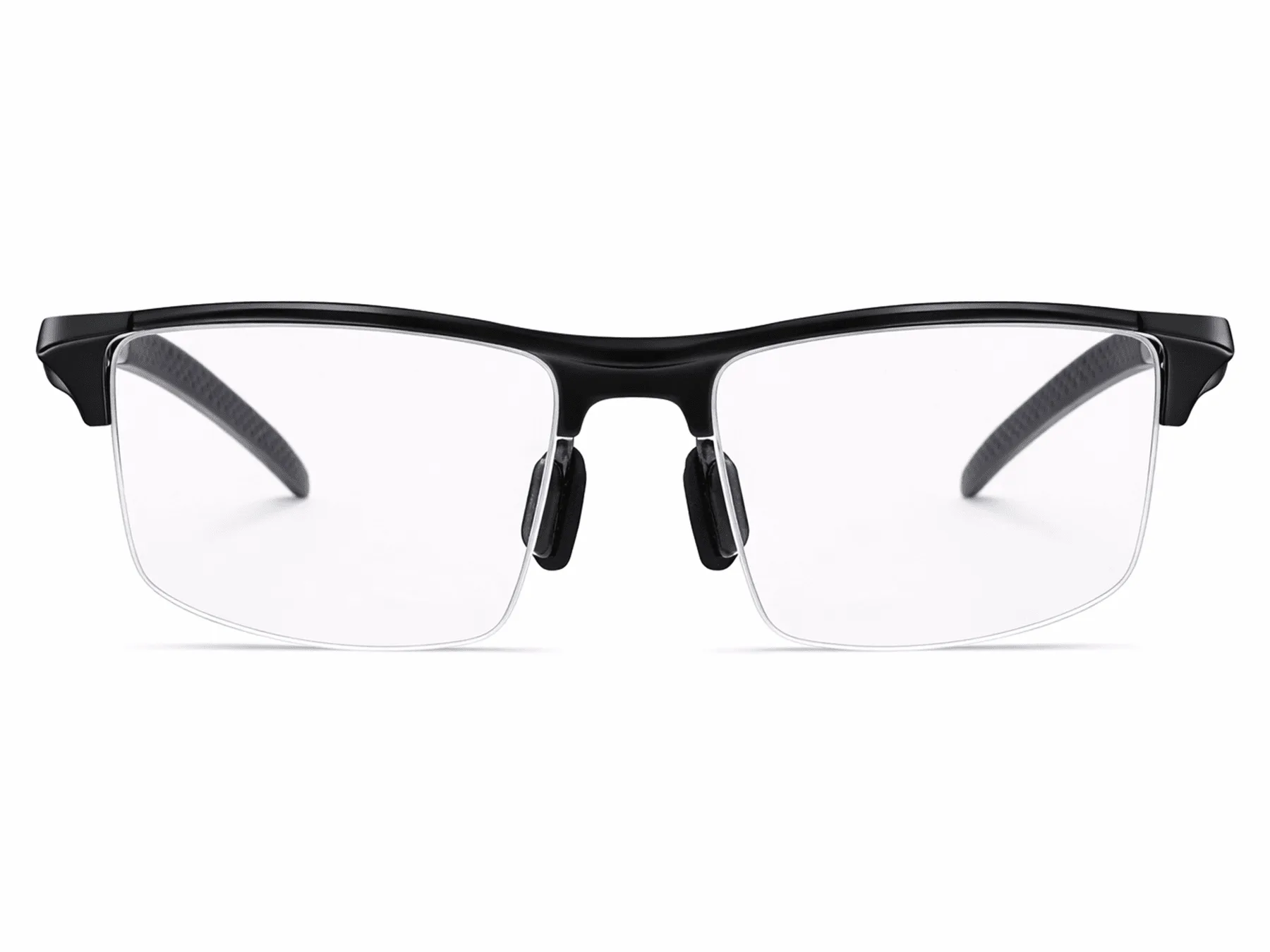
Itzal Rectangle Reading Glasses
-
Itzal Rectangle Reading Glasses: Available in single vision and progressive lens options with a maximum PD of 80. If you need a prescription-style lens rather than a simple reader, confirm your PD falls within that range before choosing options.