The recycled durability question, answered honestly
If you're eyeing a recycled fabric bikini top, you've probably wondered: does recycled swimwear last as long as virgin nylon? The short answer is that durability depends far more on fabric blend, construction and care than on whether the nylon started as production waste. The Tuscany Underwired Halter Bikini Top gives us a concrete example to examine. Its recycled Q-Nova nylon from Italy is blended with polyester and elastane, and the top is built with underwires and coconut-shell hardware. That blend and build tell us more about longevity than the recycled label alone.
Below, we separate common myths from what the product record actually confirms, so you can judge recycled fabric bikini top durability for yourself.
Myths worth retiring before you buy
- Myth: Recycled nylon is inherently weaker: The Tuscany top's fabric is 46% nylon, 33% polyester and 21% elastane. Elastane provides stretch and recovery; polyester adds structure. The record does not compare recycled versus virgin nylon strength, so we can't claim one is stronger. What we can say is that this blend is a standard swimwear composition, and durability will hinge on how you treat it.
- Myth: Eco bikinis are only for light wear: Nothing in the Tuscany record suggests limited use. It's a supportive underwired halter designed for D–GG cups, with a back clasp for firm underband support. That construction points to regular wear, not a delicate display piece.
- Myth: Recycled fabric needs special detergent or hand-washing rules: The supplied product record includes no care instructions, so we can't confirm a specific wash method. Treat any 'must-use' recycled-fabric detergent claim as unverified. General swimwear care—rinsing after wear, avoiding rough surfaces—applies, but the manufacturer's exact guidance isn't in our evidence.
- Myth: Coconut-shell hardware is fragile: The record states the ring hardware at the cup tops is made from coconut shell. It doesn't describe durability testing or water exposure limits. Coconut shell is a natural material; we can't confirm how it ages, so inspect the rings and avoid unnecessary stress.
What the Tuscany top's construction says about wear
Two design details matter for longevity. First, the underwires are plunge-style, which means they sit in a shaped channel and bear load across the cup. Second, the halter ties at the neck and back, with a clasp at the back for underband support. Those ties and the clasp are adjustment points—and adjustment points are where wear often shows first. Check them periodically for fraying or loosening.
The fabric blend (46% nylon, 33% polyester, 21% elastane) is a common swimwear mix. Elastane is the component most sensitive to heat, chlorine and oils over time, so care choices that protect stretch will do the most for recycled fabric bikini top durability.
Tuscany facts that affect how long it lasts
-
Tuscany Underwired Halter Bikini Top, D-GG Cup Sizes, Recycled Fabric: Made from recycled Q-Nova nylon fabric from Italy, produced from production waste materials. This is the recycled content claim itself—useful context, but not a durability guarantee.
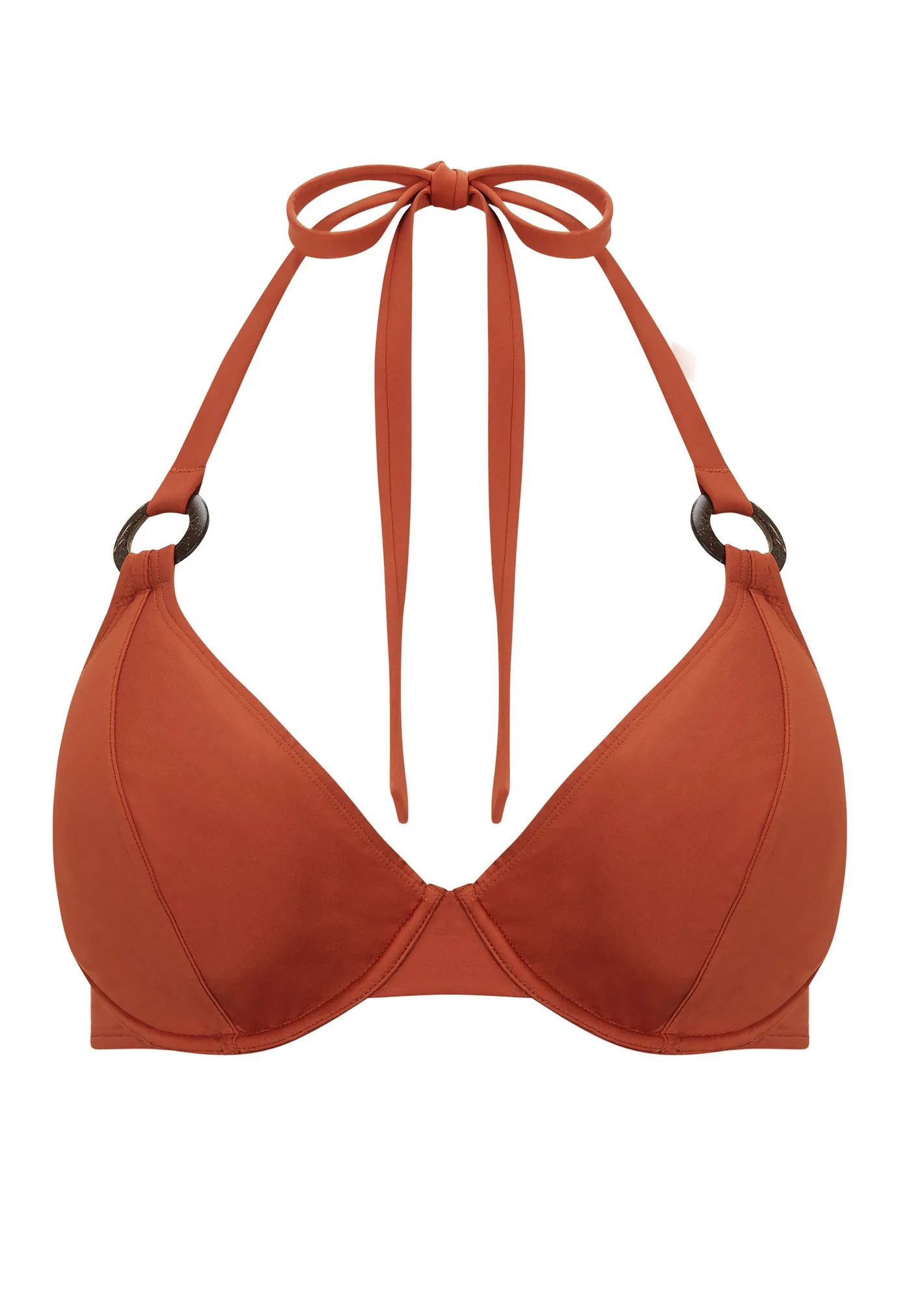
Tuscany Underwired Halter Bikini Top, D-GG Cup Sizes, Recycled Fabric
-
Tuscany Underwired Halter Bikini Top, D-GG Cup Sizes, Recycled Fabric: Fabric composition: 46% nylon, 33% polyester, 21% elastane. The blend tells you what to protect: elastane for stretch recovery, nylon and polyester for structure.
-
Tuscany Underwired Halter Bikini Top, D-GG Cup Sizes, Recycled Fabric: Cup-top ring hardware is made from coconut shell. A natural-material detail to inspect for wear, though the record gives no specific care guidance.
-
Tuscany Underwired Halter Bikini Top, D-GG Cup Sizes, Recycled Fabric: Halter ties at neck and back, with a back clasp for firm underband support. These are the stress points to check over time; proper adjustment reduces strain.
What the record does not confirm about recycled swimwear care
The supplied product record contains no washing instructions, drying guidance, chlorine-resistance claims or lifespan estimates. That means we can't tell you a specific detergent, water temperature or wash frequency for the Tuscany top. If you need manufacturer-approved care steps, check the label on the garment or the brand's care page when it arrives.
Similarly, the record doesn't state whether the recycled nylon is solution-dyed or how colorfast it is. Avoid assuming recycled fabric behaves identically to conventional nylon in every respect; treat general swimwear care as a sensible default, not a verified instruction for this top.
Practical checks that support any swimwear's lifespan
- Rinse after each wear: Fresh water rinsing helps remove salt, chlorine and sunscreen. This is general swimwear advice, not a Tuscany-specific instruction from the record.
- Adjust ties and clasp before swimming: A properly adjusted halter reduces shifting and strain on the underwires and rings. The Tuscany top ties at neck and back and has a back clasp for this purpose.
- Inspect coconut-shell rings: Check for cracks or looseness. The record doesn't specify care for coconut shell, so handle with reasonable care and avoid pulling on the rings when removing the top.
- Rotate your swimwear: Giving a top time to dry fully between wears helps preserve elastane recovery. This applies to any stretch swimwear, recycled or not.
The bottom line on recycled fabric bikini top durability
Recycled content alone doesn't make a bikini top fragile or invincible. The Tuscany top's durability will depend on its blend, its underwired halter construction and how you care for it. The record supports the materials and build; it does not support claims about a specific lifespan or special recycled-fabric care ritual. Judge eco bikini fabric myths by that standard: if a claim isn't in the product details or on the care label, treat it as unconfirmed.