Quick answer
Treat a red glass vase as the boldest object on the surface, not as a neutral container. Choose flowers that contrast with the red, place the vase where light can pass through the glass, and leave clear space around it on the shelf.
Why red glass changes the flower decision
A red vase already supplies strong color, so flowers that are also red or deep burgundy tend to merge into the glass and lose their shape. Pale or contrasting stems — white, cream, soft pink, or green foliage — stay legible against the red. If you prefer dried stems, choose light-toned grasses or bleached branches for the same reason.
The vase's smooth glass surface also reflects light, which makes it read as an art object even when empty. That is an argument for keeping arrangements simple: a few stems with clear silhouettes will do more than a dense mixed bouquet.
Where red glass works best on a shelf
Red draws the eye first, so a shelf display works best when the vase has breathing room. Place it at one end of a shelf rather than dead center, and avoid surrounding it with other saturated colors or busy patterns. A plain wall, a light wood shelf, or a neutral book spine behind it will let the glass color carry the display.
Light matters as much as placement. Near a window or a small lamp, the glass glows and the red deepens; in a dark corner it can turn flat and almost brown. If your shelf has no direct light, a single warm-toned lamp nearby is usually enough.
When not to use a red glass vase
Skip it in rooms where you want calm and low contrast, such as a bedroom styled in muted tones, or on a shelf already anchored by a strong artwork. In those settings the vase competes rather than accents. It is also a poor choice for very tall, heavy branches unless the vase's proportions and stability suit them — the catalog gives a compact form, so keep stems proportionate.
How to style and place a red glass vase
- 1. Choose the surface and clear the zone: Pick a shelf, tabletop, or mantel with some open space around the vase. Remove neighboring objects in strong colors or busy patterns so the red reads as the accent. If the surface already has a dominant artwork, choose a different spot.
- 2. Test the light before arranging: Set the empty vase in place and check how the glass looks at different times of day. Move it closer to a window or a lamp if the red looks flat or dark. A vase that looks dull empty will usually look dull with flowers too.
- 3. Pick flowers that contrast with the red: Use white, cream, soft pink, or green stems for fresh flowers, or light dried grasses and bleached branches. Avoid red and deep burgundy blooms that disappear into the glass. Keep the stem count low so each shape stays visible.
- 4. Arrange with proportion in mind: Cut stems so the flowers sit just above the rim, and keep the arrangement narrower than the vase is tall. A compact vase looks best with a compact bouquet. Check stability before letting go — a top-heavy arrangement can tip.
- 5. Clean the glass gently and regularly: Empty the vase, rinse with warm water, and wipe the inside with a soft cloth. For stubborn film, use a little mild dish soap and rinse thoroughly. Dry the outside with a lint-free cloth to keep the surface smooth and reflective. Avoid abrasive pads or harsh cleaners that can scratch the glass.
- 6. Reset the display between flower changes: When the flowers fade, leave the vase empty for a while as a standalone object, or swap in dried stems. Recheck its position against the light each season. An empty red vase is still a display — treat it as one.
Product facts
-
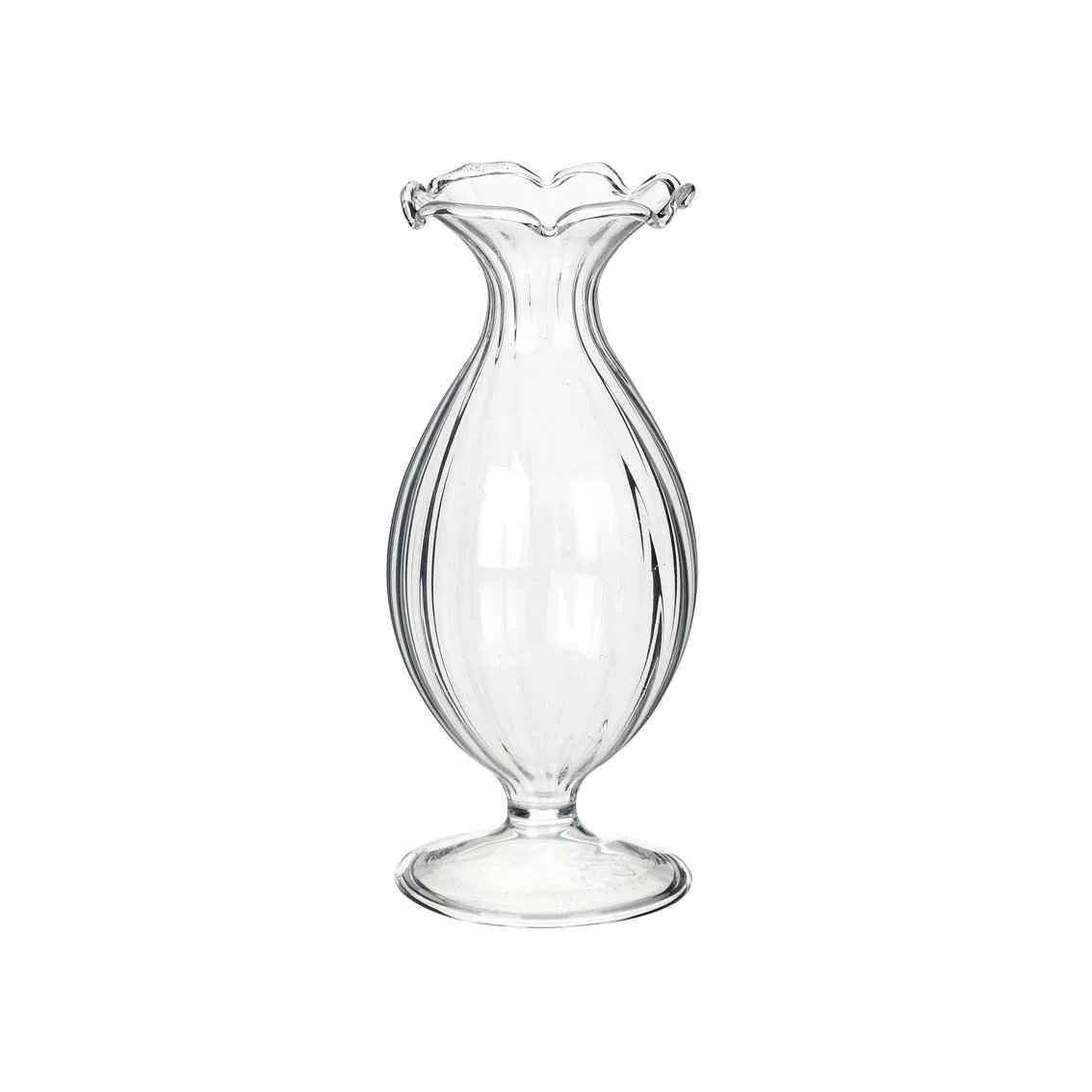
赤いガラス花器: Rich red glass finish with a smooth surface, suitable as a vase or standalone art object. You can leave it empty as a sculptural accent between flower changes, which makes it easier to live with on an open shelf.
赤いガラス花器
-
赤いガラス花器: Compact form fits tabletops, shelves, or mantels. Its smaller footprint suits a shelf display with breathing room rather than a large floor arrangement.